Follow Us on Google
•Experts speak
By Adewale Sanyaolu and Merit Ibe
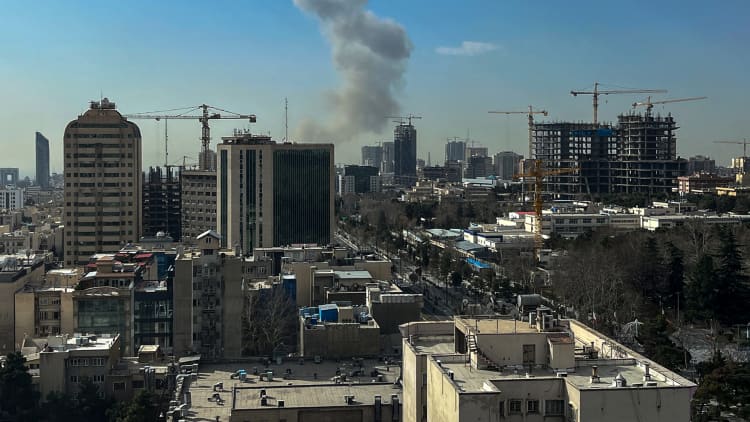
The decision by the United States President, Donald Trump, to authorise strikes on Iran on February 28, 2026, has injected fresh uncertainty into an already fragile global economy. Done in cahoots with Israel, Washington justified the attack by accusing Tehran of threatening US interests, citing its record of repression, backing of regional proxies and alleged nuclear ambitions, alongside renewed calls for regime change.
Iran’s retaliation has been swift and wide-ranging, targeting US interests across the Gulf, including the UAE, Bahrain, Qatar, Kuwait and Israel, while reportedly placing Saudi Arabia, Jordan and Iraq on alert.
Though the escalation began over a weekend when financial markets were shut, analysts worldwide are bracing for economic aftershocks once trading fully resumes.
In his submission, the Chief Executive Officer of Nairametrics, Ugodre Obi-Chukwu, noted that oil was at the center of global anxiety. He reckoned that Iran produces roughly 1.5 million barrels per day, while Gulf nations now exposed to conflict account for an estimated 18 million barrels daily.
“Any sustained disruption to that output would squeeze global supply. Even more consequential are threats that Iran could block the Strait of Hormuz, the narrow waterway through which nearly a fifth of the world’s oil, about 21 million barrels per day, flows.
“Brent crude has already climbed to $72.87 per barrel, a seven-month high. Should the conflict intensify or shipping routes be compromised, prices could surge beyond $100 per barrel, triggering a supply shock reminiscent of past Gulf crises.
“For Nigeria, an oil-dependent economy, the unfolding confrontation presents both promise and peril.
“Nigeria currently produces around 1.47 million barrels per day, according to recent OPEC figures, trailing heavyweights such as Saudi Arabia, Iraq, the UAE, Iran and Kuwait. Its top buyers include Spain, India and France. If Gulf production falters, Nigeria could benefit from higher global prices and potentially increased demand, provided it can scale up output quickly and avoid domestic disruptions.
“Higher crude prices would swell government revenues, strengthen external reserves, now above $50 billion, and potentially provide short-term support for the naira. An improved fiscal buffer could ease budgetary pressures and offer breathing space for economic reforms”, he explained.
For many, the advantages may come with hidden costs.
Nigeria’s petrol prices, which averaged N1,036 in January and had moderated due to stronger local refining capacity and a firmer currency, remain tied to global oil benchmarks. A sustained spike in crude prices would likely translate into higher pump prices. Even if the naira holds steady, global price dynamics could override currency gains, reigniting inflationary pressure.
“Exchange rate stability also faces a delicate balancing act. On one hand, stronger oil earnings could lift dollar inflows and support the naira. On the other, rising geopolitical tension typically drives investors toward safer assets. If global funds retreat from emerging and frontier markets, capital inflows into Nigeria could slow, weakening the currency despite stronger oil fundamentals.
“Investment flows present another uncertainty. Major foreign direct investment decisions often stall during periods of geopolitical upheaval. Global risk committees tend to reassess exposure before approving new commitments. Although Nigeria is geographically distant from the conflict, heightened global risk perception could dampen enthusiasm for frontier markets.
“The broader economic ripple effects may extend beyond energy. Oil price shocks often spill into other commodity markets. Higher energy costs raise transportation and production expenses worldwide. “Fertiliser prices could climb, driving up global food costs. Industrial metals and mining outputs may become more expensive. For Nigeria, which relies heavily on imports, these trends would likely feed into domestic inflation.
“Shipping and air cargo disruptions could further inflate logistics costs. If trade routes become constrained or insurance premiums spike for vessels navigating conflict-prone waters, import bills could rise sharply. Given Nigeria’s import dependence for machinery, refined products, pharmaceuticals and food inputs, such disruptions would quickly transmit into higher consumer prices.
In sum, the US–Iran conflict presents Nigeria with a narrow corridor between opportunity and vulnerability. Elevated oil prices could deliver fiscal gains and temporary currency stability. But prolonged instability risks higher inflation, weaker investment sentiment and renewed pressure on the exchange rate.
Whether the country experiences a windfall or a setback will ultimately depend on how long the conflict endures, and how effectively Nigeria leverages any oil-driven gains without allowing macroeconomic imbalances to resurface”, Obi-Chukwu explained. Also commenting on the development, the Chief Executive Officer, Centre for the Promotion of Private Enterprise (CPPE), Dr. Muda Yusuf said the ultimate impact of the war will depend less on external events and more on domestic policy discipline. Strategic savings, production efficiency, macroeconomic prudence and structural diversification will determine whether Nigeria converts geopolitical turbulence into macroeconomic resilience.
“The Iran–US–Israel conflict represents a classic double-edged shock for Nigeria. Higher oil prices may strengthen fiscal and external balances in the short term. However, inflationary pressures, welfare deterioration, capital flow volatility and global growth risks pose significant countervailing threats.
Other News
“CPPE recommends the following strategic responses:
Strengthen oil production capacity; intensify anti-theft operations and incentivize upstream investment to maximise output within OPEC limits.
“Build fiscal buffers, channel excess revenues into stabilisation and sovereign savings frameworks; deepen domestic refining to reduce vulnerability to imported refined products; enhance transparency and liquidity in the foreign exchange market to mitigate volatility; cushion vulnerable households against energy-driven inflation shocks; expand non-oil exports, manufacturing, agro-processing, ICT and services to reduce external vulnerability”, he said.
Chief Economist at SPM Professionals, Mr. Paul Alaje, warned that although oil prices may not spike overnight, sustained tension would exert upward pressure on global crude benchmarks. Nigeria, he noted, cannot insulate itself from international oil volatility.
“Our revenue depends heavily on crude exports. If global prices rise, government earnings will improve. But because fuel subsidies have been removed and Nigeria now operates largely on market-based pricing, any global increase will directly affect local pump prices,” Alaje said.
Imokhai Ehimigbai, a member of the Manufacturers Association of Nigeria Export Group (MANEG), noted that conflict in the Middle East often disrupts normal economic patterns, particularly in energy markets. “It may affect the price of crude oil because in a war state things can’t definitely be the same. The price may increase, which means more revenue for Nigeria. But it depends on how the government manages the output for the good of the economy,” he said.
His remarks reflect a key concern among analysts, that higher prices alone may not translate into sustainable national gains without production stability and prudent fiscal management.
Also speaking, David Etim, Project Lead of the Calabar and Gulf of Guinea Municipal and Trade Centre Limited by Guarantee and former president of the Calabar Chamber of Commerce and Industry (CALCCIMA), explained that Iran’s role as a major oil producer makes it central to global supply dynamics.
“Iran is a major oil-producing country. Under a war situation, the chances of Iran’s oil entering the global market will be challenged because oil is an inflammable product. Depending on how long the war persists, Iran’s oil entering the market may be constricted,” he said.
Etim added that even the threat of supply disruption tends to push prices upward. “Nigeria’s budget benchmark is about $65 per barrel. Currently, even before the bombing started, we were already doing about $71, $72 for Brent oil. With the war and bombings, this will affect the price of oil upward,” he noted.
Analysts say global oil prices typically rise during Middle East conflicts because the Gulf region controls a significant share of global exports. Any threat to production facilities or shipping routes such as the Strait of Hormuz, a critical passage for global crude shipments, triggers immediate market reactions as traders price in supply risks. Historical precedents such as the Iran–Iraq War and the Gulf War saw oil prices surge sharply, with crude once peaking near $145 per barrel during global supply pressures in 2008.
For Nigeria, higher oil prices could boost foreign exchange inflows and improve fiscal performance, provided production levels remain stable. However, structural challenges such as pipeline vandalism, underinvestment in oil infrastructure and failure to meet OPEC production quotas could limit the country’s ability to fully benefit from price rallies.
Nigeria’s crude grades, including Bonny Light, Bonga and Qua Iboe, are light and sweet crude varieties that typically command premium prices in tight global markets, further strengthening potential export earnings during supply shortages.
However, economists warn that the global shale oil industry could moderate long-term price spikes. Higher crude prices often make shale production in the United States and Canada more profitable, encouraging increased output that could eventually stabilise or reduce prices.
While the crisis could provide short-term gains by strengthening Nigeria’s external reserves and improving fiscal revenue, experts stress that long-term benefits will depend on production discipline, stronger fiscal savings, and accelerated economic diversification away from oil dependence.
Senior Vice President of Geopolitical Analysis at Rystad Energy, Jorge Leon, noted that while alternative infrastructure exists, bypass capacity remains limited relative to total flows.
Energy analysts at Eurasia Group projected that oil prices could jump by $5–10 above the $73 baseline if the conflict intensifies and tanker traffic remains disrupted.
RBC Capital’s Head of Commodities Research, Helima Croft, warned that $100 per barrel oil is a “clear and present danger” should the confrontation spiral further.