Follow Us on Google
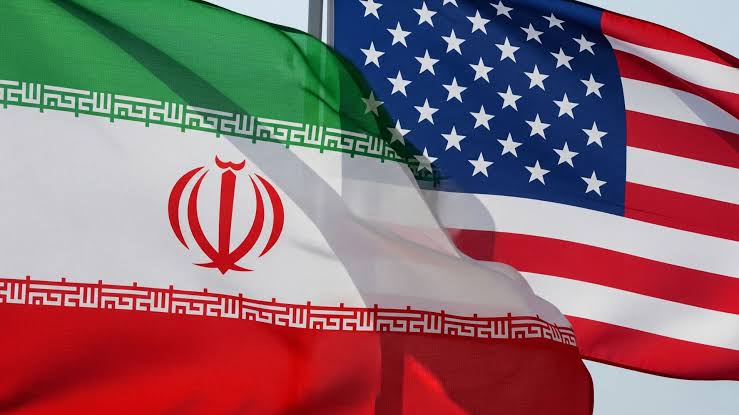
Fresh negotiations between the United States and Iran opened in Switzerland on Sunday amid renewed tensions over the Strait of Hormuz, after Tehran claimed it had again closed the strategic oil shipping route following Israeli military operations in southern Lebanon.
The talks come just days after both countries signed a preliminary agreement aimed at ending hostilities and paving the way for a broader settlement over the next 60 days.
US Vice-President JD Vance arrived in Switzerland ahead of the discussions, while Iran’s delegation, led by Parliamentary Speaker Mohammad Bagher Ghalibaf and Foreign Minister Abbas Araghchi, landed on Saturday night. Pakistan’s Prime Minister Shehbaz Sharif and Chief of Army Staff, Field Marshal Asim Munir, are also participating as mediators.
In a statement ahead of the meeting, Pakistan’s Foreign Ministry said: “Pakistan will continue to support the implementation of the understandings between Iran and the United States.”
Speaking before departing for Switzerland, Vance said he hoped the talks would make progress “on the nuclear issue” and on the “Lebanon ceasefire issue.”
On the situation in Lebanon, he added: “Things are actually getting better there, and things are slowing down a little bit.”
Vance said lasting stability remained the objective, noting: “It’s going to be something we’re just going to have to continuously manage to ensure that Israel and Lebanon are both safe and secure. That’s fundamentally the goal of this, to make the whole region safe and secure.”
Other News
Iran, however, signalled that it would press Washington to honour commitments made under the earlier agreement. Foreign Ministry spokesman Esmail Baghaei said Tehran would be “demanding that the other side fulfil its commitments.”
The negotiations are taking place against the backdrop of continued violence in Lebanon despite a ceasefire announced on Friday. Lebanon’s Health Ministry said at least 47 people were killed in Israeli air strikes on Saturday, while the Israeli military reported striking 80 Hezbollah-linked targets and killing dozens of fighters. Four Israeli soldiers were also reported killed.
Tensions escalated further after Iran’s Islamic Revolutionary Guard Corps announced the closure of the Strait of Hormuz, accusing the United States of failing to implement provisions of the ceasefire agreement, particularly the clause calling for “the immediate and permanent termination of military operations on all fronts, including in Lebanon.”
The United States quickly rejected the claim. US Central Command spokesperson Tim Hawkins insisted that “traffic continues to flow” through the waterway and stressed that “Iran does not control the Strait of Hormuz.”
According to Centcom, 55 merchant vessels carrying more than 17 million barrels of oil passed through the strait on Saturday without disruption.
The outcome of the Switzerland talks is expected to shape both the future of US-Iran relations and the fragile ceasefire in Lebanon, while global energy markets continue to closely monitor developments around the Strait of Hormuz, one of the world’s most important oil transit routes.