Follow Us on Google
By Lukman Olabiyi
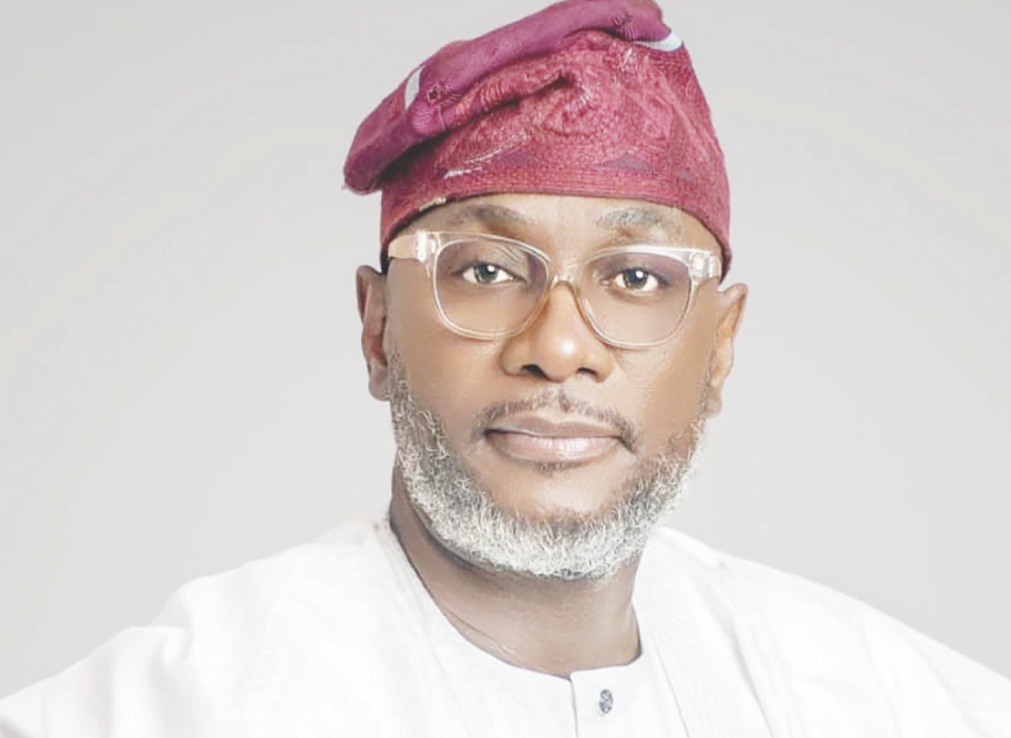
Mr Dayo Alebiosu, otherwise known as D Bush, is a grassroots politician, former federal lawmaker and the current Lagos State Commissioner for Waterfront Infrastructure and Development. He is also a former aide to President Bola Ahmed Tinubu during the latter’s tenure as Governor of Lagos State.
In this interview, Alebiosu speaks on the controversies surrounding demolitions in Oworonshoki and Makoko, urban regeneration, waterfront development, illegal dredging, political speculation in Kosofe Federal Constituency, and his ministry’s achievements and projections.
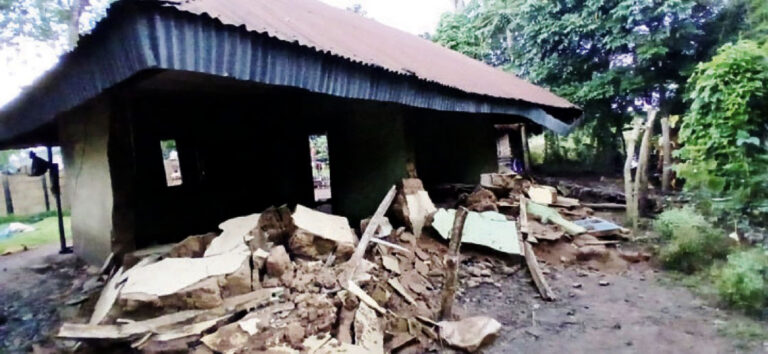
A lot has been happening in Kosofe Federal Constituency, politically and socially. The recent demolitions in Oworonshoki have generated tension and controversy. What is your take on why this incident has become such a major issue?
I think it is important to first put the issue in a proper context. What has happened in Oworonshoki is fundamentally a case of urban regeneration. If you understand the history of Oworonshoki, there was a time when movement after 7:30 pm was extremely risky due to violence and insecurity. I remember vividly because I had aides from there, and their families would panic if they were delayed in returning home. Thankfully, through community effort and government intervention, that phase is behind us.
Now, the current issue has nothing to do with my ministry. The demolitions fall under the purview of Lagos State Building Control Agency (LASBCA) and the Ministry of Physical Planning & Urban Development. Notices were served multiple times over a period of more than two years.
Unfortunately, it happened in my local government, which makes it emotionally difficult for me.
Kosofe is home to me. I was born in Anthony Village, grew up here, and my 80- year-old mother also grew up here. Our family house is here. I feel the pain of the people because they have supported me consistently over the years. However, I also understand that Kosofe sits on a vast network of waterways that cut across three local governments.
We have areas like Agboyi Island, which has enormous potential, similar to Ilashe. We have Odo-Ogun, where we are developing a waterfront housing scheme that will accommodate over 4,000 housing units. That is practically a new city. Imagine the direct and indirect jobs, the economic activity and the transformation it will bring to Lagos.
Oworonshoki is strategically located. Development on Lagos Island actually begins from Oworonshoki and there is no reason we cannot extend that growth inland.
You have spoken strongly against conventional poverty alleviation programmes. Why do you hold this view?
I have never been a supporter of so-called poverty alleviation schemes. I have rarely seen lives permanently transformed by distributing grinding machines or clippers to people who do not need them. Many of these items are eventually sold and nothing changes.
Real poverty alleviation must be economic and structural. When my father served in the Lagos State House of Assembly during the Lateef Jakande administration, three-quarters of Kosofe was under government acquisition. Through legislative advocacy, landlords paid ₦1,000 for regularisation and became landowners. Today, those same lands are worth over ₦100 million.
Tell me, what poverty alleviation is better than that?
What we are doing in Oworonshoki through the waterfront scheme will increase property value not only there but across Ogudu, Magodo, and Bariga. It is a ripple effect that benefits everyone.
We are also developing a jetty in Oworonshoki, a ₦7 billion investment and working towards establishing what could become Lagos’ first modern fish market. It makes no sense that a state surrounded by water imports fish at exorbitant prices.
Some people believe your name keeps coming up because of a perceived ambition to contest for the House of Representatives. Is this speculation justified?
People will always speculate. But ambition? Have I even finished the work I was assigned as commissioner? Do people understand how technical the Waterfront Ministry is?
When I assumed office, over 95 per cent of the staff wanted to leave. We had to completely turn the ministry around. I barely have enough hours in a day to handle my current responsibilities.
Let me be clear: I have not spoken to anyone about contesting for any office. When I began active politics, my original goal was to become a commissioner. Ironically, I ended up in the House of Representatives instead. Now I am a commissioner.
For me, it has always been about showing up and letting God direct my path. I do not chase positions. I focus on delivering results. Those saying I orchestrated the Oworonshoki demolitions ignore the fact that urban regeneration is not under my ministry.
Why would I demolish a place where I am planning a jetty and a housing scheme for 4,000 people? It makes no sense.
Critics argue that as a leader from Kosofe, you should have intervened more to alleviate the suffering caused by the demolitions. How do you respond?
This is a fair question. Let me say this clearly: I feel the pain deeply. We met with the affected residents at the House of Assembly alongside their representatives. I personally reached out to friends and through a foundation, we have raised ₦9 million so far to assist with relocation and rent.
I have personally paid rent for several families. But let us be realistic: can one individual shoulder ₦50 million alone? No. That is why we are still engaging partners and companies who have promised to assist.
I did not want to speak publicly about it until everything was ready. But I know what I have done, and God knows too.
At the same time, I took an oath of office. I cannot condemn urban regeneration when I know it is necessary for long-term development. Balancing empathy with governance requires wisdom.
Illegal dredging is a major concern. Since the Waterfront Summit 2025, what progress has been made?
Illegal dredging is to Lagos what illegal bunkering is to the Niger Delta. Dredging itself is not evil, we cannot survive without sand. But it must be regulated.
We have made arrests. We conduct operations regularly. I personally lead many of these enforcement actions. Illegal dredging destroys waterways, causes flooding, and destabilises ecosystems.
Since we intensified enforcement, people have started approaching the ministry voluntarily for permits. That is why waterfront issues are now in the news; it is because we are working.
We introduced floating concrete pontoons for jetties—the first of their kind in Lagos, with a lifespan of 30 to 50 years. Six pilot jetties are already in place, including Agboyi Ketu.
What about industrial pollution and environmental protection?
We work closely with the Ministries of Environment, Water Resources, and Transport. No dredging or reclamation is approved without Environmental Impact Assessment (EIA) and Transport Impact Assessment (TIA).
Many developers focus only on cost, ignoring environmental consequences. We will not compromise public safety or ecological balance for revenue.
Developers complain that approval processes are cumbersome. How transparent is the system?
The process is transparent. If you apply properly and meet requirements, approvals are granted. The challenge is that some people already know they will not get approval, such as those building on setbacks, yet they proceed illegally, hoping government will eventually look away. That will not happen under my watch.
Government needs revenue, but not at the expense of people’s safety or the environment.
Can you highlight your ministry’s achievements in 2025 and projections for 2026?
In 2025, we held the first-ever Lagos Waterfront Summit, bringing all stakeholders together. We tackled illegal dredging, introduced floating pontoons, rehabilitated jetties, and activated several moribund projects.
Projects like Orange Island, Graceville, Kingsmart City, and Odo-Ogun Waterfront Housing Scheme are progressing. The Odo-Ogun scheme alone will deliver 4,000 housing units.
For 2026, our focus is expansion, more jetties, rehabilitation, housing delivery and innovative revenue-sharing models rather than outright land sales.
There are rumours of political tension in Kosofe involving the local council chairman. What is your relationship with him?
Politics naturally comes with differences, but I focus on results, not conflicts. Kosofe is one family. Success is what history will record, not disagreements.
I have never positioned myself as a threat. I would rather be a blessing. If people feel threatened, it is not because of anything I have done.
Finally, when should residents of Oworonshoki expect the jetty construction to begin?
This year. We already have approval and are going through revalidation. It is important to start early because the impact will be significant.
What is your overall vision for Lagos waterfront development?
Every area is a priority: safety, infrastructure, economy, culture. We must also educate communities to use the facilities provided. Infrastructure is expensive and it must be maximised.
By God’s grace, 2026 will be our best year yet.