Follow Us on Google
By Nnaji Jekwu Onovo
Nigeria grapples with bad governance at all levels, even at the towns and villages. This is due largely to prebendalism, as those in power feel entitled to share of public revenue, using their positions to secure material benefits for themselves and their cronies. Bad leaders at the town and village levels especially traditional rulers and town union leaders incite division, and polarise their communities to deflect attention from their corrupt practices and primitive acquisition including dispossessing people of their lands. Communal crisis resulting from land disputes are typically more pronounced in the South East. Land is a highly contested, sacred, and economic resource in the South East region. Corrupt town union executives, sometimes in collaboration with traditional rulers and politicians, undermine traditional ownership laws by arbitrarily selling communal land; prompting violent pushback from marginalized youths and other villagers. Some of the union leaders have been accused of forging community constitutions, land registry documents, and minutes of meetings to legalise fraudulent land grabs. State governments sometimes interfere in the internal governance of town unions—often to reward political loyalty. This leaves union leaders feeling untouchable and emboldens them to commercialise community assets for personal enrichment. Disputed boundaries and fraudulent land sales routinely result in fatalities, arson, and the destruction of farmlands across states in the South East. In Nigeria, state governments hold all land in trust under the Land Use Act of 1978. However, for the government to compulsorily acquire or revoke the customary right of occupancy of family lands, it must strictly meet the criteria of an “Overriding Public Interest,” serve a formal statutory Notice, and pay adequate compensation. The government cannot seize family land for private or commercial use. The acquisition must be for a strictly defined public purpose such as construction of roads, schools, hospitals, or airports; and economic needs including mining, oil prospecting, or major industrial layouts.
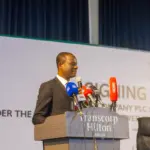
Intra-communal crisis is brewing in the host community of University of Nigeria Teaching Hospital, UNTH, Ozalla town of Nkanu West LGA, Enugu State. Some members of the town development union, who parade themselves as Ozalla stakeholders led by the President General, are working to dispossess some families of their ancestral lands. At a thank-you-visit to the state governor, Peter Mbah, by the stakeholders, the town union President, informed the governor of the decision of the people of Ozalla to hand over some parcels of land located in two autonomous communities (Umuanee and Obeagwu) to the state government for agricultural purposes. The lands mentioned are ancestral lands of families in the autonomous communities. Unfortunately, the decisions were made without the consent of the families concerned. The families have therefore threatened to defend their ancestral lands by any means possible. Ozalla town, the UNTH host community is teetering on the edge of crisis, and the government should do something and do something fast, to stop the looming crisis.
Other News
Ironically, the pronouncement by the Ozalla town union President, offering the lands belonging to families of Umuanee and Obeagwu autonomous communities to the state governor was made at the governor’s home town, Owo, Nkanu East LGA; a town embroiled in land dispute with the Nigerian military. The dispute between the Nigerian Army and the indigenes of Owo and Mbulu-Owo towns in Nkanu East LGA, Enugu State, centres on the military’s claims of owning the entire community’s ancestral land. The military asserts it acquired the land in the 1960s/1970s, while locals view this as military land-grabbing. The governor and his kinsmen of Owo town have been suing for peace and pleading with the federal government to intervene and save their ancestral land from military encroachment. Furthermore, the pronouncement was made in the presence of the Honourable Minister of Innovation Science and Technology, Kingsley Udeh, who is an indigene of Umuanee autonomous community, Ozalla town, but he is not aware of the meeting where the decision was reached, and therefore, not party to dispossessing his kinsmen of their lands without due consultation. The fact that such a decision was made without the knowledge of the minister and other illustrious sons of Umuanee and Obeagwu autonomous communities means that someone is being economical with the truth; and equally mischievous. Families and clans or ethnic groups jointly own land under most indigenous communal or traditional lands and individual households own land through the headpersons allocated portions of land that they hold in perpetuity. Inheritance of land is in accordance with the existing tribal or customary laws. The contentious pronouncement by the town union leader, has the potential of putting a wedge between the minister and his principal, the governor; or between the minister and his kinsmen of Umuanee plus their neighbouring community, Obeagwu. At a presidential debate, J. F. Kennedy, an ardent Catholic was asked, what will be his position in an issue between America and Rome. He said, his loyalty will be to America not Rome. That’s the dilemma of the Honourable Minister, choosing between his people and his benefactor. The country is under immense insecurity pressure due to the activities of terrorists, bandits and kidnappers. We should not compound the bad situation by adding communal clashes. I therefore, call on the government and all concerned citizens of Enugu State to avoid stoking trouble in any guise. Stopping town union leaders or local officials from unlawfully seizing land in South East requires a combination of customary, legal, and community-based actions. Because land administration is complex, defending your property requires formalising your ownership and utilizing specific legal and community networks to counter unauthorised or corrupt practices. Without formal state documentation, land is vulnerable to local tampering. You should, therefore, apply through your state’s Ministry of Lands to secure legal title. Hire a registered surveyor to chart the exact coordinates of your land and lodge it with the Office of the Surveyor-General in your state. Town unions operate under constitutional bylaws registered with the state government. If executive members act ultra vires (beyond their powers), they breach their own constitution; aggrieved members of the town should petition the Ministry of Local Government and Chieftaincy Affairs. If you are being politically or economically oppressed by powerful union leaders, you can seek assistance or publicity through the regional offices of the Legal Aid Council of Nigeria or regional civil rights groups. By and large, don’t take laws into your own hands.
•Onovo, an engineer, writes from Lagos email: [email protected]