Follow Us on Google
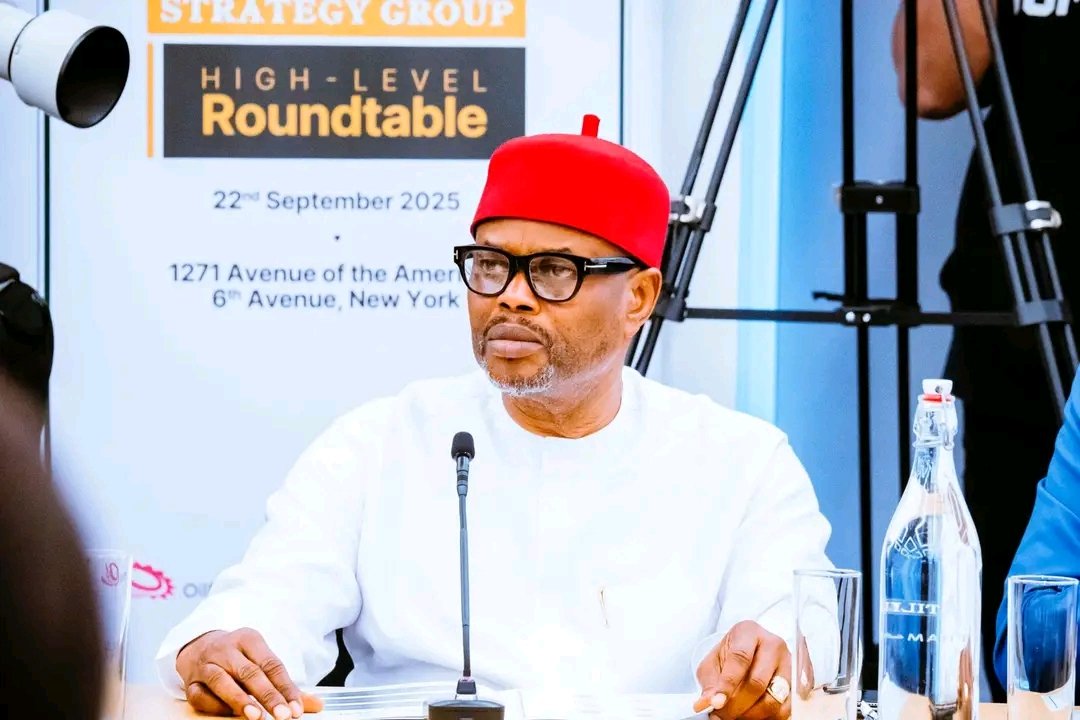
From Isaac Anumihe, Abuja
More facts have emerged on the certificate forgery allegations against the Minister of Science and Technology, Chief Geoffrey Uche Nnaji.
Media consultant, Amaechi Nwagbara, disclosed in a statement in Abuja, yesterday, that the University of Nigeria, Nsukka, (UNN) had, two years ago, cleared the minister of the same allegations.
Addressing journalists on behalf of the Minister in Abuja on Monday, Dr. Robert Ngwu reaffirmed that Nnaji is a proud alumnus of UNN, having obtained a Bachelor of Science degree in Microbiology/Biochemistry with a Second Class (Honours) Lower Division in July 1985.
Ngwu, who described the controversy as a case of political desperation disguised as academic inquiry, said official records from the UNN, including its 1985 convocation brochure and the institution’s registry, confirmed the minister’s academic history beyond any doubt.
Barely 24 hours later, Nwagbara reaffirmed that UNN, through the registrar, issued a certificate affirming that Nnaji graduated from the institution.
“In December 2023, the university’s registrar issued an unequivocal letter confirming that Nnaji, with registration number 1981/30725, graduated from UNN in July 1985, with a Bachelor of Science in Microbiology/Biochemistry, Second Class (Honours) Lower Division.”
The document, according to him, bore the university’s official stamp and signature.
“It should have been the end of the matter. But in May 2025, a second letter suddenly appeared; this time declaring that no record of his graduation could be found. No audit trail explained the disappearance; no internal inquiry was cited. What changed between 2023 and 2025 was not the archive, but the politics. Two senior members of the ruling Peoples Democratic Party (PDP) in Enugu State had just taken charge of the university’s leadership, first as acting, then as substantive Vice Chancellor. The coincidence was too neat to be accidental.
“When the minister became aware that elements within the university were attempting to tamper with his records, he sought legal redress. In Suit No: FHC/ABJ/CS/1909/2025, the Federal High Court, Abuja, restrained the university from further interference and ordered the release of his transcript. The ruling should have restored order but instead, the vice chancellor doubled down.
“By academic convention, the custodian of all student records is the registrar, not the vice chancellor. Yet, the new vice chancellor, a man more at ease in the corridors of power than the corridors of scholarship, took it upon himself to rewrite institutional history. His decision was not a lapse in judgment; it was a calculated gesture of loyalty. In Enugu’s combustible political culture, such gestures are rewarded.
“To the casual observer, this might seem like a petty dispute over paperwork. It is not. It is a case study in how Nigeria’s public institutions are increasingly suborned by political interests. Universities that should embody intellectual independence have become extensions of state patronage, their leaders recruited as political surrogates. In this instance, the motivation is transparent: to tarnish Nnaji’s credibility and slow his growing influence. What they underestimated was the resilience of evidence and the fact that a federal court does not bend to state-level vendettas.”
The damage, Nwagbara explained, goes far beyond one man’s reputation. For a university founded to restore the dignity of man, the episode represents a moral unravelling. The minister of Innovation, Science and Technology has brought purpose and coherence to a ministry long dismissed as a bureaucratic backwater.
“Chief Nnaji’s record, both academic and professional, remains intact. The university’s archives, the court’s rulings and the logic of chronology, all affirm it. What remains at stake is not his degree but UNN’s dignity.
To ‘restore the dignity of man,’ as the university’s motto insists, should resist political coercion, respecting institutional protocol and remembering that truth, unlike politics, does not expire every election cycle.”
Nwagabara insisted that Nnaji’s initiatives in research funding, industrial innovation and digital transformation have begun to reposition Nigeria for a knowledge-driven economy.
“He represents, in short, the kind of meritocratic leadership Nigeria desperately needs and precisely the kind of figure that the old political order fears,” he added.
He further noted that in Nigeria, “universities were once seen as sanctuaries of reason; places where evidence triumphed over emotion, and truth enjoyed immunity from politics. Its leadership, under a vice chancellor more eager to please political patrons than protect institutional honour, has stumbled into the murky theatre of Enugu’s partisan intrigues.
The target of this latest academic melodrama is Nnaji, a man whose record, both in public service and private enterprise, is far less ambiguous than his political rivals would prefer. What began as a bureaucratic query about his academic credentials has now spiralled into an absurd campaign of misinformation, orchestrated by those who see in his rising profile a political threat.”