Follow Us on Google
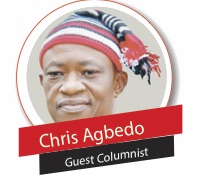
On November 4, 2025, history converged on Nsukka. In the august setting of the Princess Alexandra Auditorium at the University of Nigeria, Nsukka (UNN), a moment unfolded that reaches far beyond ceremony and scholarship. There, before a rapt audience of scholars, cultural custodians, diasporic delegates and students, Griffin Lotson, Vice Chairman Emeritus of the Gullah Geechee Cultural Heritage Corridor Commission (USA) and Mayor Pro Tem of Darien, Georgia, delivered a lecture of extraordinary significance. But the high point was not merely his lecture. It was the formal hand-over of a document: the John Couper and James Hamilton List of Enslaved “Eboe” (Igbo) People, dated January 1, 1806, enumerating 181 Igbomen, women and children who were part of the tragic and heroic story of the 1803 Igbo Landing at St. Simons Island, Georgia. In that act of passing, the list was handed by Lotson to the convener and facilitator of the lecture, Chris Uchenna Agbedo, for onward transmission to the Vice-Chancellor of UNN, Prof. Simon Uchenna Ortuanya, represented by Prof. Anthony A. Attama, Director Academic Planning (DAP). With this transfer, UNN – the cradle of higher education in Igboland – was vested with the custodianship of a record that many believed lost, or at best fractured across sea, time and trauma.
The historical weight of this moment – the homecoming of names – cannot be overstated. The Igbo Landing of 1803 stands as one of the most daring acts of resistance in the history of the African diaspora. According to historical accounts, a group of captive Igbo people, transported through the Middle Passage to Georgia, refused to submit to bondage. After gaining control of a ship or refusing disembarkation, they walked into Dunbar Creek, singing, “By the water spirits we came and by the water spirits we will be taken home.” In handing over the list, Lotson was not simply transferring paper. He was returning names, stories, genealogies and the very imprint of belonging. For descendants of that diaspora, for Igbo families in southeastern Nigeria and beyond, this represents a closing of a circle: the ancestral voices now find institutional resonance on their own land. It is, as one scholar put it, a “heroic affirmation of will over submission to slavery”.
By accepting this document, UNN has assumed an identity beyond that of a conventional university. It becomes a custodian of memory, an archive for Diasporic reconnection, and a locus for new academic inquiry. More than mere preservation, this is about active stewardship. The Faculty of Arts in particular now has the opportunity to anchor research programmes, heritage centres, memorial exhibitions and postgraduate work built around this file and what it symbolises. It also brings an institutional burden. Receiving custody of the List entails responsibility: to digitise, preserve, make accessible, interpret and contextualise. It challenges UNN to invest in archival infrastructure, oral-history projects, genealogical databases and inclusive collaborations with diaspora communities. This is no mere symbolic hand-over; it is a call to long-term engagement.
The cultural resonance is profound. For Ndigbo at home and abroad, the list affirms that the story of the Middle Passage, of forced migration and survival, is not only external to their identity; it is central. The Gullah Geechee people of America, whose culture retains unmistakable Igbo echoes in music, language, food ways and ritual, now see an African institution affirming that bond. The List may become a “reconnection hub” for Igbo ancestry, a pilgrimage text for those seeking roots beyond the Atlantic divide. Educationally, this moment opens new vistas of collaboration. As the lecture emphasised, universities in Nigeria and the United States can now build bilateral networks anchored in shared heritage. Staff and student exchanges, joint research projects in Africana studies, diaspora and memory studies, heritage tourism studies, and cultural industries become not theoretical possibilities but actionable pathways. The hand-over serves as both symbolic and literal bridge between the academy in Nsukka and universities in the US with Diasporic populations and heritage interest.
Socially and politically, the event underscores the power of narrative to heal. For centuries, Africa’s stories were told by others; today, Africa reclaims part of its archive. That reclamation has repercussion in global diplomacy. New forms of trans-Atlantic partnership may grow – driven not by resource extraction or philanthropic charity, but by cultural equity, heritage justice, and shared humanity. These partnerships anchor new economic possibilities: heritage tourism, diaspora investment, cultural industries rooted in memory and identity. This is not purely ivory-tower scholarship. The institutionalisation of the List at UNN invites heritage tourism. Scholars, diaspora descendants, Gullah Geechee visitors may travel to Nsukka not simply for research but for pilgrimage. A potential Igbo Landing Memorial Centre could evolve – a site where memory, performance, scholarship and tourism intersect. That, in turn, could catalyse local economic development, cross-border creative industry collaborations, and global visibility for Nsukka and Igbo land.
Certainly, this grand homecoming, substantially facilitated by Dr. Nwachukwu Anakwenze (Onowu & Regent of Abagana), Chairman, Board of Presidents of Council of Igbo States in Americas (CISA) and Igbo World Assembly (IWA), marks a turning-point for Mayor Lotson and for diaspora identity. For Mayor Lotson himself the hand-over is a pivotal life moment. A descendant of the very Eboe (Igbo) people listed on that document, he brings personal genealogy into public history. His act embodies what diaspora scholars call “return-migration of memory” – a journey not just of bodies but of belonging. In one gesture, he anchored his lineage in the African soil of his forebears and offered it to institutional memory in Nigeria. This gesture signals to diaspora communities that their stories belong here too. It invites mutual recognition: that the Gullah Geechee and Igbo are not separate peoples but part of a single human story of displacement, survival and renewal. It invites Nigerian institutions to open their doors to the diaspora not merely as visitors but as kin, co-researchers, and stakeholders in Africa’s future.
The implications of this hand-over resonate into the future. UNN now has an imperative to embed this document in curricula – courses on diaspora studies, memory and identity. It should partner with US universities, heritage agencies, diaspora organisations and cultural industries to digitise, disseminate and animate the list. Also, the University needs to explore the possibility of facilitating community engagement, connecting Igbo families in Nigeria with diaspora descendants, so that the List is not a tombstone, but a living archive of mutual interaction. It has great potential for triggering heritage-tourism, performance programmes, exhibitions and conferences that centre diaspora and homeland together. More importantly, the historic event presents an auspicious opportunity for UNN to prove that Africa’s universities are not merely passive recipients of global knowledge; instead, they are originators of inquiry, memory-keepers of global stories, and architects of reconciliation.
The list underscores the scale and depth of the trans-Atlantic slave trade. The Bight of Biafra region (today southeastern Nigeria) was among the largest source areas of enslaved Africans to the Americas. Research indicates that possibly up to 1.3 million Igbo persons were trafficked through that corridor. he Igbo Landing event thus stands not as isolated tragedy but as emblem of a larger human catastrophe – and of human defiance. In this light, the hand-over becomes a moment of global memory justice. It recognizes that enslaved Africans were not mere statistics; they were individuals with names, families, possibilities and dignity. By restoring the names of 181 persons, UNN and Lotson give back humanity to a group long stripped of it.
Of course, this hand-over is a beginning, not a conclusion. Institutionalising the list requires resources, policy, collaboration and vision. UNN should strive to secure archival infrastructure, digitisation funds, and continuing partnerships. The diaspora’s engagement demands trust, meaningful access and co-ownership. And the academic agenda demands that this become not a one-off spectacle, but a lasting programme of research, teaching and outreach.
When the list passed from the hands of Griffin Lotson into the custody of the University of Nigeria, something profound occurred: the silo of memory broke open, and the Atlantic became a corridor of reconnection. The ‘Eboe’ did not simply walk into water; they walked into history again, reclaiming agency, identity and continuity. For UNN, this is a moment of responsibility and opportunity. For Ndigbo at home and abroad, it is a moment of recognition and reclaiming. For the global community of memory-keepers and heritage-builders, it is a case study in how the act of returning names can spark new futures. In the language of the Gullah Geechee people, “Kumbaya”- Come By Here – not as a lament but as a bridge. In the rhythm of Igbo drum and song, “Anyi bu otu”- We are one. In this hand-over, the ‘Eboe have come home. Welcome home! Nnoo!
• Agbedo writes from University of Nigeria, Nsukka