Follow Us on Google

From Bamigbola Gbolagunte, Akure
Ondo State government owned University of Medical Sciences (UNIMED), Ondo has brought a new innovation to health science education in Nigeria with the introduction of Executive Masters of Business Administration (MBA) in Health Sciences.
The newly introduced programme which is adjudged the first in the country was introduced by the university to produce health professionals with knowledge in management science and also avail sound knowledge of health management and education for management experts, especially those occupying key political and managerial positions in both public and private sectors.
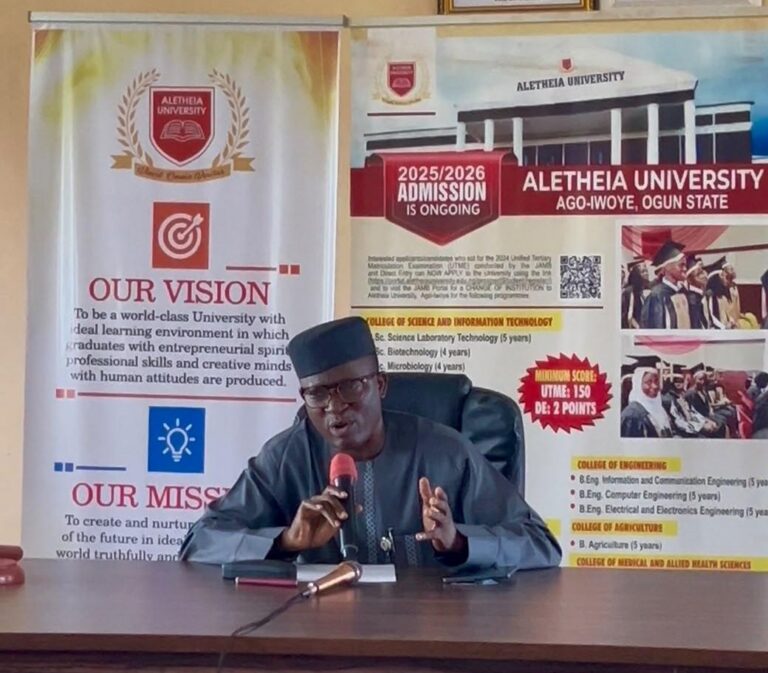
The Dean, faculty of Health Law and Humanities of the university, Prof. Leroy Edozien who announced the birth of the new academic programme at a press conference, said the initiative of the university was to produce health professionals who will be acquainted with sound knowledge of management science and administrative skills.
Prof Edozien who informed that the Senate of the university under the leadership of the vice Chancellor, Prof Ebunoluwa Adejuyigbe had made necessary arrangements for the take off of the programme also hinted that the academic curriculum of the course was designed in line with the standard of the National Universities Commission (NUC).
The don noted that the new programme will provide ample opportunity for political office holders including legislators at all levels, captains of industries, management consultants and other professionals to have both knowledge of management and health at the same time, saying this will help the country to foster development at different levels of governance
He said “the Executive MBA in Health Management will focus on management in the health sector. And it’s also an executive course. So it is slightly different from the usual Masters degree programme in the way it was designed. The programme is targeted at people who are in leadership positions administratively, executives in the health sector and in particular people who are aspiring to the highest levels of executive leadership.
Other News
“We are targeting clinicians who are going into leadership positions or already in leadership positions. We’re talking about hospital managers, health managers, people working with Non Governmental Organizations (NGOs), Ministries of health officials and so on. And the clinicians who are involved don’t necessarily have to be doctors.
“It is important to know that we need people to manage the health system effectively. You can have all the resources in the world but If you don’t have the appropriate management and the appropriate leadership, you’re not going to get to the desired destination.
“Gone are the days when you just picked a doctor from somewhere and make him the Chief Medical Director of the hospital. All they’ve ever known in their lives is just how to attend to a patient in clinic, how to do an operation in theatre, and they are put into this leadership position. Or somebody comes out of university with a degree in History or Sociology and becomes Director of Human Resources and so on, learning on the job. That era has changed. Now, one must acquire requisite management training for him or her to hold vital leadership and administrative positions.
“Management has become more complex. So, those who pass through this programme are expected to have sound management training which will be useful for them in their day to day administrative affairs. There will be people who will be teaching them organisational behaviour, Organisational Economics and so on. So, all of these will be skills that people will be acquiring.
“Students will not have to be physically present in class for the programme as it will be an online programme. We have done it in the past and we achieved great success. I’m sure, this will also be highly successful.
“I think for us to make the next big steps in the health sector, it’s not just about producing more doctors, more nurses, more physiotherapists and so on. Yes, those are important. But what is even more important than those ones in my own humble opinion, is the skill to manage that system, to reduce waste, to optimise the use of resources, to think ahead, to plan strategically and to coordinate all the various elements,” he submitted.