Follow Us on Google
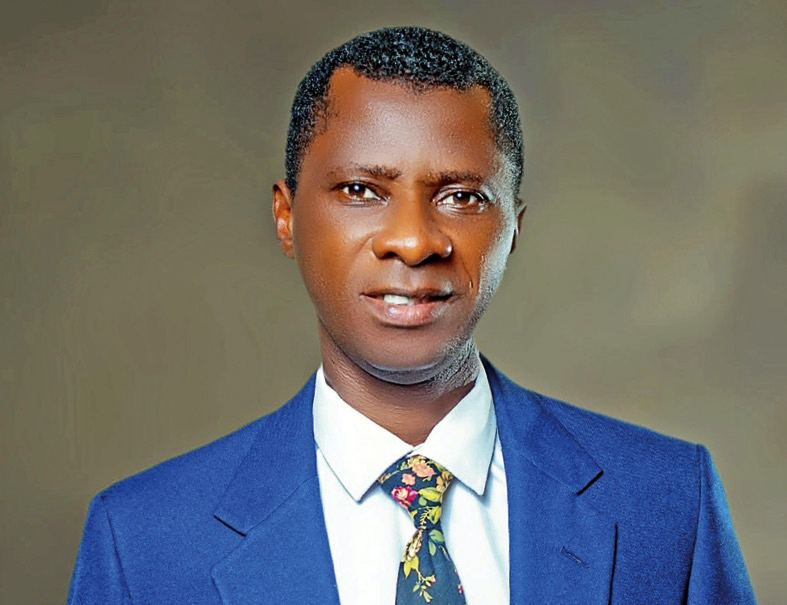
By Juliana Taiwo-Obalonye
Adebusuyi Olumadewa, founder of DoTheDream Youth Development Initiative, says he’s on a mission that is shaping thousands of young lives across Nigeria and beyond.
In this interview, he speaks on purpose, youth leadership, energy justice, and why empowering girls to lead in the green economy is both a moral imperative and an economic strategy for Africa’s future.
What inspired you to found DoTheDream Youth Development Initiative? And what personal turning point set you on this path?
Between 2000 and 2005, I entered a season of personal reckoning. Though I’d made many people happy, I lacked fulfillment. I discovered a renewed purpose: I’m wired differently, and that difference brings responsibility and direction. I took ownership of my life and focused on what I saw most clearly: true societal transformation starts with youth, women, and girls, equipping them to move from dreaming to daring.
That conviction, shaped by spiritual insight and a commitment to national service, led me to create platforms helping young people, especially girls and emerging leaders, turn visions into lasting impact. Mandela’s warning against playing small and Kennedy’s call to serve inspired the Dare to Dream project in Lagos schools, which between 2005 and 2008 became DoTheDream Youth Development Initiative (DoTheDream YDI). Marianne Williamson’s insight about power, not inadequacy, remains our compass.
Since 2005 DoTheDream YDI has run weekly leadership seminars reaching over 262,000 young people, launched Girls in Energy, STEAM as a Catalyst, and Read 2 Build, and donated more than 25,000 leadership books. We now hold UN-accredited representation in New York, Geneva, Vienna, and Nairobi — connecting grassroots innovation to global policy. A season of reckoning became a global movement.
Looking back on your early years in Nigeria, what experiences shaped your belief that youth are a demographic dividend, not a problem?
I am the author of 22 books, six published. In You Can Be The Dream, I recount three experiences that shaped my conviction; one stands out. At the 2000 Africa Cup of Nations I watched Victor Ikpeba’s penalty hit the net, yet older voices insisted the referee hadn’t counted it. That taught me to trust what I see and value lived evidence over unquestioned authority.
That instinct founded DoTheDream Youth Development Initiative. My belief that the youth are a demographic dividend comes from observing peers full of talent but constrained by poverty and neglect, and from community networks where young people already practise entrepreneurship and resourcefulness. The problem was never the youth; it was systems that failed to recognise them.
Faith deepened this conviction: every person has intrinsic worth and a purpose worth investing in. The difference between demographic dividend and demographic disaster is the quality, scale, and intentionality of investment in skills, leadership, and entrepreneurship. Given the right ecosystem, youth becomes the solution.
How did ‘Girls Are Asset’ become Girls in Energy, and when did your view shift from seeing girls as beneficiaries to seeing them as engineers, managers, and owners?
The transition began not with strategy but with relationships — observation, listening, and one simple truth: the girls in Girls Are Assets were not waiting to be rescued. They were waiting to be trusted.
From its founding, Girls Are Assets rejected the welfare mindset entirely. We treated girls not as problems or beneficiaries but as assets — carriers of talent, intelligence, and leadership waiting for the right environment to surface. As we mentored them through leadership exposure and community engagement, their capability became unmistakably evident. They solved problems, led peers, and imagined futures far beyond what anyone around them expected.
That pattern raised an unavoidable question: if girls could lead in general leadership spaces, why not place them at the centre of a sector the world urgently needs them to lead? Energy was the clear answer — a daily crisis that disproportionately burdens girls and women, yet one they already manage in informal, unrecognised ways.
Girls in Energy, therefore, deepens the original conviction: a girl who is an asset in life is an asset in energy, deserving not only access but ownership as engineers, managers, entrepreneurs, and policymakers. We redesigned everything from a beneficiary model asking “what does she need?” to an ownership model asking “what can she build?”
Their inclusion is not charity. It is strategic economic sense, community by community, until the energy transition is not only clean but just and genuinely owned by the people it serves.
As Founder and Lead Strategist of Girls in Energy, what is the most radical aspect of your model linking girl-centred STEM education with mini-grids, entrepreneurship, and global advocacy?
The radical core of Girls in Energy is simple: we refuse to keep what belongs together apart. We rejected the usual sequence – education, then training, then work, then advocacy – and put the girl at the centre as designer, implementer, entrepreneur, and advocate. She need not wait for a degree or job title to touch a solar panel, lead a project, or speak in a policy room; the model declares she is ready now.
We fuse STEM education, mini-grids, entrepreneurship, and advocacy into one self-reinforcing ecosystem: learning builds confidence, competitions connect mentors and investors, mini-grids provide real-world application, and advocacy reshapes policy. This circular logic creates pathways from awareness to ownership and voice, not just inspiration.
We honour both linear and non-linear routes—engineer, entrepreneur, banker, technician, or advocate—so girls from diverse backgrounds find meaningful entry points into the energy economy. The shift is from beneficiary to architect: girls identify needs, design solutions, implement pilots, secure funding, and present results on global stages. That is ownership—and it creates lasting sustainability.
The Girls in Energy Village embodies this: girls design and run mini-grids, lead enterprises, mentor peers, and engage policymakers—proving local action can meet global standards and scale across communities. This is not charity; it is strategic economic sense: when girls lead the energy transition, outcomes are more inclusive, resilient, and powerful.
What does the 10MW women- and girls-led renewable mini-grid hub look like on the ground, and how did you convince investors and partners that young women could lead such complex infrastructure?
The 10MW Renewable Mini Grid Hub is a practical expression of Girls in Energy: an integrated community transformation model where energy access, gender inclusion, youth leadership, and local economic development are one vision.
The pilot will be implemented in Ayedun Community, Kwara State, with a strategic partner. This is deliberate: a women and-girls led model meant to be technically sound, socially owned, financially credible, and replicable across six communities. Everything to be implemented in Ayedun is designed to become a blueprint.
Technically, the hub will combine solar PV generation, battery storage for evening supply, mini grid distribution, smart metering, inverters and control systems, low voltage lines, and locally managed operations and maintenance — real infrastructure built to serve households, businesses, schools, clinics, and productive uses at scale
Equally important is the human design: the project was born from listening to communities and tailoring the system to what electricity unlocks: study after dark, vaccine refrigeration, agro processing, cold storage, digital commerce, charging services, and women led enterprises. The grid is engineered around productive uses, not just lighting.
Community development is embedded from the start: local enterprise support, women’s active roles in planning and operations, youth skills training, and genuine community ownership ensure the grid powers a local economy, not just individual connections.
To win partners and investors we kept them in the room from the beginning, combining five pillars of persuasion: clear community evidence of need; a realistic technical and implementation plan; demonstrable social and economic value; credibility through trusted partners; and a clear scalability pathway. Strategic partners shaped the vision, strengthened technical capacity, and connected the project to funding ecosystems.
At the World Bank–IMF Civil Society Forum you called women’s low representation in Sub Saharan Africa’s energy sector a challenge and an opportunity. How do you stay motivated despite those structural barriers?
Motivation begins with one unshakeable belief: every challenge is an opportunity to express knowledge, innovation, and impact. A barrier becomes a doorway when seen that way. That conviction drives the Girls in Energy Project and DoTheDream Youth Development Initiative (DoTheDream YDI) forward every single day.
When women represent only approximately 13 per cent of Sub-Saharan Africa’s energy workforce, we do not see defeat. We see a pipeline to build, talent to activate, and an economy to fundamentally reshape. We start in Nigeria, scaling community by community so that every solution becomes a replicable blueprint. The Girls in Energy Project trains young women to design, implement, and operate the pilot 10MW distributed renewable mini-grid hub across six communities – delivering measurable, real-world impact where it is needed most.
Reliable local power unlocks far more than electricity: it enables small businesses, agro-processing, cold storage, digital learning, and women-led enterprises. The energy transition connects directly to decarbonisation, green hydrogen, critical minerals, and smart systems — future markets where exclusion today means irrelevance tomorrow. Equipping girls now builds a more resilient, inclusive economy. Inclusion is not just moral. It is strategic.
How does DoTheDream YDI turn bold targets into daily practice, and what’s been the biggest hurdle in getting communities, governments, and energy companies to trust a girls centred model?
The targets are deliberately bold because they guide every decision — measurable destinations, not decoration. Our core conviction is simple: local action drives global progress. We start in Nigeria as a scalable testbed: one community becomes a demonstration site, clusters form across local government areas, and successful clusters become blueprints for states and the Global South.
The operational engine has five pillars – Career, Conference, Competition, Camp, and Communities – backed by the Girls in Energy Village and the Girls in Energy Fund. Career builds a long-term pipeline on two tracks: a linear route into engineering, research, and policy, and a non-linear route into distribution, maintenance, community enterprise, and finance. Conference targets girls 13–25 to convert awareness into sustained interest. Competition (ages 5–55) turns ambition into prototypes and businesses. Camp delivers hands-on renewable training. Communities connect everything to our 10MW distributed mini-grid hub, powering homes, schools, clinics, and women-led enterprises with deep local ownership.
The biggest hurdle has been credibility – not because the model is weak, but because many struggle to imagine young women leading infrastructure, finance, and community energy systems. Our response is show before you tell: treat resistance as a prompt to engage more deeply, and argue with evidence. Inclusion is an economic strategy, not charity. Training girls in solar PV, mini-grids, and smart systems expands the talent pool and strengthens the sector.
Because the energy transition links to decarbonisation, green hydrogen, critical minerals, and smart systems, exclusion now risks irrelevance later. Gradually, demonstration dissolves doubt: communities adopt, governments institutionalise, and companies see the business case. Trust grows patiently, consistently, and with data.
Which specific moment or success—such as at UNIDO A2D in Bogotá—made you feel, “We’re actually changing the narrative”?
The moment I knew we were genuinely changing the narrative was UNIDO’s invitation to the Accelerate 2 Demonstrate Facility in Bogotá. This was not mere attendance at a global event. It was serious, substantive international recognition — confirmation that the Girls in Energy Project, a product of DoTheDream Youth Development Initiative, had moved decisively from advocacy into a credible framework for inclusive industrial development, climate innovation, and community transformation.
When I asked how UNIDO had learned of the project, their answer was both reassuring and deeply significant: our model aligned with UNIDO’s Gender Equality and Social Inclusion principles. That meant what we had built locally in Nigeria — rooted in equity, genuine community participation, and measurable impact — was already institutionally relevant and technically scalable on the global stage. We had not retrofitted our work to meet external criteria. We had built authentically, and the world had come to find us.
That invitation proved what DoTheDream YDI has always believed: one initiative can create a leader, one leader can shift a community, and one community can reshape policy and investment. When our locally forged solution entered global decision spaces, the narrative shifted — from access to ownership, and from programme outputs to genuine systems change
How do you measure real impact — and can you share a participant’s journey that brought that measurement to life?
The strongest proof of impact is never the number trained. It is whether a girl’s life trajectory changes after she enters the Girls in Energy ecosystem. That is our test. We ask different questions: did curiosity become capability? Did participation become leadership? Did learning become livelihood? When the answers are visible in her choices, her community, and her future, the programme is working.
DoTheDream Youth Development Initiative) calls this approach “people becoming proof.” Real impact appears simultaneously in three places: life changes, community changes, and systems changes. A girl’s life is truly different when she moves from participant to contributor, creator, and job generator — turning solar training into an enterprise, helping electrify her community, or joining an energy institution.
The journey that captures this most powerfully begins with a quiet girl sitting at the back of the room — doubting she belongs — and ends with her coordinating peers, presenting to policymakers, and leading a community project. She needed three things: a safe space, a mentor who believed in her before she believed in herself, and a practical opportunity to prove she belonged.
You work across New York, Maryland, and Nigeria and attend global forums. How do you protect family time while leading a globally connected initiative like Girls in Energy?
Leading a global initiative while anchoring family life is a leadership discipline, not a scheduling problem. Discipline is designed intentionally, consistently, and without apology.
Family is foundational resilience, not a secondary duty. Protecting shared meals, retreats, and spiritual rhythms keeps me grounded and signals to team, partners, and children that people come before projects. This is strategy, not sentiment: a leader who loses their family in pursuit of a mission has already compromised that mission.
We plan family time first and arrange professional commitments around it. When engagements clash with milestones, we adjust or delegate — no side event is worth an irreplaceable moment.
My wife, Titilayo Temilola Olumadewa, is central to everything I do. She is a strategic partner, emotional anchor, and reality check whose counsel helps me separate urgent opportunities from distractions. Family conversations become a leadership laboratory: refining vision, testing ideas, and teaching our children by example.
Faith and gratitude sustain an energy no productivity system alone can provide. Balance must be deliberately designed, consistently protected, and regularly reviewed. When built that way, family life becomes the truest training ground for the restraint, humility, and long-term thinking that sustain global leadership.
What routines help you recharge, where do you holiday, and what is your ideal meal?
We built a deliberate culture of refilling — daily and weekly practices that restore soul, body, and spirit so I can show up fully for global meetings, UN side events, World Bank forums, and demanding field visits. Refilling isn’t the opposite of work; it’s its condition.
After intense seasons I move from performance into restoration: deep reading (not scrolling) to turn data into meaning; long, unhurried sleep to reset; and quiet prayer to listen for direction. Physical resets matter too: a cold bath marks the shift to rest, and church restores humility and community, where I serve rather than lead from the spotlight. Listening to grassroots stories renews purpose in ways no boardroom can.
My favourite holiday is a state of being: any quiet place where I can disengage and reconnect. I focus on three disciplines — deep reading across scripture, leadership, energy, and development; extended prayer as a leadership act; and invention, using stillness to imagine stronger, scalable designs for the Girls in Energy Village, the Girls in Energy Fund, and the STEAM-as-Catalyst framework. Many of our best ideas were born in jotters during quiet, creative moments.
The ideal meal? My wife, Titilayo, decides that: she cooks with care, craft, and cultural intelligence. I practise three-dimensional eating — food that nourishes the body, clears the mind, and honours the spirit with gratitude. How you treat your body reflects how you treat your mission; excellence in small things shapes excellence in large ones.
Looking back from 2005 to today, what would you tell your younger self, and what do you wish more people understood about youth leadership, gender equality, and energy justice?
Guard your soul as fiercely as you guard your mission. That is what I would tell the young founder of DoTheDream Youth Development Initiative (DoTheDream YDI) in 2005. Protect your inner life — visibility must never replace intimacy with God, family, and quiet reflection. Build teams and systems early, turning projects into repeatable models that outlive any one person. Value depth over constant ascent — allow seasons of rooting as well as rising. Learn to say no with grace, because every yes to distraction is a quiet no to your core responsibility. Lead always as steward, not owner, and let recognition follow obedience, never drive it.
And what I wish more people understood is equally urgent: youth leadership is not optional — it is the human infrastructure that makes the SDGs, climate justice, and inclusive development achievable. Too often young people are managed as a problem rather than invested in as the primary engine of change. When girls lead in energy, they advance gender equality, climate action, and local economies simultaneously.
Invest in youth leadership as you invest in critical infrastructure — one community, one girl, one energy project at a time. That is how transformation scales.