Follow Us on Google
• To replicate project across Nigeria
From Idu Jude Abuja
The Federal Government has said that it is ready to decommission all national projects involving power plants to check the inherent health danger associated with polychlorinated biphenyls (PCBs).
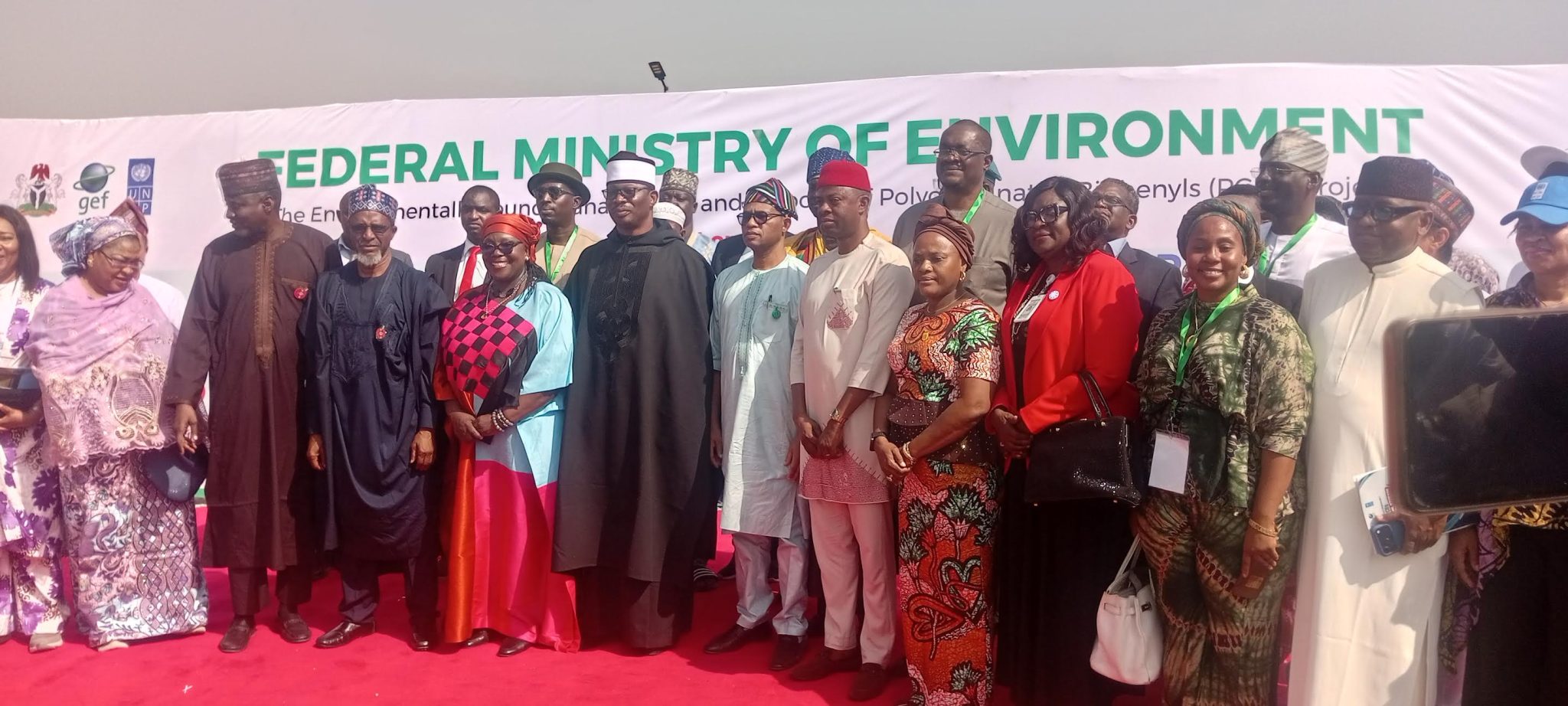
The Minister of Environment, Balarabe Lawal, disclosed this yesterday in Abuja during the official commissioning of the first West African PCBs treatment plant, built in the Kwali Area Council of the FCT.
The Minister further remarked that his leadership would appeal to President Tinubu for it to be replicated across the country’s six geopolitical zones.
The project established under the Global Environment Facility (GEF) and the United Nations Development Programme (UNDP), with support from the Environmentally Sound Management and Disposal of PCBs Project in Nigeria, is to ensure proper treatment of PCBs to avoid health hazards associated with it.
The Minister further highlighted that the commissioning was more than the unveiling of an infrastructure.
“It is a clear demonstration of Nigeria’s commitment to environmental sustainability and public health protection, in line with our national development priorities and global obligations.
“I, therefore, extend the appreciation of the Ministry to our partners, community and traditional leaders and all stakeholders whose collective efforts have made this achievement possible.
“PCBs are highly hazardous pollutants that pose serious risks to human health, biodiversity and the entire environment. When improperly handled or disposed of, they can cause severe illnesses, such as cancer and reproductive disorders, as well as long-term damage to ecosystems. They are also a major cause of soil, water and food contamination, which threatens the well-being of present and future generations,” he stated.
The minister reaffirmed that the country is a committed party to the Stockholm Convention on Persistent Organic Pollutants (POPs).
“We are, therefore, obligated to eliminate and manage PCBs in an environmentally friendly manner. This treatment facility is a direct demonstration of our dedication to meeting these obligations and building lasting institutional capacity,” he said,
Other News
He said it is evident that the collaboration of the Global Environment Facility (GEF), the Environmentally Sound Management and Disposal of PCBs Project, with the invaluable support of the UNDP, the Federal Ministry of Environment and other national stakeholders had yielded positive milestones, to include development of policies and guidelines to strengthen chemicals and waste regulation, training government agencies and private operators on safe handling, storage and transport of PCB-contaminated materials. In addition, it has also yielded in conducting national inventories of PCBs to support evidence-based decisions, establishment of the dedicated PCBs treatment facility and to further create public awareness of the hazards of PCBs through workshops and the media.
“This facility is more than a technical installation, it represents a major advancement in the country’s capacity to manage hazardous materials domestically. Enabling the decontamination and environmentally sound treatment of PCBs will prevent further contamination of our environment and food systems, thereby reducing health risks to workers and surrounding communities. This facility is a direct pathway to generating more green jobs, driving the country broader towards a circular economy, enhancing resource efficiency and promoting sustainable development for the benefit of all,” he reinstated.
He promised that the Federal Ministry of Environment would continue to champion reforms, strengthen enforcement and work closely with all sectors to ensure that hazardous chemicals are properly managed and pollution is prevented.
“As we celebrate this milestone achievement, let us also reaffirm our collective resolve to build a cleaner, healthier and more resilient Nigeria. This aligns strongly with the Renewed Hope Agenda of President Tinubu. It also aligns with our national environmental laws, policies and the global ambition of the sustainable development goals,” he concluded.
The pioneer project coordinator, Olubumi Olusanya, affirmed that the project commissioning was both humbling and fulfilling, as it marked the successful conclusion of a journey that demanded vision, perseverance and sustained collective commitment.
“Following the implementation challenges that initially beset this project, I was appointed as the Project Coordinator on December 7, 2021, with the mandate to accelerate implementation, meet established timelines and achieve the project’s set objectives. The task was challenging; technically, administratively and at times, emotionally but it was guided by a shared resolve to ensure that the project did not lose focus or purpose,” he said.
He stated that the PCB commissioning underscored an important truth, which is that development is a continuum built on continuity. “While leadership and responsibilities may evolve, success is always the result of foundations laid by many hands.
“Beyond the physical infrastructure we see today, this facility represents a critical national asset in the safe management and treatment of polychlorinated biphenyls, contributing to environmental protection, public safety and Nigeria’s compliance with international environmental obligations. I am confident that it will be properly maintained, effectively utilised and continue to serve its intended purpose for many years to come,” he added.
The UNDP resident representative in Nigeria, Ms Elsie Attafuah, during the commissioning, extolled Nigeria’s leadership role in Africa, with an emphasis that the feat of building the first PCBs in the subregion is a testament to its achievement over the years.
She noted that the treatment plant was not only there for Nigeria as a nation but for other African Nations to emulate and also for the entire world to enjoy a clean environment.
Addressing the gathering, the Etsu of Kwali, Luka Ayedoo Nizassam, while promising unalloyed support to the project, reminded them of the proper implementation of community’s social responsibility and the maintenance of the facility to avoid environmental hazards.