Follow Us on Google

From Adanna Nnamani, Abuja
In order to improve digital inclusion and internet governance among young people in Africa, the Nigeria Communications Commission (NCC) is collaborating with the African Union (AU), the United Nations (UN), and Deutsche Gesellschaft für Internationale Zusammenarbeit (GIZ).
NCC Executive Director, Professor Umar, Danbatta notes that Africa has a burgeoning youth population which represents both an opportunity and a challenge.
He therefore said harnessing the energy and creativity of Africa’s youth is crucial for the continent’s development.
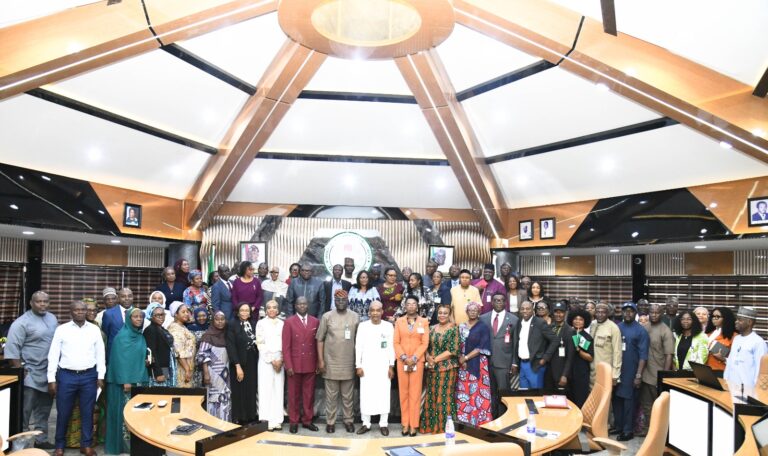
The EVC stated these at the 12th edition of the Africa Youth Internet Governance Forum (AfYIGG) 2023, held Monday in Abuja.
Represented by Ibiso George, Head of Internet Governance Unit at the Commission, Danbatta said: “We are in the era of rapid technological growth which is key to unlocking our continent’s untapped potential and transforming Africa’s Digital Landscape.
“Emerging technologies have emerged as a beacon of hope, offering transformative solutions to these issues. With their disruptive potential, they offer a range of tools and solutions which have the power to propel Africa towards sustainable development and youth empowerment.
“Also of high importance is the concept of multistakeholderism in Africa’s digital and cyberspace. Collaboration between the youth and governments, industries, academia, civil society, is a determinant factor in building a resilient digital ecosystem.”
The NCC boss stressed that the continent’s digital future relied heavily on a collective effort to ensure inclusivity, security, and innovation
“The Nigerian Communications Commission has long recognized the vital role of our youth in shaping the trajectory of our nation’s technological advancement. Through strategic policies and initiatives, we have championed youth empowerment, providing the tools, knowledge, and platform for our young minds to thrive in the digital age.” He added.
Mactar Seck, Chief of technology and innovation, the United Nations Economic Commission for Africa (UNECA), stated that by 2050, 70% of the African population will be under 35 years, which shows how important youth is to the future of the continent.
He said such fora can help to properly understand what kind of skills the youth need and their perspective in the digital economy era.
Seck said there were several challenges facing African youths and limiting their ability to fully utilize the digital space.
He however noted that to address this, there was the need to increase digital literacy, develop capacities of young people and provide opportunities as well as fundings for startups.
“There are some policies the government can take into consideration to facilitate access to move to the digital evolution.
“We have to talk at a continental level about the digital era, and we need this collaboration, but, when we have this collaboration, we need to think about the challenges faced by African countries such as the cyber security issue, which is something we have to look at the youth level because the most people exposed to cyber attacks are the youths.” He added.