Follow Us on Google
By Gabriel Dike
The Universal Basic Education Commission (UBEC) in collaboration with the United Nations Children Fund (UNICEF) trained key stakeholders responsible for the implementation of three major basic education revised documents.
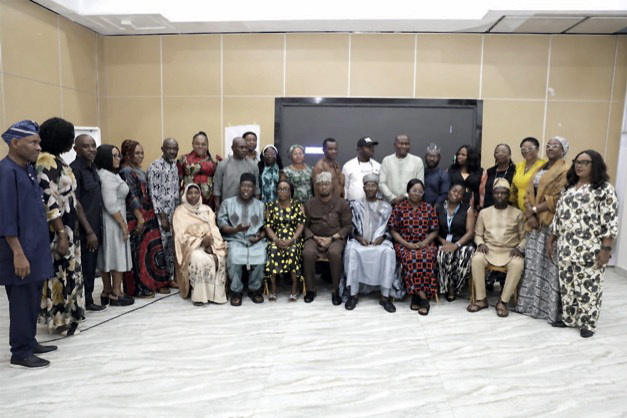
The three-day training of state and non-state actors on the revised School Board Management Committee (SBMC) documents held in Lagos was attended by South West, South East and South South state officials of the Universal Basic Education Board (SUBEB), state SBMC members and Civil Society Organizations (CSO).
The three basic education revised documents are SBMC Operational Manual, SBMC Mentoring and Monitoring Guidelines and, SBMC-SIP Implementation Manual.
Speaking about the training, the UBEC Executive Secretary, Hajiya Aisha Garba, who was represented by the Deputy ES (Technical), Mr. Rasaq Akinyemi, recalled the conclusion of the Northern phase, which covered the 19 Northern states and the FCT and that the gathering in Lagos is to complete the national rollout.
Garba said the presence of participants, drawn from the 17 Southern states, signifies the shared and unwavering commitment to the transformation of basic education governance across the country.
She acknowledged that SBMC is the brain child of the Federal Government, which was approved in 2006 and that UBEC, in collaboration with UNICEF and other development partners, has worked to ensure these committees are functional, providing training manuals, mentoring packs, and guidebooks.
“By design, SBMCs serve as the vital bridge between schools and their communities. They foster accountability, transparency, and inclusivity in school governance. They decentralize decision-making, giving schools the autonomy to address their unique challenges by leveraging indigenous resources and specific community strengths.
“These revisions were meticulously crafted to align with emerging educational priorities, address current grassroots challenges, and reflect global best practices. Over the next three days, our objective is to ensure that you, as the critical intermediaries between the commission and the schools, have an in-depth of these updated frameworks,” she said.
The ES commended UNICEF for their unwavering financial and technical support, which she said has been instrumental in making the joint initiative a reality, noting, “your partnership continues to be a cornerstone of our efforts to leave no child behind.”
Garba informed the participants that they are expected to return to their respective states, Local Government Education Authorities (LGEAs), and schools as catalysts for change.
She stated: “You must cascade this knowledge effectively to ensure that the revised SBMC guidelines are not just understood, but actively implemented at the school level. The future of education in Nigeria hinges on our ability to ensure that all stakeholders are actively involved in the decision-making processes that affect our schools.
In her remarks, UNICEF Education Specialist, Nneka Ogbansiegbe, said the agency is committed to supporting the Federal Government to deliver quality education and that it will ensure schools are safe, children have access to education, provide technical support and funding.
“We expect commitment from SBMC in ensuring children have access to quality education. We expect SBMC will ensure schools are safe for our children and proper funding,” she stated.
Other News
Ogbansiegbe challenged the SBMCs nationwide to ensure full implementation of the revised documents to boost basic education.
The Director of Social Mobilization, who was represented by the Head of Unit Community Empowerment and Social Mobilization, Madam Patricia Oche, said the revised documents aligns with the emerging changes in the education system.
Oche said the workshop would help define the roles and responsibilities of the SBMC in managing schools on behalf of the communities.
The Dean of Director of Social Mobilizations, Madam Joy Otoworo, said the revised documents would serve as a guide to directors of social mobilization. She appreciated the executive secretary for approving five percent funds for social mobilization and commended UNICEF for collaborating with UBEC to boost basic education.
The Civil Society Action Coalition on Education for All (CSACEFA) in their goodwill message by the Programme Manager, Mr. Damian-Mary Adeleke, acknowledged the review of the documents and commended UBEC and UNICEF for the effort invested in improving the SBMC-SIP programme.
His words:” We believe that this review provides an opportunity to address the gaps, lessons and challenges experienced during the first phase of implementation, while positioning school communities to better contribute to planning, accountability, safety and improved learning outcomes.
“As the National Education Coalition in Nigeria, CSACEFA remains committed to providing independent civil society support through monitoring, advocacy, partnership and programme accountability. For us, the focus is clear: every Nigerian child, whether in primary school or lower secondary school, deserves safe, inclusive and quality education.”
According to him, the coalition is opened to platforms that promote collaboration, strengthen education systems, deepen social accountability and ensure that public investments in education reach the children they are meant to serve.
Adeleke called on the Federal Government and relevant security agencies, to do everything within their power to secure the immediate and safe release of all abducted children and teachers. “We do not encourage criminality, banditry, abduction or insurgency in any form. However, we believe that no effort is too much when the lives of our children and the future of our nation are at stake.
“The safety of learners and teachers must remain a national priority. A school cannot deliver quality education if children are afraid to attend, if teachers are afraid to teach, or if communities no longer see schools as safe spaces,” he noted.
The National Chairman of SBMC, Alhaji Umar Abdullahi, considered the workshop as vital to boosting quality basic education in schools.
Abdullahi, who is the Wazirin Gwandu, acknowledged that lack of education is part of what has triggered banditry and kidnapping and assured that every child will receive quality education in every state.
He disclosed that SBMC was created in 2006 to take over, run schools and supervisors how funds allocated to schools are spent.