Follow Us on Google
From Isaac Job, Uyo
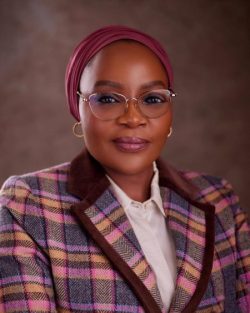
The Executive Secretary of the Universal Basic Education Commission (UBEC), Dr Aisha Garba, has reaffirmed the Commission’s commitment to working closely with state governments and other stakeholders to address Nigeria’s out-of-school children crisis.
Garba made this known during a four-day engagement and sensitisation meeting with education commissioners and the chairmen of State Universal Basic Education Boards (SUBEBs) from the South South and South East geopolitical zones. The meeting was held in Uyo, the capital of Akwa Ibom State and focused on the effective implementation of the HOPE Governance Programme and delivery of Hope Education (HOPE-EDU).
According to her, collaboration between the federal and state governments remains the most viable pathway to rescuing more than 10 million out-of-school children and returning them to the classroom.
The UBEC boss explained that the HOPE-EDU programme is a Federal Government initiative designed to improve the quality of basic education across the country. She noted that the programme aligns with broader efforts to strengthen foundational learning and expand access to education, particularly for vulnerable children.
Represented by the Deputy Executive Secretary (Technical), Mr Rasaq Akinyemi, Garba highlighted the numerous challenges confronting Nigeria’s basic education sector, including overcrowded classrooms, a rapidly growing school-age population, and disparities in resource allocation.
“We must be candid about the road ahead. Nigeria’s basic education sector faces stark realities: over 10 million out-of-school children and overcrowded classrooms,” she said.
Despite these challenges, he expressed optimism that the HOPE-EDU programme would significantly improve learning outcomes for more than 29 million children nationwide. She added that the initiative is structured to reduce the number of out-of-school children and ease classroom congestion.
He called on education stakeholders to embrace multi-sectoral partnerships to ensure the programme’s success. “I urge you to foster multi-stakeholder partnerships, engage local governments, civil society organisations, parents and private sector allies,” she said.
He also emphasised the importance of accountability and transparency, noting that a digital monitoring dashboard would be deployed to track funding and milestones. “We will track every Naira and every milestone to ensure measurable progress,” she added.
He further explained that the programme adopts a performance-based funding model, tying financial support to concrete achievements and measurable results. The focus, she said, is on improving foundational learning, enhancing literacy and numeracy skills, especially in rural communities, and strengthening education systems nationwide.
Describing HOPE-EDU as more than just a funding mechanism, Garba said the initiative is closely aligned with the Renewed Hope Agenda of President Bola Tinubu.
“HOPE-EDU is more than a funding mechanism; it is a promise fulfilled. It aligns seamlessly with President Bola Tinubu’s Renewed Hope Agenda and targets the heart of our challenges in basic education,” she stated.