Follow Us on Google
From Fred Ezeh, Abuja
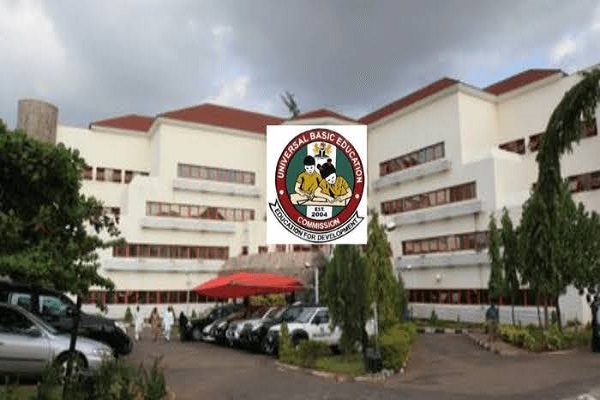
The Universal Basic Education Commission (UBEC) has signed pact with the Japan International Cooperation Agency (JICA) to upgrade some basic schools in Nasarawa, Benue and the Federal Capital Territory (FCT), Abuja.
In the pact, UBEC said some model schools would be upgraded with new science labs, ICT rooms, vocational workshops and gender-sensitive sanitation facilities, in addition to equipment that would support hands-on learning in areas like Home Economics, Computing, and Technical Skill in line with updated national curriculum.
Executive Secretary of UBEC, Dr. Aisha Garba, told journalists at the signing ceremony in Abuja yesterday that the new projects were designed to strengthen the foundation of basic education in Nigeria, particularly in the benefitting states.
She said the project, which focuses on improving the learning environment in selected model schools across Nasarawa, Benue and the FCT, was much more than infrastructure and equipment.
“It’s about creating spaces where young minds can thrive in science, technology, mathematics and pre-vocational education. It’s about ensuring that girls have continued access to education. Ultimately, it’s about giving every child the chance to learn, grow and succeed.
“Because these model schools cater for both primary and junior secondary levels, the investment will have a broad impact ensuring that learners experience a smooth transition as they progress through the education system, with continuous exposure to STEM and vocational learning from an early age.
“Our relationship with JICA is not new. We have a long history of working together to expand access to education and improve quality teaching. Between 2004 and 2016, JICA supported the construction of over 1,000 classrooms, nearly 1,000 wash facilities and water facilities across five states. These were not just buildings. They were lifelines for communities and opportunities for thousands of learners.
“JICA have also played a key role in strengthening teacher capacity through the Strengthening Mathematics And Science Education (SMASE) project. With the ASEI-PDSI approach, our teachers embraced more practical, learner-centred teaching methods. Even after the technical partnership concluded, UBEC continued SMASE nationwide using the Teacher Professional Development Fund.
Other News
“Over 200,000 teachers have benefited and independent assessments confirm that it is making a measurable difference in classrooms,” she said.
Mr. Ishigame Keiji, Chief Representative of JICA, said the new grant aid project is titled, “the Project for Educational Environment Improvement at Model Schools for Basic Mathematics, Science and Pre-Vocational Education.”
He said the primary objective of the project is to enhance the educational environment by improving school facilities and equipment necessary for STEM and pre-vocational education.
“It also aims to strengthen support systems for girls’ continuous learning in selected model schools, envisioned to serve as regional hubs across the target states. Through these efforts, we hope to contribute to the development of industrial human resources vital for Nigeria’s future.”
He stated that in the education sector, JICA remains committed to tackling the global challenges of the “learning crisis and “learning poverty” by supporting efforts to improve learning outcomes.
“Our past initiatives, such as the SMASE Project, focused on strengthening mathematics and science education by training core instructors, expanding regional teacher training to all 36 states plus FCT and enhancing practical science teaching methods.
“Additionally, through Japan’s Grant Aid, JICA has supported the construction of over 1,000 classrooms in over 130 schools across Kano, Kaduna, Niger, Oyo and Plateau states, thus contributing to the improvement of learning environments across Nigeria.”
He said that JICA Nigeria remains committed to promoting basic education in Nigeria through a combination of grant aid, technical cooperation, human resource development in Japan and public-private partnerships.