Follow Us on Google
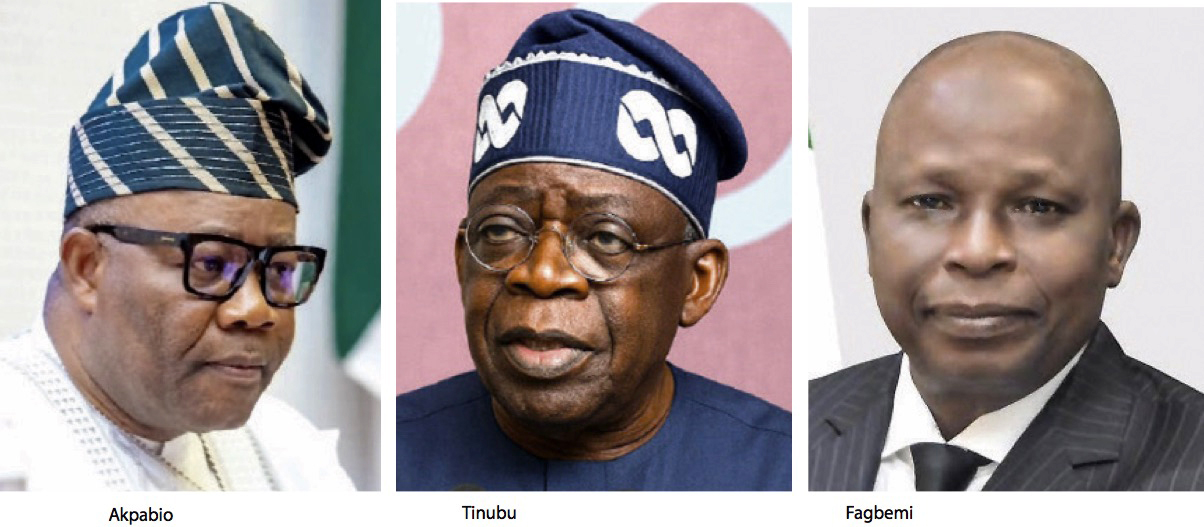
•SGF, Attorney-General keep mum on level of implementation
By Fred Itua, Abuja
The argument has, by now, become almost a national refrain. Nigeria’s 774 local government areas, where most Nigerians actually live and work, cannot deliver basic governance without control over their own resources. Yet, the one reform most directly capable of equipping that tier of government, full financial autonomy for local councils, remains, almost two years after it was granted by the Supreme Court of Nigeria, a judgment honoured chiefly in its breach.

It is worth recalling how this began. In 2024, the Attorney-General of the Federation and Minister of Justice, Lateef Fagbemi, filed a suit against the Attorneys-General of 36 states, aimed at securing the financial autonomy of Nigeria’s 774 local government areas. The case arose after the Federal Government dragged the state governors to the apex court over what it characterised as misconduct in the handling of local government affairs, including the practice of seizing federal allocations and releasing them to councils only piecemeal, often barely enough to keep the lights on.
The Attorney-General also sought an order prohibiting governors from the unilateral, arbitrary dissolution of democratically elected local government leaderships. On July 11, 2024, the Supreme Court delivered what many constitutional lawyers have since described as one of its most consequential rulings in decades. In the unanimous judgment of a seven member panel, the court upheld the federal government’s suit to strengthen the independence of local governments.
Justice Emmanuel Agim, delivering the lead judgment, held that local governments should henceforth receive their allocations directly from the Accountant-General of the Federation, and ruled that it is illegal and unconstitutional for governors to receive and withhold funds allocated to local government areas in their states.
In the court’s own words, delivered that Thursday: “It is the position of this court that the federation can pay local governments allocations directly to the local governments or through the states. In this case, since paying them through the states has not worked, justice demands that local governments allocations from the federation account should henceforth be paid directly to the local governments.”
The ruling did not stop at the question of money. It also prohibited governors from controlling funds meant for local governments and ordered the direct payment of allocations into local government accounts, while separately barring governors from dissolving democratically elected local government councils and replacing them with caretaker committees, a long standing tactic used to install loyalists at the grassroots without the inconvenience of an election.
Reaction at the time, predictably, split along the fault lines that have defined Nigerian federalism for a generation; those who see the states as the proper custodians of resources flowing to a tier of government they regard as historically poorly governed, and those who see the states, particularly the governors, as the very obstacle that has hollowed out local government for over two decades.
Legal commentators were similarly effusive. Writing shortly after the verdict, a senior advocate, Fabian Ajogwu, commended the Attorney-General’s bold action in filing the suit and argued that the judgment reinforces the importance of decentralisation and the empowerment of local authorities to manage their affairs independently, a development he said would enhance councils’ capacity to deliver essential services and improve the quality of life for citizens at the grassroots level.
Almost two years on, that optimism has collided with a more familiar Nigerian reality; a Supreme Court judgment that the executors of policy have simply declined to execute. A check a year after the ruling found that state governors had retained control of council allocations totalling N4.5 trillion, defying the judgment that mandated direct funding to local governments, with funds continuing to pass through state governments amid delays and disputes between the Central Bank of Nigeria, the states and local authorities themselves.
The Federal Government had directed the Central Bank of Nigeria to open individual accounts for each of the 774 councils to facilitate direct disbursement, yet a year later, local government allocations were still being routed through the state governments the judgment was designed to bypass.
The defiance has not been only passive.
Some states moved, deliberately, to construct legal architecture that would survive the judgment’s spirit while ostensibly complying with its letter. The Anambra State House of Assembly passed the Local Government Administration Bill 2024, which mandates that local government allocations be deposited into a “State Joint Local Government Account”, directly contradicting the Supreme Court’s decision, with Governor Chukwuma Soludo defending the bill as a measure that would ensure consistency and transparency.
That law, as things stand, remains on the books, a state level statute operating in open tension with the country’s highest court. It stands in instructive contrast to states that chose the opposite path; the Nasarawa State House of Assembly, by contrast, amended its local government laws to comply with the ruling by abolishing joint accounts altogether and aligning state legislation with the judgment.
Faced with this patchwork of compliance and resistance, the Attorney-General of the Federation has at times sounded less like a triumphant litigant and more like a man pleading with the very governors his office had taken to court. Fagbemi issued a stern warning to defiant governors during the 2024 annual conference of the National Association of Judiciary Correspondents in Abuja, threatening to pursue contempt of court actions if the defiance continued, and cautioned governors and state Attorneys-General that they could face disciplinary action from the Legal Practitioners’ Disciplinary Committee for professional misconduct.
The threat, two years on, has yet to materialise into any visible sanction against a single governor. A source within the Attorney General’s own office, speaking to Daily Sun, two years after the judgment, offered an explanation that doubled as an admission of institutional limits: “The Attorney-General is not the one in charge of disbursing of funds.”
Where, then, does responsibility for implementation actually sit, and why has it stalled? Part of the answer lies in the curious position the Presidency itself has occupied, caught between a judgment it sought and a Governors’ Forum it cannot easily override. According to one account of the standoff, President Tinubu listened to the concerns of the governors and mandated the Secretary to the Government of the Federation, George Akume, alongside the Attorney-General, to work through what were described as the bottlenecks affecting implementation, with one official insisting that “no one has gone quiet” even as the substantive disbursement mechanism remained unresolved.
Labour unions at the grassroots, who might have been expected to be the chief beneficiaries of a more empowered local tier, have grown openly sceptical. The Gombe State chairman of the Nigeria Labour Congress, Yusuf Bello, confirmed that nothing had changed nationwide a year after the ruling, noting that appointed local government chairmen still lacked control over funds and that autonomy remained, in practice, elusive.
The money, it should be said, has not stopped flowing into the system, it has simply not stopped flowing through the same old channel. FAAC’s own monthly communiqués show local governments were allocated N337.02bn in July 2024 rising through N355.62bn by November, N402.55bn in December, and figures fluctuating between roughly N360bn and N435bn in the months that followed into 2025, with the local government share of total federation revenue holding steady at between 24 and 25 per cent each month.
The percentage flowing to councils, in other words, has not been the problem. The problem, persistently, is the pipe through which it travels, a pipe still substantially under gubernatorial control two years after the apex court ordered otherwise. Why would governors resist a reform that, on its face, simply gives a constitutionally distinct tier of government the money the constitution already allocates to it? The honest answer, rarely stated this plainly in public, involves at least three converging interests.
Other News
The first, and most basic, is patronage. Local government, in the prevailing arrangement in many states, functions as a reservoir from which governors draw to settle the wider political ecosystem that keeps them in power, party loyalists, traditional rulers, religious leaders, and local power brokers who expect, and receive, a share of council resources in exchange for political peace. Full financial autonomy removes that reservoir from gubernatorial reach, and with it, a significant instrument of political management.
The second is structural insulation against political opposition. There is fear among some governors that local government chairmen, once genuinely autonomous and financially independent, could become an alternative centre of political organisation altogether, potentially even a base from which a serious challenge to a sitting governor could be mounted, since chairmen with independent budgets, independent staff and independent political standing are chairmen no longer dependent on the governor’s goodwill for re-election or survival.
A governor who has spent years building a network of compliant, often handpicked local government leadership has every incentive to resist a reform that could, over a single electoral cycle, dissolve that network’s dependency.
The third is the matter of internally generated revenue, a less discussed but equally significant front in the same battle. The constitution and accompanying legislation already provide that a defined percentage of a state’s internally generated revenue should be passed down to local governments. In practice, in numerous states, this provision is observed mostly in the breach; the funds are rarely released in full, and where local laws have been engineered, as in Anambra’s joint account statute, to formalise state control over both streams of revenue, the local share becomes effectively indistinguishable from the state’s own treasury.
The Supreme Court judgment was meant to sever precisely this entanglement. Where states have legislated around it instead of complying with it, the entanglement persists by other means.
Local government chairmen, however, are structurally unable to exercise real control over their resources, not for want of allocation in principle, but for want of actual access to it in practice. Even where funds notionally arrive, the established pattern, as has been widely reported by labour leaders and local officials themselves, is that chairmen sign off on disbursements that have, in effect, already been redirected by the state before the ink dries, a process critics describe as a council “owning” funds on paper that it never actually controls.
The consequence cascades through every basic local function; unpaid local government staff and primary school teachers, pension arrears for retired council workers, the disappearance of feeder road maintenance that once connected farms to markets, and the absence of basic healthcare centre upkeep.
It is also worth noting that the legal architecture meant to entrench local government accountability has its own, separately acknowledged, weaknesses. Legal analysts have pointed out that local government laws still vary considerably from state to state, and that some contain provisions inimical to the growth of local councils, including mechanisms by which governors tinker with a chairperson’s tenure, limit the sums a state commissioner overseeing local government can approve, or facilitate the impeachment of an uncooperative chairman, powers that remain constitutionally vested in the state government regardless of the Supreme Court’s ruling on funding.
One commentary observed plainly that as long as the constitutional provisions empowering states to enact local government administration laws and conduct council elections remain unchanged, financial autonomy alone may not deliver the independence the judgment intended.
There is, too, a more academic but no less consequential dispute about the judgment’s constitutional footing, one that gives governors and their lawyers an opening to resist compliance without appearing to defy the court outright. Without fresh constitutional amendment, the Supreme Court’s consequential order, that allocations be paid directly to local governments, sits uneasily against the express wording of Section 162(6) of the 1999 Constitution, which still requires that allocations be paid into a State Joint Local Government Account.
Whatever the legal merits of that critique, it gives state governments a convenient, lawyer-ready argument for slow walking implementation; that the judgment, however well-intentioned, has effectively asked the executive to act ahead of, or even contrary to, an unamended constitutional text. The National Assembly, for its part, has expressed support for the judgment and signalled intent to collaborate across both chambers to amend the 1999 Constitution to ensure full implementation, but that amendment, more than a year on, has not materialised, leaving the judgment to operate in a kind of constitutional limbo, binding in principle, contested in detail, and largely unenforced in practice.
This is the crux of where the matter now stands. A unanimous seven member panel of the apex court has spoken. The Attorney-General of the Federation has, by his own public admission, exhausted persuasion and moved to threats of contempt proceedings that have not yet been carried out. The Presidency has mediated rather than enforced. The National Assembly has expressed support without legislating. Individual states have either complied, as Nasarawa did, or constructed parallel legal structures, as Anambra did, that allow them to continue operating precisely the arrangement the Supreme Court declared unconstitutional.
A growing number of grassroots advocates and governance analysts say the time for mediation has passed, and that the Federal Government must now act decisively rather than continue to plead with state governors.
What, realistically, can break this impasse? Experts believe that a constitutional amendment remains the cleanest route, and the Senate’s stated willingness to pursue one is welcome, but constitutional amendments in Nigeria require the concurrence of two thirds of state assemblies, the very institutions that, in cases like Anambra’s, have already demonstrated a willingness to legislate around the Supreme Court rather than in compliance with it. Relying on that route alone risks indefinite delay.
Experts also believe that a more immediate, if more contentious, option would be a renewed application to the Supreme Court itself, this time seeking not merely a declaration of rights but a concrete enforcement mechanism, an order compelling the Central Bank of Nigeria, the Accountant-General and the federal disbursement machinery to bypass state government touchpoints entirely, regardless of the administrative inconvenience involved, and regardless of what fresh objections governors might raise.
Whether such an order would require invoking anything resembling a doctrine of necessity is itself a serious constitutional question, and any move in that direction would need to be approached with considerable legal care, given how contested the judgment’s underlying constitutional basis already is. But the alternative, allowing a unanimous apex court ruling to be quietly nullified by state legislative manoeuvring and federal inertia, carries its own, arguably graver, constitutional cost; a precedent in which Supreme Court judgments on federalism are treated as aspirational rather than binding.
The stakes of getting this right extend well beyond constitutional housekeeping. If local government chairmen were to gain genuine, unmediated control over their allocations, the most immediate and tangible change would likely be felt not in any single dramatic policy announcement, but in the restoration of the basic functions that have atrophied across rural Nigeria, salaries paid on time, pensions cleared, feeder roads maintained, and primary healthcare centres stocked.
Two years after the Supreme Court spoke with unusual clarity, the gap between that judgment and the lived reality of Nigeria’s 774 local councils remains the gap between a constitution that promises a third tier of government and a political culture that has, for a generation, treated that tier as an extension of the governor’s office. Closing it will require more than another strongly worded statement from the Attorney-General.
It will require either the political will to enforce a court order that has already been given, or the legislative will to amend a constitution that currently allows governors room to resist it.
Until one of those things happens, local government chairmen will continue signing off on allocations they never truly held, and the grassroots will continue to wait for resources that, on paper, are already theirs. As advocates increasingly insist, the next move belongs squarely to the Federal Government.
Media aide to the Attorney-General of the Federation, Mr. Kamarudeen Ogundele, in his brief reaction, said the implementation of the judgment is being handled by the Secretary to Government of the Federation, Akume, who serves as chairman of the committee.
“SGF is the chairman of the implementation committee. You may contact him,” Ogundele responded.
However, when contacted, media aide to Akume on Media, Mr. Yomi Odunuga, acknowledged the message, but declined comments. He did not respond to inquiries made on the level of implementation of the Supreme Court judgment.