Follow Us on Google
By Damiete Braide
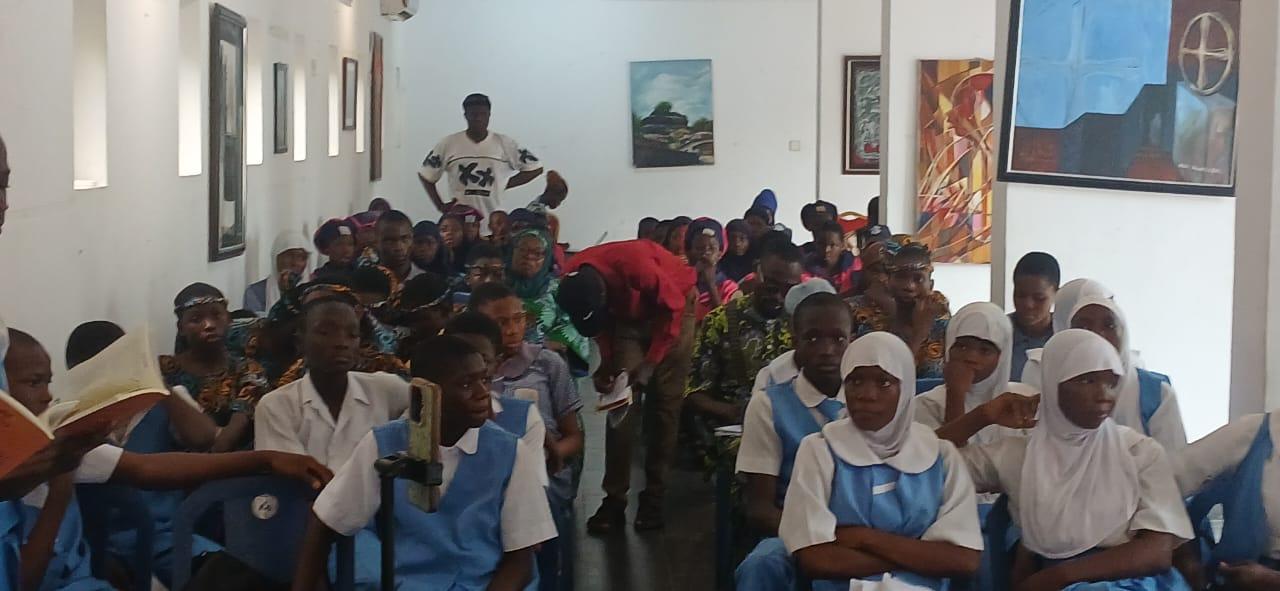
Nigeria joined the rest of the world on April 23, 2026, to celebrate this year’s World Book and Copyright Day with a strong call for young people to embrace reading as a pathway to knowledge, creativity and personal growth. The event, themed “Read for Pleasure,” was organised by the Committee for Relevant Art (CORA), the Nigerian Copyright Commission (NCC), CORA Youth Creative Club (CYCC), alongside other partners, at the CORA Library and Resource Centre, Freedom Park, Lagos Island.
Observed annually by UNESCO, World Book and Copyright Day was inaugurated in 1995 to celebrate authors, encourage reading culture and promote copyright protection. The date, April 23, was chosen to honour literary icons such as William Shakespeare and Miguel de Cervantes, both of whom died on the same date.
The Lagos event brought together about 100 students from different secondary schools across the state in a vibrant atmosphere filled with literary conversations, reading sessions, writing workshops and mentorship interactions designed to deepen the students’ appreciation for books and creative expression.
Anchored by Ms. Lynda Amadi, the programme focused on inspiring young readers to discover themselves through literature while exploring the limitless opportunities that reading and writing provide. Participants engaged in interactive literary activities and had direct access to accomplished authors who shared their personal experiences and creative journeys.
One of the major highlights of the programme was the appearance of award-winning author and literary advocate, Dr. Awele Ilusanmi, popularly known as the “Queen of Books.” Joining the event virtually through live streaming, she delivered a passionate address on the importance of reading and why books remain relevant in shaping lives.
According to her, books are powerful because they help to build what she described as the “mental operating system” of an individual. She explained that every book offers readers the opportunity to learn how people overcome challenges, make decisions and navigate life experiences.
“Books matter because they are the fastest way to enter someone else’s brain,” she said. “When you read an author’s book, you are learning from that person’s life experiences.”
She noted that books provide empathy without risks and expose readers to broader human experiences that can inspire ambition and personal development. In a world filled with distractions, she said reading helps people to develop focus, discipline and critical thinking skills.
Dr. Ilusanmi, who revealed that she began promoting reading culture in 2004 after publishing her first book, encouraged the students to cultivate a lifelong relationship with books. She described reading as a tool that gives young people a competitive edge in life while helping them imagine greater possibilities for their future.
“Reading books gives you hope,” she said. “It helps you believe that you can become whatever you want to become. If you sincerely love reading, books will eventually bring favour and opportunities your way.”
Another guest speaker at the event was young author Victoria Nwankpa, whose recently published novel, The Art of Forgetting You, served as the central reading text for the programme. The novel explores the story of Ezinne Okoro, an artist entangled in love, mystery and hidden truths in Lagos, while touching on themes of identity, emotional resilience and memory.
Victoria read excerpts from the novel alongside students who also participated in live reading sessions, creating an engaging and interactive atmosphere for the audience.
Speaking on literacy and creative writing, Victoria described writing as more than simply putting words on paper. According to her, writing is about communicating stories clearly and meaningfully to readers.
She disclosed that she started writing at the age of 11, beginning with short stories and children’s books before expanding into fantasy and fiction writing. She credited her parents, particularly her father, for nurturing her love for books by ensuring she read regularly as a child.
“My father made sure I read at least two books every month,” she recalled.
The young author encouraged aspiring writers to develop strong reading habits, stressing that no one can become a good writer without first becoming a committed reader. She advised students to expose themselves to different reading materials, including books, newspapers and magazines, to broaden their understanding of the world.
Victoria also spoke extensively on the elements of storytelling, including plot development, character creation and setting. She explained that writers must create stories capable of inspiring readers emotionally while also provoking thought and reflection.
“As a writer, you are not just writing for entertainment,” she said. “You are writing to impact lives and make readers think differently.”
She encouraged the students to practise writing daily and to draw inspiration from experiences around them, reminding them that impactful writers can emerge at any age.
Earlier in his welcome address, the Director-General of the NCC, John Asein, represented by the Lagos Director of the Commission, Ms. Lydia Alphaeus, said the celebration underscored the enduring importance of books as instruments of education, cultural preservation and national development.
He stated that the 2026 theme, “Read Books, Respect Copyright,” highlights the need for Nigerians to embrace reading while also protecting intellectual property rights.
According to him, Nigeria’s literary industry has grown significantly over the years, with Nigerian authors gaining international recognition and publishers embracing digital publishing opportunities. However, he warned that piracy remains a serious threat to the creative economy by depriving authors and publishers of legitimate earnings.
The NCC boss also highlighted the importance of the National Intellectual Property Policy and Strategy in strengthening Nigeria’s copyright protection framework and improving opportunities for authors and publishers to commercialise their creative works.
He further stressed the need to make books accessible to persons living with disabilities through the implementation of the Marrakesh Treaty and provisions contained in the Copyright Act 2022.
As the programme came to a close, participants left with renewed enthusiasm for reading and writing, reaffirming the enduring belief that books remain one of humanity’s most powerful tools for learning, imagination and transformation.