Follow Us on Google

By Aderosoye Fadola
Every election season in Nigeria comes with its share of noise. Promises are made in market squares, posters go up overnight, and slogans compete for attention on radio and social media.
But as the country edges towards the 2027 general elections, a more serious conversation is needed, one built not on slogans but on records. What has this government done? What has changed in the lives of ordinary Nigerians? And is there enough evidence to justify giving President Bola Ahmed Tinubu and Vice President Kashim Shettima another four years to finish what they started?
Dr. Olubunmi Tunji Ojo, the Minister of Interior, often answers such questions with a simple line. Do not judge us by what you hear, he says, judge us by what you see.
It is a bold challenge in a country where citizens have grown weary of grand announcements that never reach the street. Yet when one looks closely at the ministry he has led since August 2023, and at the wider record of the administration he serves, the challenge begins to look less like a slogan and more like an invitation to examine the evidence.
To understand the case for a second term, one has to begin with the economy, because that is where President Tinubu made his boldest and most painful decisions.
On the day he was sworn in, he announced that the petrol subsidy was gone. Soon after, the multiple exchange rate system that had allowed a privileged few to profit from the gap between official and parallel market rates was dismantled.
These were decisions previous governments had avoided for decades because they knew the political cost. The immediate effect was hardship. Prices rose, transport fares climbed and many families had to make painful adjustments. Nobody who lived through 2024 needs to be reminded of how difficult it was.
But reforms of this kind are judged not by their first year but by where they lead. And the numbers today tell a story of an economy that has turned a corner.
The government reports that inflation has more than halved, falling from 34.80 percent in December 2024 to 15.69 percent in April 2026, while external reserves this year reached a thirteen year high of about 50 billion dollars.
Independent analysts are more cautious, noting that the drop in inflation was helped partly by the rebasing of the consumer price index in 2025, but even they agree the economy has moved from shock and volatility into early stabilisation.
In his independence anniversary broadcast this month, the President told Nigerians that the economy had grown by over 4 percent this year, that oil theft had fallen and that reserves had been rebuilt.
The world has noticed too. In August, the ratings agency Moody’s upgraded its outlook on Nigeria from stable to positive, citing the country’s stronger external position.
The current account surplus rose to 12 billion dollars in the first half of 2026, up from 8.6 billion dollars in the same period of 2025. Oil production, which had fallen to embarrassing levels before this administration, climbed to 1.663 million barrels per day by April 2026. For a country that once borrowed money to subsidise petrol consumed partly by smugglers and neighbouring countries, these are not small achievements.
The savings from subsidy removal have also changed the finances of every tier of government. States and local councils now receive significantly larger monthly allocations, giving governors and council chairmen more room to pay salaries, build roads and fund primary healthcare.
Financial autonomy for local governments, long demanded but never delivered, has now been backed by the administration, alongside new regional development commissions designed to bring development closer to each geopolitical zone.
The President has also promised to intensify tax reforms, focusing on harmonising taxes across all tiers of government to reduce multiple taxation on citizens and businesses.
Infrastructure is where these new resources are becoming visible. The Lagos Calabar Coastal Highway, once dismissed by critics as impossible, has become the flagship of the administration’s road programme.
The 750 kilometre highway will connect nine coastal states, namely Lagos, Ogun, Ondo, Delta, Edo, Bayelsa, Rivers, Akwa Ibom and Cross River. The Minister of Works, Dave Umahi, said in August that Lot 1 had been completed, Lot 2 was over 80 percent done, and more than 30 percent of work had been achieved on the Calabar and Akwa Ibom end.
Alongside it are three other legacy projects, the 477 kilometre Trans Saharan Highway, the 422 kilometre Akwanga Jos Bauchi Gombe Expressway, and the 1,068 kilometre Sokoto Badagry Superhighway.
For Ondo State, which lies on the coastal corridor, the significance of this highway for trade, tourism and jobs cannot be overstated.
Social protection has also received serious attention. Under the Renewed Hope Conditional Cash Transfer, the government expanded the number of targeted households from two million to fifteen million.
Beneficiaries are drawn from the National Social Register and verified with their National Identification Numbers, a link that shows how reforms in one ministry support the work of another.
The Nigerian Education Loan Fund has opened the doors of higher education to young people whose parents could not afford fees, and by January 2025 it had disbursed over 116 billion naira to more than 680,000 students in universities, polytechnics and colleges of education.
A new minimum wage has also been signed into law, and while no wage increase alone can defeat inflation, it remains an important signal of a government listening to workers.
All of this matters. But for most Nigerians, the real test of government is not found in reserve figures or credit ratings. It is found at the passport office, at the border post, at the National Identity enrolment centre, at the fire station and in the treatment of the most vulnerable citizens, including those behind prison walls.
This is precisely where the Ministry of Interior under BTO has become the clearest and most practical demonstration of what the Renewed Hope agenda means on the ground.
When Tunji Ojo assumed office in August 2023, the Ministry of Interior was known to most Nigerians for two things, the announcement of public holidays and the frustrations of the passport office.
Applicants waited months for booklets that never seemed to arrive. Touts thrived at every office. Visa applications required physical visits and long delays. Government data sat with third party companies.
The country was missing from the global directory that verifies the authenticity of electronic passports. In short, a ministry that should serve as the front door of the nation had become a symbol of everything citizens dislike about government.
The turnaround began quickly. Within weeks, the ministry cleared a backlog of more than 200,000 passport applications, a problem that had come to be accepted as normal. It then moved from a paper registration model to a fully automated application process, introduced contactless biometrics that allow Nigerians at home and abroad to capture their details without physical contact, and launched passport home delivery so that citizens no longer had to queue to collect their documents.
Through the implementation of Public Key Infrastructure and Public Key Directory, Nigeria secured inclusion in the ICAO Global Directory, restoring international confidence in Nigerian passports. Electronic passport facilities were established at Nigerian embassies in Italy, Spain, Greece, Austria and Switzerland, bringing the service closer to citizens in the diaspora.
The visa system was rebuilt along the same lines. Multiple and confusing visa regimes have given way to a streamlined electronic visa process, with approvals now delivered within 48 hours.
Landing and exit cards have been introduced to improve migration administration, an ECOWAS travel certificate has been launched to ease movement within the region, and the expatriate quota system and the CERPAC residence permit have been reformed and digitised. Electronic gates have been installed at all five international airports in the country, making arrival and departure faster and more secure.
Security at the borders has received equal attention. Technological surveillance now covers about 60 percent of Nigeria’s land borders, supported by more than 30 new patrol vehicles.
The government no longer stores its sensitive data with third party firms. Instead, the ministry built a Tier 4 data centre, and earlier this month the minister disclosed that its capacity now exceeds eight petabytes, making it one of the largest in Africa, with the command and control centre running entirely on solar power from a 0.5 megawatt solar installation.
Only last Friday, he unveiled a ten year technology roadmap to modernise immigration management, strengthen border security and improve intelligence sharing.
The minister has also revealed that the integration of immigration and identity databases helped in identifying suspected terrorists returning to Nigeria, a powerful example of how administrative reform can directly strengthen national security.
The National Identity Management Commission tells a similar story of renewal. Before this administration, enrolment was slow, fraud was common, fake websites claimed access to the national database, and Front End Enrolment Partners were owed two years of payments.
Public confidence was low. Today, more than 800 mobile enrolment devices have taken registration closer to the people, pushing the number of registered Nigerians from 100 million to over 113 million by November 2024.
All Front End Enrolment Partner licences were revalidated to remove fraudulent operators, territorial offices were created to improve oversight, and self service mobile and web applications now allow citizens to update their records without visiting a centre.
The NIN has been integrated with immigration records for passport verification and with the Federal Inland Revenue Service for tax records. The General Multipurpose Card has been relaunched with payment applets that will allow citizens to perform financial transactions directly with the card, and more than 200 diaspora enrolment centres have been opened worldwide. This year, the NIMC Act 2026 placed the entire system on the principle of one person, one identity, one number.
Perhaps no part of the ministry needed reform more urgently than the Nigerian Correctional Service. For years, custodial centres were overcrowded, poorly fed, badly maintained and short of medical care. Many inmates remained behind bars simply because they could not pay small fines.
The administration raised over 600 million naira to clear petty fines for more than 4,000 inmates, reducing congestion by about 5 percent. More than ten custodial centres have been renovated, the feeding allocation has been increased by 100 percent, and presidential approval was secured for the recruitment of 100 nurses and 50 doctors, alongside the posting of NYSC medical corps members to custodial centres.
A biometric database now improves inmate management, surveillance technology monitors facilities, plans have begun to relocate centres swallowed by urban growth, and zonal commands have been expanded from 8 to 18.
Perhaps most inspiring of all, inmates at Kuje Correctional Centre are now earning postgraduate degrees, while newly completed vocational factories are preparing others for productive lives after release.
A society is often judged by how it treats those it has locked away, and on this measure Nigeria is doing better than it was three years ago.
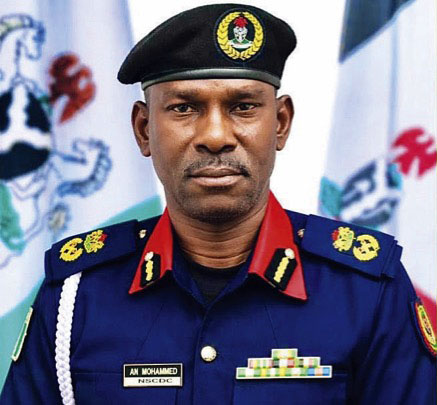
The Nigeria Security and Civil Defence Corps has equally been transformed. Once seen as an agency living in the shadow of the police, it is now a frontline force with clearly defined responsibilities. Its 2,200 Mines Marshals were deployed to protect 1,175 mining sites, a direct response to illegal mining that had drained the economy and exposed foreign workers to abduction.
Since March 2024, the corps has arrested 327 people for illegal mining and prosecuted 143. Railway commands have been established to protect rail infrastructure across the country, telecommunications installations are now secured nationwide, the Safe Schools Initiative has been accelerated, and a Special Female Squad has been created to protect school environments. Private guard companies have been sanitised, and cooperation with the military, police and DSS has been strengthened.
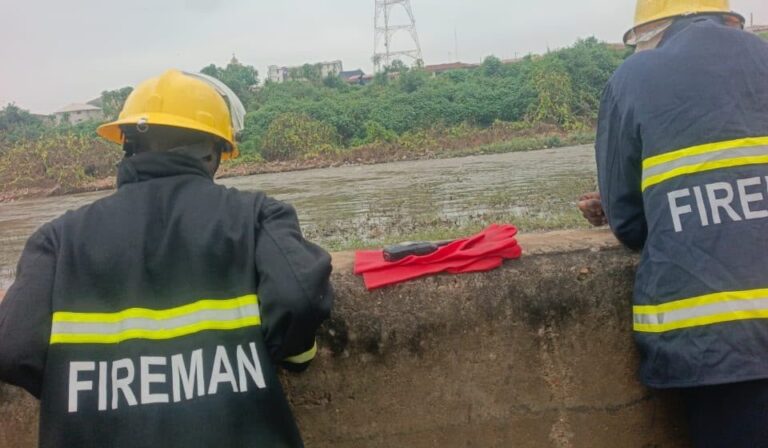
The Federal Fire Service, too, is no longer the slow and poorly equipped agency many Nigerians remember. Response times have improved. Six state of the art firefighting trucks and 15 Ford rapid response vehicles have been commissioned, more operational vehicles have been acquired, and strategic fire posts have been created in zones of high economic importance.
New zonal and state commands have been opened, the fire academy is being remodelled, and the ministry is pushing for an amendment of the Fire Service Act so the service can act as operator, regulator and enumerator. The result is measurable. The value of property saved from fire rose from 1.2 trillion naira in 2023 to 1.9 trillion naira in 2024.
Behind every reform are the men and women who make it work, and here lies one of BTO’s most heartfelt achievements. For years, officers of the four services under the ministry complained of demoralisation, stalled careers and promotion exercises that spilled over from one year to the next.
Through the Civil Defence, Correctional, Fire and Immigration Services Board, promotion exercises are now started and concluded within the same year.
The ministry has completed promotions for over 75,000 paramilitary officers across various ranks, ending years of stagnation, while a recruitment exercise for 60,000 young Nigerians into the four services is ongoing.
At least 35 percent of every recruitment intake is now reserved for women. A peculiar allowance has been approved, a paramilitary academy has been approved, an independent group life assurance scheme has been secured for officers and men of the four services, and a pension reform structure now covers all agencies under the ministry. For thousands of families, these are the changes that matter most.
What ties all these reforms together is a culture of accountability. In March, the minister used the 2026 management retreat to remind heads of agencies that past achievements should serve as motivation rather than a final destination.
He has also signed performance bonds with the heads of all agencies, committing them to measurable results. It is perhaps no surprise, then, that the ministry was commended by the National Assembly after surpassing its revenue target for the 2024/2025 fiscal year.
The recognition has followed. President Tinubu himself praised the minister in May for his urgency, his work on inter agency coordination and his commitment to efficient and accountable service.
Earlier this month, Tunji Ojo was honoured at the 2026 African Cultural Festival in Harrisburg, Pennsylvania, for improving Nigeria’s international image through reforms and innovation. At home, he has received the Vanguard Personality of the Year award among other honours.
For the people of Ondo State and for young Nigerians across the country, BTO’s story carries a meaning that goes beyond any single ministry. He became the chief executive of an indigenous consulting firm at 24, served as a member of the House of Representatives, and has now shown that a young leader, given responsibility and trust, can deliver beyond expectations. In a country where young people are often told to wait their turn, his record is evidence that capacity, not age, should be the true test of leadership.
None of this means that every problem has been solved. Insecurity remains a painful reality in many communities, from banditry in the North West to kidnapping on highways in the South. The cost of living is still a daily struggle for millions of households, and many Nigerians are yet to feel the improvement that the economic figures describe.
Honest supporters of the administration do not deny any of this. The President has pledged that security agencies will deepen cooperation with regional and global partners, while the government explores decentralised policing and regulated forest guards to confront banditry and terrorism.
The argument for continuity is not that the work is finished. It is that the hardest part of the journey has been travelled, and that turning back now would waste the sacrifices Nigerians have already made. Reforms of this scale take time to mature.A coastal highway is not completed in one term. A digital immigration system is not fully embedded in three years. An economy recovering from decades of distortion needs steady hands, not sudden reversals.
That is the real choice before Nigerians in 2027. It is not about whether the road has been smooth, because it has not. It is about whether the country should change drivers just as the road begins to straighten. The Tinubu and Shettima ticket is asking for the chance to consolidate the gains, correct what still needs correcting and carry the benefits of reform into every household.
At the grassroots, that message must be carried with honesty and respect. Supporters should engage voters with facts, listen to their concerns, encourage young people to register and vote, and promote constructive political participation free from violence and hate. Elections are won not only by mobilisation but by persuasion, and the strongest persuasion is evidence.
Judge us by what you see, BTO says. From the passport office to the border post, from the correctional centre to the fire station, from the coastal highway to the student loan portal, there is now a great deal to see. In 2027, Nigerians will decide whether what they see is worth protecting.