Follow Us on Google
“The best way to predict the future is to create it.”
—Peter Drucker
By Omoniyi Salaudeen
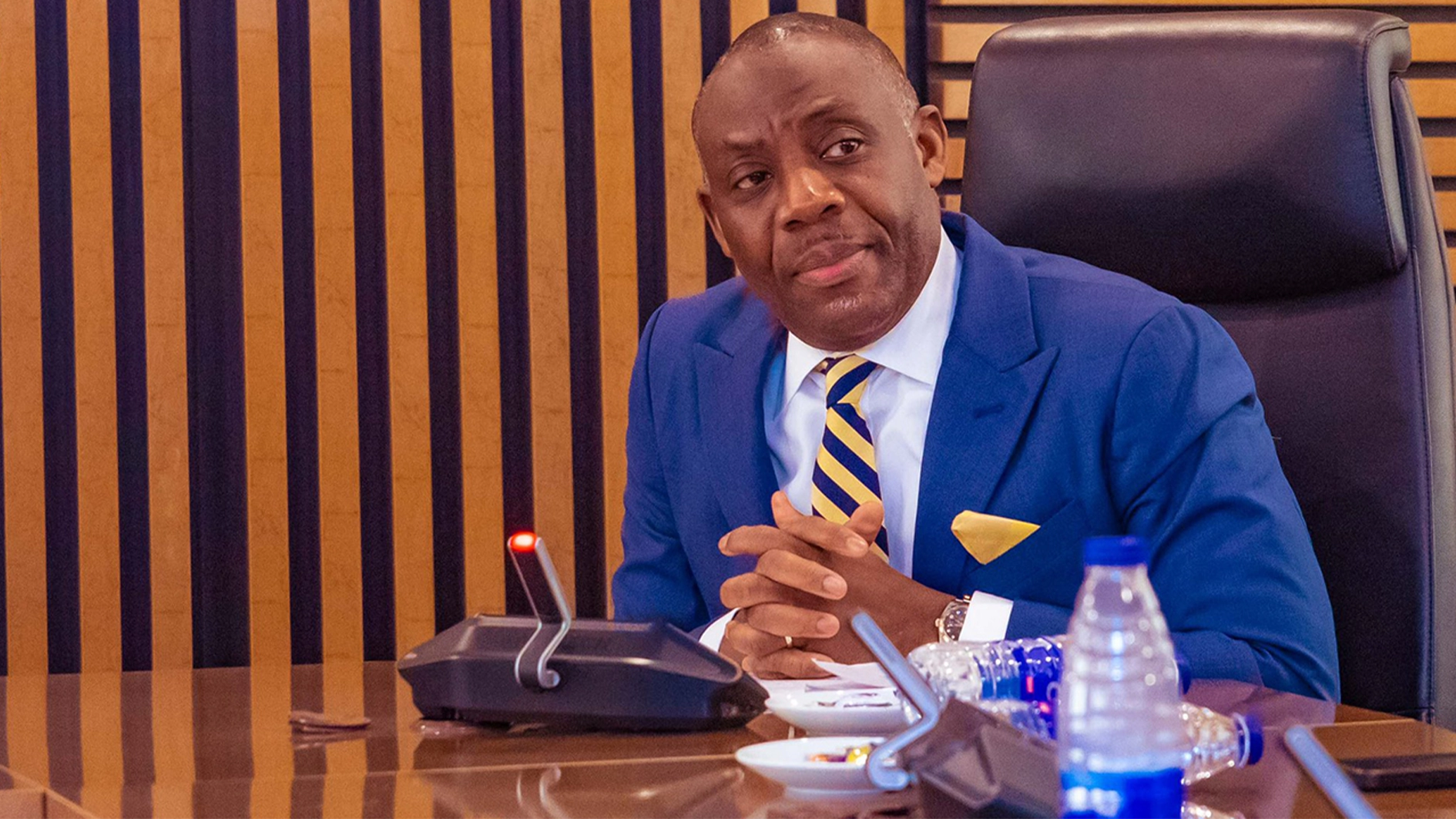
Though public opinion remains divided, Education Minister Tunji Alausa has emerged as a dynamic reformer, steering the sector from stagnation toward structured progress. At the heart of his latest reform is a deliberate attempt to separate the wheat from the chaff in Nigeria’s academic honours system. The new rules impose strict limits on the indiscriminate conferment of honorary doctorates, signalling an end to the era of cash-and-carry titles and forcing universities to treat the “Doctor” designation as something earned, not purchased.
Under the new policy, only universities with established, active PhD-awarding programmes may confer honorary degrees. Even then, they are restricted to four categories: Doctor of Laws (LL.D), Doctor of Letters (D.Lit), Doctor of Science (D.Sc), and Doctor of Humanities (D.Arts/D.Hum). The intention is to reserve the title “Doctor” for those who have completed rigorous academic research and earned the degree through examination. Any misrepresentation of an honorary degree as an earned academic credential will now be treated as academic fraud, with legal and reputational consequences.
For transparency, the National Universities Commission (NUC) has been designated as the clearing house. While some public affairs commentators view the timing with suspicion, the policy also discourages conferring awards on serving public officials—a practice long used for political patronage. This intervention corrects a market that had become overheated with vanity. By restricting the use of the “Dr” prefix and narrowing the scope of these awards, the policy targets the demand side of the equation: if a politician can’t put the title on a campaign poster, they are far less likely to invest millions in a university to get it.
This shift moves the university-funding conversation into a more mature, albeit more difficult, phase—a transition from retail honours to institutional partnerships. For years, many Nigerian universities relied on honorary degree ceremonies as a revenue stream, often with little regard for academic standards. The ceremonies became predictable: a convocation lecture, a citation read in Latin, and a handshake for a donor who had written a cheque large enough to justify the pageantry. The result was a devaluation of the doctorate and a perception problem that hurt both institutions and genuine scholars.
When universities stop monetising degrees, the financial gap will likely be filled through legitimate means such as industry-research synergies, endowments, and partnerships. For example, an engineering department collaborating with a manufacturing firm to solve a production bottleneck can create a sustainable revenue stream through grants and service fees, rather than relying on one-time, title-linked donations. This model aligns university research with real economic problems and builds long-term relationships that benefit students through internships, equipment donations, and job placement. It also gives firms access to R&D they could not afford to run in-house.
Already, Nigerian universities are diversifying into commercial agriculture, hospitality, and consultancy services. The University of Ibadan’s agricultural ventures, Covenant University’s hospitality training centre, and several federal universities’ consultancy arms show that institutions can generate income without compromising academic integrity. Obafemi Awolowo University’s Ile-Ife Business School and Ahmadu Bello University’s consultancies for public sector projects point to the same trend. This allows them to maintain financial autonomy while keeping their core mission intact. If a degree is seen as undignified because it’s sold to the highest bidder, successful alumni often distance themselves. Restoring dignity makes the alumni brand more valuable, which can lead to larger, merit-based endowments and stronger giving campaigns. In the U.S. and U.K., alumni giving often hinges on pride in the degree. Nigeria can replicate that once the market signal changes.
In the long run, an institution’s character becomes its most valuable asset. A university that refuses to dish out degrees to the deep-pocketed sends a clear message to the corporate world: “Our graduates and our endorsements cannot be bought.” That signal matters in a competitive job market where employers are increasingly sceptical of credentials from institutions known for commercialised honorary awards. HR managers in Lagos, Abuja, and Port Harcourt already quietly filter CVs based on the reputation of the awarding institution.
Other News
This creates a premium on everything the university touches—from its research papers to its graduates’ employability. International partners and funding bodies also take note. A university with a reputation for academic rigour is far more likely to win competitive grants from the African Development Bank, the World Bank, and foreign research councils than one associated with title-for-cash scandals. The policy therefore has an external credibility function as much as a domestic one. For a country pushing to improve its global university rankings and attract foreign students, that credibility is not optional.
The immediate future will test institutional resilience. While the funding crunch may tempt some universities to raise tuition fees, the smarter play is to lean into the Law, Letters, Science, and Humanities strengths mandated by the Federal Government. By becoming centres of genuine excellence in these four categories, universities can attract international research grants that far outweigh the donations they once received from local political aspirants. Partnerships with institutions in South Africa, Kenya, and Ghana already show that regional research networks can replace domestic patronage as a funding source.
However, successful implementation depends on enforcement and cultural change. The NUC will need consistent monitoring, public reporting, and swift sanctions for violations. Publishing an annual register of legitimate honorary degree recipients is a good start, but universities must also internalise the new norms through senate resolutions and convocation guidelines. Without consequences, the policy risks becoming another circular filed and forgotten.
There is also a need to educate the public. Many Nigerians still equate the title “Dr” with status, regardless of how it was earned. The practice of printing “Dr” on business cards, banners, and political posters has normalised the confusion. Media and civil society can play a role in distinguishing earned doctorates from honorary ones, reducing the incentive for misrepresentation. Journalists and fact-checkers have a part to play in calling out the misuse during election cycles.
For universities without PhD programmes, the policy is a push to either develop research capacity or focus on undergraduate and professional training where they can excel. It discourages the practice of new private universities conferring honorary degrees to build legitimacy overnight. Instead, they should build partnerships with established research universities for joint supervision, shared labs, and staff development.
Beyond honorary degrees, the policy fits into Alausa’s wider agenda: aligning education with employability, expanding TVET, and building data systems for accountability. The ministry has pushed for 80 per cent practical content in technical colleges, launched the Nigeria Education Sector Renewal Initiative (NESRI), and moved to digitise student data to curb ghost students and certificate fraud. By tackling the credibility crisis at the top of the academic ladder, the government signals that no part of the system is exempt from reform.
Tunji Alausa took office in late 2024. Since then, education stakeholders have largely framed him as data-driven and implementation-focused, with mixed reactions on specific policies. Recently, he won Most Innovative Cabinet Minister of the Year 2025 at the Independent Newspapers Silver Jubilee Awards. The award cited public voting, jury assessment, and measurable innovation under NESRI. Policy experts say his reforms reflect a broader strategic vision rather than isolated decisions, noting quiet but deliberate implementation compared to past pronouncements without delivery. The emphasis on data, timelines, and measurable outputs marks a departure from the cycle of policy launches that fizzle out.
On the flip side, Alausa has faced backlash after stating at the University of Abuja that social science and arts courses may be cut because they don’t lead to employment. Critics called it philistine and warned against devaluing non-STEM fields. The concern is valid: history, philosophy, and literature train critical thinking, communication, and civic literacy. The real challenge is to reform those programmes so graduates are employable, not to eliminate them. Yet STEM is getting special attention because it’s seen as the engine for jobs, innovation, and economic growth. With the policy shift toward STEM and TVET, Alausa has repeatedly said the government is aligning education with labour market demands. The plan includes upgrading labs, expanding engineering quotas, and linking polytechnics directly to industry through apprenticeship schemes.
If sustained, the reform could restore trust in Nigerian degrees both locally and abroad. That trust is essential for student mobility, academic collaboration, and the country’s ambition to become a knowledge economy. Nigerian graduates face visa and credential scrutiny abroad partly because of past scandals around degree mills and honorary title abuse. A cleaner system helps reverse that.
The era of buying prestige is ending. The era of earning it is beginning. The real test now is sustainability—whether these reforms survive election cycles and funding gaps. Policy continuity in Nigeria has historically been weak. What makes this moment different is the combination of political will, data systems, and pressure from employers and international partners who want verifiable credentials.
Ultimately, the cleanup of honorary degrees is not about policing titles. It is about rebuilding the social contract between universities and society. When a degree means what it says, students work harder, employers hire with confidence, and research addresses real problems. That is how you create the future Drucker was talking about.