Follow Us on Google
…As unmetered customers decry outrageous bills, demand mass disconnection, suspension of service
ν Say bills affecting households, killing businesses
ν Hope renewed for S/East customers as prepaid meter firm takes off
ν Delta customers paying for darkness
ν Niger, power state without electricity
By Olakunle Olafioye (Lagos), Jude Chinedu (Enugu), Scholastica Hir (Makurdi), Noah Ebije (Kaduna), Paul Osuyi (Asaba), Okey Sampson (Umuahia), Tony John (Port Harcourt), Ighomuaye Lucky (Benin), John Adams (Minna)
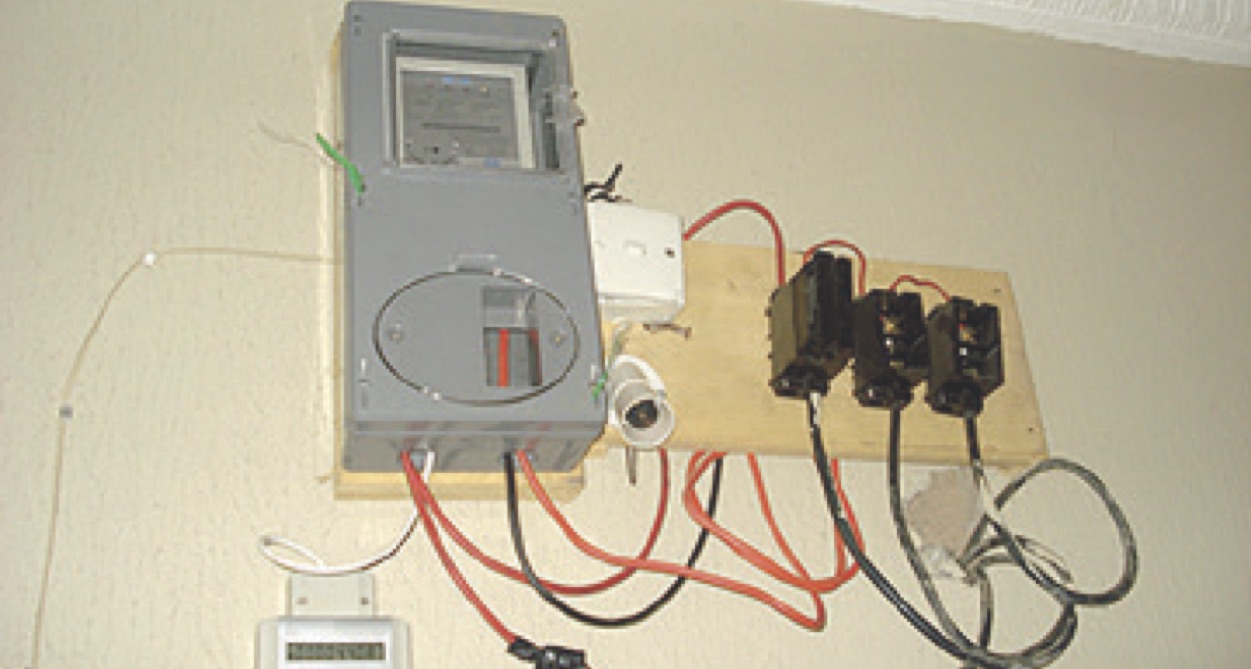
A storm is gradually building up among the millions of electricity consumers across the country who are not metered. These have essentially been victims of pen robbery by the electricity distribution companies, who have forcefully take the hard-earned income of the people through outrageous bills which are generated on estimated consumption.
Such estimated consumption assigned to unmetered customers have consistently gone far above the reality of actual consumption of energy. The unmetered customers have discovered to their pain that their fortunate metered neighbours spend far less on electricity bills per month than them.
The unmetered customers are now up in arms and mobilising to give the DisCos the mother of all fights for prepaid meters.
Meanwhile, the customers served by the Enugu Electricity Distribution Company, EEDC, which serves the five Southeast states of Imo, Abia, Anambra, Enugu and Ebonyi, will soon experience a great relief as Sir Emeka Offor, the promoter of the company, has set up a prepaid meter production plant in Oraifite, Anambra State.
In this report, Sunday Sun paints the true picture of the current situation of service by the DisCos to the customers under their jurisdictions.
LAGOS (IKEJA)
Electricity consumers on the platform of Ikeja Electric Plc have expressed optimism of enjoying much improved performance from the distribution company if it sustains the relative improvements being noticed in its services in most parts of its area of coverage.
Sampled opinions of consumers in communities such as Ogba, Ikeja, Agege, Abule Egba, Oko-Oba, Alakuko, Iyana Ipaja, Alagbado among others, showed that electricity consumers in these places have experienced much improved electricity supply from the distribution company in recent months.
An electricity consumer at Ogba area of Lagos State, Mrs Odunayo Shofela, expressed satisfaction at the services of the distribution company, which according to her, has been regular except on few occasions when technical glitches led to power failure.
“There has been significant improvement in power supply at Ogba and its environs. I can say we can now boast of an average of 16 to 20 hours of power supply in my area. We are now being compelled to regulate our electricity consumption on our own in order to manage the units (of electricity) we purchase,” she said.
Also, electricity consumers in Alakuko said that power supply in the area has equally improved, but complained that perennial breakdown of electrical infrastructure such as stepdown transformers in some communities is a blight on the performance of the company.
A resident, Mr Seyi Akiode, noted that there had been improvement in terms of frequency of availability of power in the area, but urged the company to work on its obsolete infrastructure.
“Relatively speaking, there is a huge improvement in electricity supply in my neighborhood compared to the previous years. At least one is guaranteed a decent supply for major part of the day. But the electricity company still needs to replace all old facilities in order to make the effect of this improvement felt everywhere.
“In my community, for instance, the issue of constant breakdown of the transformer is a challenge. I learned the transformer was brought to the community several decades ago and now the load on it is more than its capacity. So, it breaks down every time: it has to be replaced if the people are to enjoy the benefit of the improved power supply in the community,” Akiode said.
This notwithstanding, unmetered electricity consumers are yet to find the treatments being meted out to them by the DisCo interesting as many of them claimed they were being burdened with outrageous bills every month.
A resident of Aminkanle in Alagbado area of Lagos, Mr Jamiu AbdulKarim, who claimed to have registered for the online application for prepaid meter since last year said that the failure of the distribution company to supply the meter is a major source of concern for him and other unmetered electricity consumers in the neighborhood.
“My neighbours who have prepaid meters pay far less for electricity than those of us without prepaid meters. One of them told me he spends about N10,000 recharging his meter monthly whereas I get electricity bill of an average of N30,000 monthly. How do you reconcile that?” he asked, urging the Federal Government to compel DisCos to ensure all electricity consumers in the country are metered.
ENUGU
For Enugu residents, it has been a tale of woes as the Enugu Electricity Distribution Company (EEDC) has failed to meet the demand for prepaid meters.
Some electricity users who spoke to Sunday Sun alleged that there was massive corruption in the process of securing the meters from the DisCo.
A customer of the firm, who requested not to be named, told Sunday Sun that lower level officials of the company demand a bribe of N10,000 for each meter request by customers.
He said: “It is not even the N10,000 that is the problem. You will still have to stay for months before it is processed. I wanted to get the prepaid meter because I was tired of paying between N34,000 and N40,000 per month.
“But when I got to their office here in Enugu, they asked me to pay N10,000 to register my name. I was surprised because I know that I wasn’t supposed to pay anything. I refused to pay and I was not attended to. When I returned, my neighbours were laughing at me.
“They had paid the same amount and waited several months before they could get. The entire thing is so frustrating. I have asked them to come and cut the light since that is the only thing they know how to do. I am tired of EEDC.”
Another customer who owns a shopping mall in Abakpa said that after he paid the initiative N10,000, he still had to bribe another official with N100,000.
“I got the contact from an EEDC official. After I paid the money, they landed with the meter in about one week. I was happy because I simply could not continue to pay under the estimated billing system. My business would not have survived,” he said.
Around the Coal Camp area, residents pay as high as N5,000 per room under estimated billing regime. One of the residents, Nkechi Ogbodo, said that her landlord made an unsuccessful effort to secure a prepaid meter.
“I am aware there was a time our landlord was going to the EEDC office to get the meter. He even told us that it won’t be long, but it is close to one year now. We are yet to see any meter. Sometimes we pay above the regular N5,000. I have two rooms so I pay on the average N10,000 every month,” Ogbodo said.
Anthony Agu who resides in Asata said that he is not aware of anyone using prepaid meters in the area.
“I think we are all on estimated billing. We even prefer it like that because we can use light the way we want.
“At times we pay N3,000 or even less depending on what EEDC decides, but we make sure we use the value of that bill. Just that sometimes, there is no light and we still have to pay,” he said..
Another resident of Ugwuaji in Enugu South Local Government Area, Chimobi Edeh said that each household pays N2,000 electricity bill to the community. “With this arrangement, we don’t have issues with EEDC. We don’t even want their meters,” he said.
A metered customer, Joseph Ogbuene, complained of the high cost of the electricity units sold by EEDC.
He said: “I am very careful with the way I use electricity now. The tariff is so high that I rarely turn on my fridge now. My fans are always turned off unless at night when the weather is too hot. Even at that, the N2,000 I recharge gets exhausted in two weeks. It’s not even up to 30 units.
“The only advantage I have is that when there is no light, I don’t care. Even if they like, they should keep the light for one year, I don’t care because I know my money is intact.”
In the face of daunting challenges it encountered in rolling out prepaid meters, Sunday Sun learnt from the Head of Communications (EEDC), Emeka Ezeh, that the company has achieved 45 per cent coverage in metering customers.
“It is important to acknowledge the funding challenge faced by the DisCos in actualizing this task, which has largely affected the rate of meter deployment to customers. To address this, there have been intervention programmes introduced by Nigeria Electricity Regulatory Commission, NERC, one of which is the Meter Asset Provider (MAP) – a metering programme that allows customers to pay for meters, have them installed and reimbursed over a period through energy,” Ezeh explained.
He also revealed that there is an intervention introduced by the Federal Government known as National Mass Metering Programme, where loan is advanced to the DisCos through the Central Bank of Nigeria (CBN) to procure meters and install for customers, adding that the customers do not pay for the meter as the DisCos bears the cost.
In addition to striving to provide prepaid meters, Ezeh explained the efforts made by the DisCo in respect of the distribution infrastructure.
His words: “We would say that the power distribution architecture of EEDC is stable. However, considering that these are machines that require management and maintenance, we ensure that proper routine maintenance framework is in place to ensure that periodic maintenance happens and prompt fault clearing is carried out whenever there is any incidence of downtime.
“To achieve efficiency and commercial viability, the EEDC has over the years made investments targeted at enhancing and improving its network to deliver quality service to its customers. These range from investment in technology, network expansion, upgrade and construction of injection substations, deployment of transformers and relief transformers.
“The company has equally invested in the area of human capital development, training and retraining of its staff, ensuring they are in tune with the ever dynamic electricity supply industry.”
On the issue of the duration of power supply which metered and non-metered customers have found grievous, Ezeh said: “Power supply to customers within our areas of coverage is a function of the energy allocation we receive from the grid. EEDC gets 9 per cent of energy generated in the country, and this is fairly distributed across the 16 districts and over 126 service centres within the five states that we cover.
“We equally have service bands and each of these bands is expected to have minimum availability per day. This is also largely dependent on the quantum of energy generated and allocation given to the EEDC. So, the duration of power supply to customers is a function of energy we receive from the grid and the distribution is according to feeders, not areas with prepaid meters or estimated billing.”
Recently, the Vice President, Kashim Shettima, commissioned an electric energy meter manufacturing plant in Oraifite, Ekwusigo Local Government Area of Anambra State.
Shettima, during the commissioning, acknowledged the electric meter shortage in the country, expressing optimism that the factory would help reduce the meter shortage gap.
“We believe that the establishment of the factory will help resolve the power supply challenges facing the country by addressing the critical issue of a very high metering gap among consumers.
“It is also a direct response to the call by the Federal Government for local and foreign investors to invest in Nigeria, create jobs and stimulate economic activities all around the country,” he said.
Incidentally, the meter manufacturing firm, Advanced Energy Management Solutions Limited (AEMSL) is owned by Sir Emeka Offor, who is the Chairman, Board of Directors, Enugu Electricity Distribution Company (EEDC).
The factory is said to have the capacity to produce 1.4 million meters annually, comprising Single Phase and Three Phase as well as Maximum Demand (MD) Meters.
The Chief Executive Officer, Advanced Energy Management Solutions Limited (AEMSL), Okechukwu Onyejiuwa, in a speech at the event revealed that the facility is equipped with advanced, cutting-edge equipment and machinery.
He said this would enable it manufacture a wide range of MD and non-MD smart energy meters, as well as feeder meters of accuracy class ranging from 0.2S to 1S in compliance with national and international standards.
“The factory is installed with ultrasonic welding machines and high-resolution laser printers; and equipped with a state-of-the-art QA/QC laboratory with environmental conditioning chamber, 35KV testing, glow wire testing, destructive testing, EHV testing, ageing testing, and power quality analyzer facilities, among others,” Onyejiuwa said.
BENUE
In Benue State, there is no doubt that the Jos Electricity Distribution Company (JEDCO) Plc has improved power supply to residents.
In the past, residents, especially those in Makurdi, the Benue State capital, could count on their fingers the number of days or hours they had light in a week or month.
It was so bad that business owners, including those operating cold rooms, barbers, drycleaners, hairdressing salons, among others, described JEDCO as a standby source of power.
This was because they ran their businesses using generators from morning till night, a situation which they lamented increased cost of services rendered while many others closed shop because they were operating at a loss.
However, despite the improvement, residents have lamented arbitrary billing rates from the company especially those without prepaid meters. This is just as those who are using prepaid meters described it as a scam.
A resident of Apir community, in Makurdi Local Government Area, Joseph Kwaghdega, said that unlike in the past, they are currently having steady power supply.
“For the fact that we are hosting the electricity substation, we experience steady power supply. Although there are times we also experience power cut from the public supply, but the situation has improved greatly.
He said the community and whole council ward do not have prepaid meter, but we are subjected to estimated billing, “a situation we want government to address without further delay.”
Kwaghdega commended JEDCO for their prompt repairs of facilities, saying “they are not prompt in installation and repairs of transmitters, as well as replacement of other electricity installations.
“Currently, we use not less than 12 hours of light per day when there is no major breakdown of equipment and it has promoted business activities thereby creating jobs and wealth.
“Most shop that were hitherto closed have opened again, new barbing saloon, provision shops and others have opened. So we are happy.”
He, however, urged the company to look into arbitrary charges, illegal disconnections, as well as lack of commitment towards installing and replacing spoiled or vandalized equipment.
A resident of Nyon, in Makurdi, Clement Tyodzua, expressed pains over the high bills from the JEDCO and called on the government to intervene.
“How can you bill a household N15,000, N17, 000, N25,000 to N30,000 a month as if they are operating an industry in the house. That is not fair. The company should check the size and appliances used by customers before billing them,” he suggested.
Another resident, Amos Aar, who resides in Ankpa Quarters area of Wadata, Makurdi, said: “We are not using prepared meter in my compound. We experience epileptic power supply in the day time and steady supply in the night from 10:00p.m till dawn. But the bills are something else.”
On his part, Mr Tor Acka of High Level Makurdi also acknowledged that light has improved from what it used to be, but noted that they unusually take the light between 5:30p.m to 6:00p.m before restoring it.
Another resident, Mr Iduma, described the prepaid meters as a scam.
Iduma who compared the speed of the meters with the airtime of a GSM company (name withheld by Sunday Sun), noted that his flat shares one meter with two other flats.
According to him, they made a law that no one should use heavy appliances like iron, electric stove, among others.
“The speed with which the unit finishes is like that of GSM credit (name withheld). That thing called prepaid meter is a scam,” he insisted.
But all that is in the past now as the company said they are committed to rendering better service to customers in their service states.
Speaking to our correspondent in an interview, the Head, Corporate Communications, Jos Electricity Distribution Plc, Dr Friday Adakole Elijah, said the company has the mandate to distribute power it gets from the national grid and has never failed to fulfill that duty.
Dr Elijah said: “Jos Electricity Distribution Plc can distribute energy allocated to it from the national grid and the company has not abdicated that responsibility.
“Jos Disco remains one of the best Discos in the country that has received its energy and distributed same accordingly to its customers. Customers within the company’s franchise states can attest to this,” he said.
He said that the company has so far installed about 240,000 prepaid meters for its customers in the four states where it operates, explaining that Benue State has a total of about 60,000 with Makurdi alone having about 30,000 while Otukpo and Gboko share the rest.
He disclosed that Jos Disco owns and maintains 31 33kV circuits, 4,540 of 33kV lines and operates 43 units of 33/11 KV injection substations.
“The company also owns and maintains 104 numbers of 11kV circuits, maintains 898.609 11kV lines, operates 4,339 numbers of 11/0.45kV network circuits as well and operates and maintains 7,066.96 km of 0.415kV circuits,” he said.
To strengthen the company’s network to enhance the stability of electricity supply, Elijah said that management has so far expended not less than N20.4 billion in the areas of metering and network expansion and reinforcement.
According to him, “in 2021 CAPEX alone, the sum of N13.4 billion was spent on this area of the company’s operations.”
He noted that the company does not segregate supply to customers based on prepaid or post-paid, but rather it is based on the band system.
“We have bands A, B, C, D and E. Customers on Band ‘A’ enjoy a maximum of 24 hours daily and a minimum of 20 hours of daily supply. Those on Band ‘B’ enjoy a maximum of 20 hours and a minimum of 16 hours of daily supply. Band ‘C’ has a maximum of 16 hours and a minimum of 12 hours of daily supply. Band ‘D’ has a daily supply of between 12 and 8 hours of supply and Band ‘E’ has between 8 to 4 hours daily,” he explained.
He said despite the above, it is instructive to note that the activities of vandals have been a thorn in the flesh of the company.
Elijah lamented that there is no month that the company will not experience vandalism on its network.
“Money that should have been used to expand the network as planned is being utilised on the restoration of the vandalized transformers,” he said.
Recall that in September 2023, the company’s Managing Director, Engr Abdu Bello Mohammed, had called on the people of Benue State to be vigilant and protect electricity installations in the state, particularly the 33kV towers.
The call came after 37 towers were vandalized by hoodlums in Ade/Bende, a Benue community, in September while high-tension towers hosting the 33KV were also said to be vandalised in Makurdi and its environs with no fewer than 53 distribution transformers vandalized in the state in October alone.
The company, at a three-day customer complaints resolution meeting organized in November, 2023, by the Nigerian Electricity Regulatory Commission (NERC) Makurdi, disclosed that the situation was negatively affecting the operations of the company towards effective energy delivery and pleaded with the Benue public to safeguard JEDCO facilities located in their environments.
“The situation got worse last month when vandals went to the ridiculous extent of vandalising the company’s 33kv towers in some parts of Makurdi; 37 of the towers conveying energy to residents of Makurdi were vandalized,” he said.
He, however, reaffirmed the commitment of JEDCO to continue to render services to its customers across their service states.