Follow Us on Google
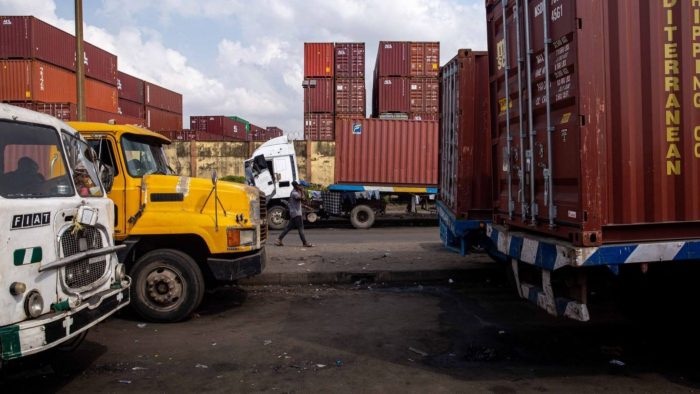
Traffic gridlock is worsening around the Lekki Deep Sea Port and Dangote Refinery corridor, threatening cargo evacuation and port operations as stakeholders blame poor enforcement of traffic regulations and the uncoordinated movement of trucks for the growing congestion.
The development has also left investors in accredited truck parks counting losses, with operators alleging that their facilities have been largely abandoned despite substantial investments made to support the Lagos State Government’s traffic management plans.
Although an electronic truck call-up system is operational along the corridor, stakeholders say its effectiveness is being undermined because many truckers obtain call-up tickets before arriving at the port and proceed directly to their destinations instead of reporting to designated truck parks.
Consequently, nearly 1,000 trucks are reportedly parked indiscriminately along the port access road, while several accredited truck parks remain underutilised.
Among the affected facilities are Hog Amazon, Nilmage, Diamond Star, Precy Integrated, Admor, Goldspeed and Tal Concept.
Stakeholders warned that unless the situation is urgently addressed, the recurring congestion could undermine cargo evacuation, disrupt activities around the Lekki Free Trade Zone and increase the risk of road accidents along the busy corridor.
Managing Director of Lekki World and a major stakeholder in the area, Adeola Olusodo, acknowledged that the worsening gridlock had become a serious challenge for residents and businesses.
Olusodo said efforts were ongoing to restore smooth traffic flow but stressed that traffic enforcement was outside the responsibility of Lekki World.
He said the organisation was engaging the Lagos State Ministry of Transportation on measures to resolve the problem.
“We do not regulate traffic. The Lagos State Government, through its agency, the Lagos State Traffic Management Authority (LASTMA), is responsible for ensuring that truck movements are properly regulated along the port corridor,” he said.
Similarly, Chairman of Ibeju-Lekki Local Government Area, Sesan Olowa, said the council had limited powers to enforce state traffic laws.
Olowa disclosed that the Lagos State Government was engaging relevant stakeholders, including the National Union of Petroleum and Natural Gas Workers (NUPENG) and the National Association of Road Transport Owners (NARTO), in a bid to find a lasting solution.
“It is still a work in progress. It is not the council’s place to enforce state laws, but I know that the Lagos State Ministry of Transport is engaging the parties involved in ensuring the smooth movement of vehicles along the port corridor. We can only appeal to them to make use of the accredited truck parks for ease of movement for everybody,” he said.
However, Lagos State Commissioner for Transportation, Seun Osiyemi, acknowledged the congestion but dismissed concerns that the situation was permanent.
Osiyemi attributed some of the recurring gridlock to sudden rushes by truck drivers following rumours of impending increases in petroleum product prices.
According to him, such rumours often trigger a rush to the port by tanker drivers seeking to load petroleum products before any possible price increase.
He said the state government remained committed to enforcing traffic regulations while avoiding measures that could unnecessarily disrupt business activities.
“We cannot enforce regulations by force, so as not to trigger any form of protest. We understand that sometimes there is a rush to the port to load products due to rumours of a price hike, and in such cases, we deploy trucks to designated parks to ease vehicular movement along the corridor,” Osiyemi said.
For truck park investors, however, the situation has become a major threat to the viability of their businesses.
Cyril Jonah of Jancy Truck Park said the facilities were being undermined because many truck drivers secured their call-up tickets before arriving at the port.
He explained that once drivers obtained the tickets, they often saw no reason to report to the designated truck parks before proceeding to the port.
“Most of these trucks already have their Call-Up tickets before they arrive at the port to load or pick up containers. Once they have secured the tickets, they see no reason to proceed to the truck parks, largely because of the lack of enforcement by the government,” Jonah said.
Other News
“There are four accredited truck parks in the axis, but only a few trucks are currently using them. We have engaged the Lagos State Government on the readiness of the parks to receive the trucks, but the truckers are not forthcoming.”
Another operator, Managing Director of Admoore Park, Shile Oloto, said more than N500 million in bank loans had been invested in the facility over the past three years without a corresponding return on investment.
Oloto attributed the poor patronage to what he described as inadequate enforcement of traffic regulations, saying the situation had left accredited truck parks underutilised.
The Nigerian Ports Authority, NPA, has also raised concerns over the traffic situation, with the Port Manager, Lekki Port, Emmanuel Anda, linking some of the challenges to the structure of the truck call-up system.
Anda said the NPA was not involved in the formulation of the call-up system for the Lekki Port corridor, unlike the arrangement at Apapa and Tin Can Island ports.
He said enforcement gaps had resulted in situations where tankers and container trucks completely blocked both sides of the road.
According to him, the unregulated movement of heavy-duty vehicles had also contributed to fatal road accidents along the corridor.
“The traffic situation has become a major challenge for us at the NPA, partly because of the non-involvement of the Authority in the Call-Up System for the Lekki Port corridor. The Call-Up System at Apapa and Tin Can Island ports is working because the NPA was involved from the beginning,” Anda said.
He identified the ongoing construction of the Lagos-Calabar Coastal Highway and other road projects in the area as additional factors slowing traffic, particularly when heavy-duty vehicles are moving through construction zones.
“Besides, the construction of the Lagos-Calabar Coastal Highway and other roads in the axis is another factor, as the movement of heavy-duty vehicles sometimes slows down traffic,” he added.
Anda also complained about the inadequate presence of traffic regulators along the corridor.
“The presence of traffic regulators is also inadequate. We hardly see personnel of the Lagos State Traffic Management Authority, LASTMA, and every day we record fatal motor accidents due to the unregulated movement of vehicles. Something drastic needs to be done, and very soon, while we await interventions from the relevant government authorities,” he added.
The NPA port manager stressed that the huge volume of commercial activities within the Lekki Free Trade Zone made an efficient traffic management system essential to the uninterrupted movement of people, cargo and heavy-duty vehicles.
He disclosed that the NPA was planning a meeting with relevant stakeholders to develop a lasting solution to the recurring congestion.
On call-up system, some truckers who spoke on the development acknowledged that the electronic call-up system was functioning but argued that it could not fully achieve its objective unless compliance with the designated truck park system was enforced.
Head of Operations at Call-Up, Mike Idike, also maintained that the technology was fully operational.
According to Idike, the major challenge is not the technology but the effective utilisation of designated truck parks, adding that persistent non-compliance by truck drivers continues to undermine the system.
Meanwhile, a detachment of the Federal Road Safety Corps was observed patrolling the coastal road leading to the port and refinery in an effort to maintain traffic flow.
Efforts to obtain comments from Sola Giwa, Special Adviser to the Lagos State Governor on Transportation, were unsuccessful, as calls and messages sent to his phone were not answered.
Stakeholders said a coordinated enforcement strategy involving the Lagos State Government, NPA, truck park operators, port users, traffic management agencies and truckers would be required to prevent the corridor from becoming a permanent bottleneck.
They warned that failure to address the problem could have wider implications for cargo evacuation, investment in logistics infrastructure, road safety and the operational efficiency of both the Lekki Port and the Dangote Refinery.