Follow Us on Google
•Africa’s untapped answer to health insecurity
With millions already relying on traditional remedies, experts say Africa must move beyond cultural preservation and invest in research, regulation and local manufacturing to turn its medicinal resources into safe, affordable and evidence-based healthcare.
For millions of Africans, traditional medicine is not an alternative to healthcare. It is healthcare.
From herbal preparations and medicinal plants to traditional healers and birth attendants, indigenous practices remain part of everyday life across communities where access to hospitals, doctors and affordable medicines is often limited.
But experts say Africa now faces a critical choice: continue treating traditional medicine largely as cultural heritage, or invest in the research, regulation and manufacturing needed to turn its vast indigenous knowledge into safe and effective healthcare products.
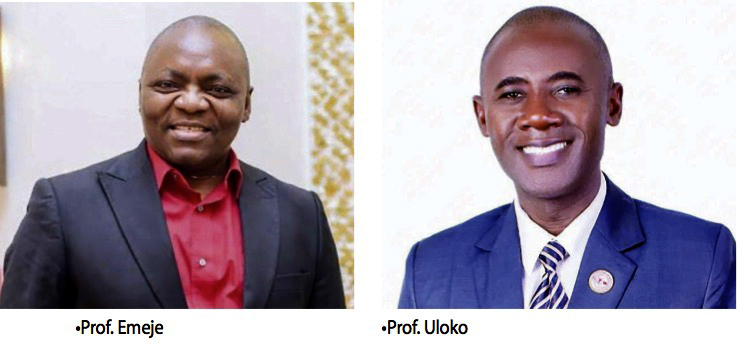
Director -General, Nigeria Natural Medicine Development Agency (NNMDA), Prof. Martins Emeje, said Africa cannot achieve meaningful health security while remaining heavily dependent on medicines and healthcare products developed and manufactured elsewhere.
“If you don’t do research and development as a nation, you are a joker country,” Emeje declared, warning that medicine insecurity could become as dangerous as food insecurity.
Speaking in commemoration of the 2026 African Traditional Medicine Day in Lagos, themed, “Reflection on Research and Development Efforts for Traditional Medicine towards Achieving Universal Health Coverage in the Africa Region,” Emeje said Africa possesses enormous biodiversity, medicinal plants and indigenous knowledge that could support the development of local healthcare products.
He said the challenge was to move beyond discussions about the potential of natural medicine and build the research and development systems required to transform indigenous knowledge into healthcare products.
Emeje said traditional medicine practitioners who had spent decades working with medicinal plants and therapies should have their knowledge documented and preserved so researchers could subsequently investigate and develop promising areas.
He also warned that Africa could lose both its indigenous knowledge and the economic benefits associated with it if such knowledge was not properly documented and protected.
According to Emeje, the continent risked providing medicinal plants and traditional knowledge while researchers elsewhere conducted the studies, developed products, secured intellectual property and eventually sold the finished medicines back to African consumers.
Professor of Medicine and Endocrinology and keynote speaker, Andrew Uloko, said traditional use alone did not establish the safety or effectiveness of a medicine.
He said the task was to identify what works, what does not and what could be harmful, while preserving traditional knowledge that could disappear with its custodians.
“That requires documenting traditional practices and medicinal plants, identifying and authenticating the plants being used, investigating their properties and subjecting promising remedies to appropriate scientific and clinical assessment,” Uloko said.
“The goal is not to discredit traditional medicine, but to provide the evidence needed to determine which practices and products can safely enter a modern healthcare system,” he added.
Uloko said the development of traditional medicine was particularly relevant to universal health coverage because healthcare systems must address access, quality, safety and financial protection.
He noted that the challenges facing African health systems include inadequate access to healthcare facilities, shortages of personnel and infrastructure and the financial burden of medicines and healthcare.
Uloko said properly researched and developed traditional medicine could complement conventional healthcare, particularly where access to formal health services was limited.
He, however, stressed that such integration must be based on scientific assessment rather than simply accepting traditional practices because they were longstanding or widely used.
WHO pushes research, regulation and integration
Unit Head, Traditional Medicine at the World Health Organisation (WHO), Dr Sung Chol Kim, said Nigeria’s rich traditional medicine heritage and widespread use of traditional remedies presented opportunities for improving health and wellbeing.
Kim said traditional medicine was used across WHO member states and could contribute to healthcare, including the management of chronic conditions.
He said Nigeria should begin by comprehensively documenting its traditional medicine practices and herbal medicines.
According to Kim, documentation would provide a basis for assessing the safety, quality and effectiveness of traditional medicines and support further research and development.
He also called for stronger collaboration between governments, research institutions and traditional medicine practitioners.
Other News
Kim said traditional medicine practitioners should receive appropriate training, particularly in infection prevention and control.
He suggested that relevant elements of biomedical training could also be incorporated into training programmes for traditional medicine practitioners.
Kim further urged the Nigerian government to strengthen the licensing of traditional medicine practitioners and the regulation of traditional medicine products.
He said stronger regulation would help establish standards around the practitioners and products available to patients.
Kim said the WHO’s Global Traditional Medicine Strategy 2025–2034 provides a framework for countries to strengthen evidence on traditional medicine, improve safety and quality through appropriate regulation, integrate safe and effective practices into health systems and maximise its wider social and economic value.
He said the strategy, adopted by the World Health Assembly in 2025, promotes evidence-based, culturally respectful and appropriately regulated integration of traditional, complementary and integrative medicine into health systems.
From cultural heritage to medicine ondustry
Emeje said the development of natural medicine could create opportunities beyond healthcare, including agriculture, research, manufacturing and employment.
He said farmers could cultivate medicinal plants, researchers could investigate their therapeutic properties, manufacturers could develop standardised products and local industries could build supply chains around them.
Emeje, however, acknowledged that developing such an industry would require long-term investment.
He said investors often preferred quicker returns from importing and trading products rather than committing resources to research and innovation that could take years before yielding commercial results.
But he argued that Africa could not build medicine security without making sustained investments in research and development.
Temitayo Erogbogbo, who contributed virtually from Switzerland, said traditional birth centres illustrated why policymakers needed to understand the reasons communities continued to use traditional healthcare.
Erogbogbo pointed to accessibility, trust and relationships as factors influencing healthcare choices and said simply asking communities to abandon traditional providers without addressing those realities was unlikely to work.
Also, youth advocate, traditional medicine Fiona Njeri, from Kenya, said traditional medicine and biomedicine should not be treated as rival systems in which one had to defeat the other.
Njeri argued that the more useful question was how the two systems could contribute to better health outcomes.
While calling for scientific assessment experts at the conference emphasised on regulation point to the need for any integration of traditional medicine to be built around evidence, quality and patient safety.
Emeje said the opportunity in natural medicine extended beyond herbal products to medicine security, local manufacturing, agricultural development, scientific research, employment and intellectual property.
He said achieving that potential would require sustained investment and a deliberate effort to move from indigenous knowledge to research, development and locally manufactured healthcare products.
Emeje said Africa already had the medicinal plants, indigenous knowledge and practitioners needed to begin that process.
The challenge, he said, was to develop the research, regulatory and industrial capacity required to transform those resources into healthcare products that could contribute to medicine security.
Practitioners seek collaboration, better training
Vice Chairman, Lagos State Chapter, Modern Traditional Medicine, Olalekan Zubair, agreed with Uloko that traditional medicine practitioners should not advise patients to abandon conventional medicines in favour of their own remedies. He cautioned that combining herbal and conventional medicines without proper guidance could cause adverse reactions. He also urged people interested in traditional medicine to seek information and training from the NNMDA.
Representative from Nigeria Association of Medical Herbalists Alimi Isiaka said traditional and conventional practitioners should collaborate and learn from one another to improve healthcare delivery. He noted that traditional medicine practice is evolving and practitioners must adapt through continuous training, seminars and engagement with regulatory authorities. He also stressed the importance of embracing science and technology to improve traditional medicine practice.