 Follow Us on Google

From Adesuwa Tsan, Abuja
From the $7.8bn facility approved in 2023 to the latest $7.707bn request awaiting Senate consideration, President Bola Tinubu has repeatedly turned to domestic and foreign lenders to finance government expenditure, infrastructure and economic reforms. As borrowing commitments accumulate, however, questions are mounting over the benefits to the economy, the country’s repayment capacity and the National Assembly’s oversight responsibility.
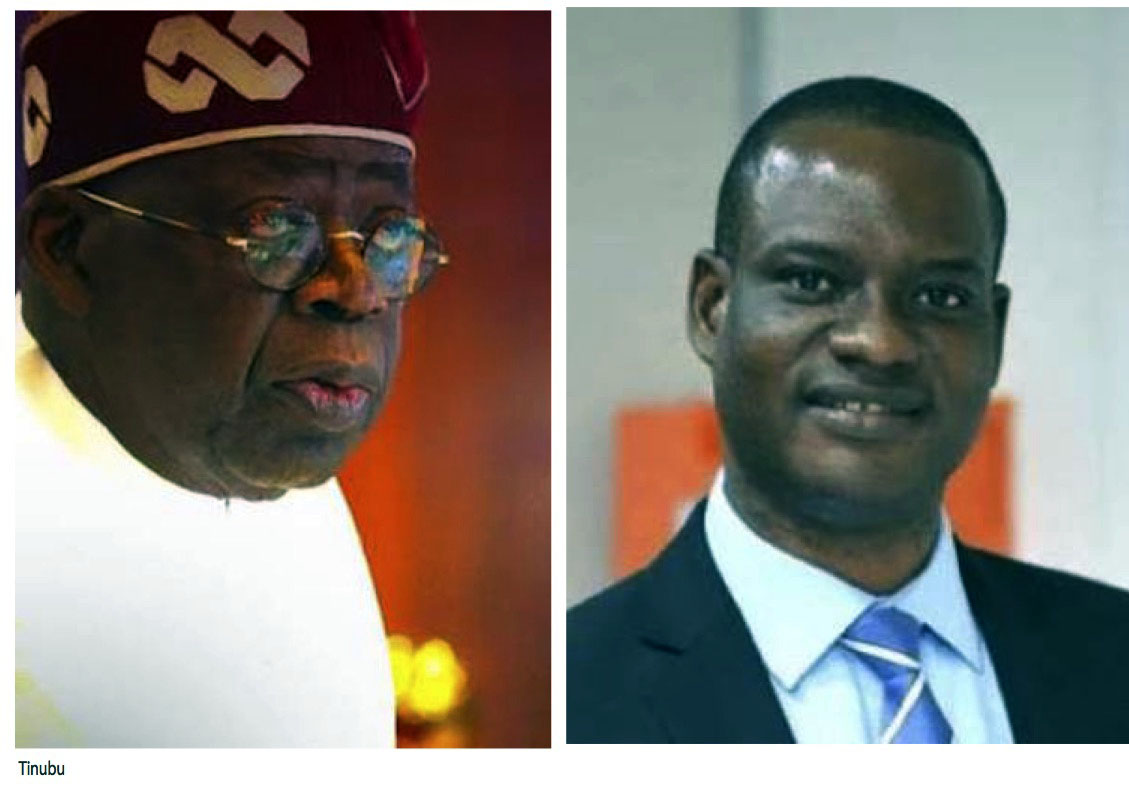
Less than two weeks ago, Tinubu returned to the National Assembly with a request for a $7.707bn facility, equivalent to about N10.79tn, to finance part of the Federal Government’s expenditure. It is the latest in a succession of borrowing proposals submitted since he assumed office in May 2023.
It is, however, a revised request rather than an entirely new addition to the country’s obligations. Tinubu had earlier sought approval for $20.518bn and €1.045bn in external loans, but the administration withdrew that proposal and replaced it with the $7.707bn request. The fresh proposal is still awaiting Senate consideration and should not be counted as an approved loan or as money already accessed by the government.
Still, the frequency of these requests raises questions about the administration’s dependence on loans, the returns on previous facilities and the country’s ability to meet mounting repayment obligations. Borrowing has become a recurring feature of fiscal policy, covering budget financing, infrastructure, power, transportation, agriculture and other development priorities.
The government maintains that borrowing is necessary to close Nigeria’s enormous infrastructure deficit and support growth, but the repeated requests have also put the quality of legislative scrutiny and the actual use of borrowed funds in focus.
Summary of loan requests and approvals
In November 2023, the President sought approval for $7.864bn and €100m under the 2022–2024 External Borrowing Plan. The Senate approved $7.8bn and €100m on 1 November 2023. Shortly afterwards the government securitised about N7.3tn in outstanding Ways and Means advances from the Central Bank of Nigeria, converting the advances into longer-term debt; this was not a conventional external loan request.
In November 2024, Tinubu requested $2.209bn (about N1.77tn) to part-finance the 2024 budget deficit. The Senate approved the facility on 21 November 2024.
In May 2025, the administration presented the much larger 2024–2026 External Borrowing Rolling Plan comprising $21.543bn, €2.194bn, ¥15bn and $65m in grants. The Senate approved the framework on 23 July 2025.
In October 2025, the President sought $2.347bn from the international capital market (including refinancing of maturing Eurobonds) together with a $500m sovereign Sukuk. The National Assembly approved the $2.347bn request on 29 October 2025.
In March 2026, two facilities totalling $6bn were approved: a $5bn facility from First Abu Dhabi Bank for budget financing and debt management, and a $1bn export-finance facility arranged through Citibank in London for the rehabilitation and upgrading of the Lagos Port Complex and Tin Can Island Port. The Senate cleared both on 31 March 2026.
In May 2026, a $516.3m facility from Deutsche Bank was approved for the Sokoto–Badagry Superhighway. The latest request, $7.707bn (about N10.79tn), remains before the Senate.
November 2023: $7.864bn and N100m
The first major request came in November 2023, barely six months after Tinubu took office. He asked the National Assembly to approve $7.864bn and €100m under the Federal Government’s 2022–2024 External Borrowing Plan.
In his letter, the President said the funds would be used for projects in infrastructure, agriculture, healthcare, education, water supply, security, employment and financial management reforms. He specifically linked the request to the economic difficulties arising from the removal of the petrol subsidy, noting that the African Development Bank and the World Bank had indicated interest in providing $1bn and $2bn respectively to help Nigeria manage the effects of the reforms. The Senate approved $7.8bn and €100m on November 1, 2023.
Ways and Means securitisation: About N7.3tn
The approval was followed by another significant financing decision: the securitisation of about N7.3tn in outstanding Ways and Means advances from the Central Bank of Nigeria. Although this was not a conventional external loan request, its conversion into a longer-term debt obligation added considerably to the Federal Government’s financial commitments.
November 2024: $2.209bn
In November 2024, Tinubu sought approval for a further $2.209bn, equivalent to about N1.77tn, in external borrowing. He said the facility was needed to partially finance the N9.7tn deficit in the 2024 budget.
The Senate approved the request on November 21, 2024, by voice vote, following a report by its Committee on Local and Foreign Debts.
May 2025: The 2024–2026 external borrowing rolling plan
Barely six months later, in May 2025, the President submitted a much larger proposal: the 2024–2026 External Borrowing Rolling Plan, involving $21.543bn, €2.194bn, ¥15bn and grants of $65m. The administration said the funds would support transportation, energy, agriculture, healthcare, education, housing, security and other critical sectors.
Among the major projects identified was the rehabilitation of the 2,044-kilometre narrow-gauge Eastern Railway corridor, for which about $3bn was earmarked. The government also said the borrowing would help address the infrastructure deficit, support economic diversification and ease the financial pressures associated with the removal of the petrol subsidy.
The Senate approved the framework on July 23, 2025, after considering its committee’s report. The approval drew attention because of the size of the package and the range of projects it was meant to support. The chairman of the Senate Committee on Appropriations, Senator Solomon Adeola, defended it, arguing that the financing would provide the revenue sources needed to fully fund the 2025 budget.
October 2025: $2.347bn and $500m Sukuk
Four months after that approval, Tinubu again approached the National Assembly. In October 2025, he sought approval to raise $2.347bn from the international capital market. The amount comprised $1.229bn in new external borrowing to part-finance the 2025 budget deficit and $1.118bn to refinance maturing Eurobonds.
He also sought approval to issue a $500m sovereign Sukuk to finance infrastructure projects and diversify the country’s funding sources. The National Assembly approved the $2.347bn request on October 29, 2025.
March 2026: $6bn in two facilities
In March 2026, the President submitted two further requests totalling $6bn: $5bn from First Abu Dhabi Bank, intended to support budget financing and the management of existing debt obligations. $1bn export-finance facility arranged through Citibank in London, earmarked for the rehabilitation and upgrading of the Lagos Port Complex and Tin Can Island Port. The government said the projects would address longstanding operational inefficiencies, improve safety standards and strengthen Nigeria’s capacity for non-oil trade. The Senate approved both facilities on March 31, 2026.
May 2026: $516.3m for the Sokoto-Badagry superhighway
In May 2026, a $516.3m facility from Deutsche Bank was approved to finance the construction of the Sokoto–Badagry Superhighway. The loan has a nine-year tenure, including a grace period of up to three years, and an interest rate capped at the Secured Overnight Financing Rate plus 5.3 per cent annually. It is backed by insurance from the Islamic Corporation for the Insurance of Investment and Export Credit. The project is one of the administration’s flagship infrastructure investments under its Renewed Hope Agenda.
The latest request: $7.707bn
The newest request, about N10.79tn, replaces the withdrawn $20.518bn and €1.045bn proposal. It has been referred to the Senate Committee on Local and Foreign Debts. Senate President Godswill Akpabio said the country must negotiate favourable terms and avoid accepting financing arrangements without weighing their economic implications.
“So we have to go out there and search for the best terms, and that’s what they may call a win-win seller, win-win buyer approach,” he said.
What the total means
A calculation of the major dollar-denominated facilities approved by the Senate since Tinubu assumed office puts the total at about $40.4bn. This comprises the $7.8bn approved in 2023, $2.209bn in 2024, $21.543bn under the 2025 borrowing plan, $2.347bn in October 2025, $6bn in March 2026 and $516.3m in May 2026. The approvals also include €2.294bn and ¥15bn under the 2025 plan (the €2.294bn counts the €100m approved in 2023). The $65m grant is not included in the loan calculation.
This figure should not be mistaken for the amount already disbursed or accessed by the government. It is the headline value of approved facilities, and it includes the $1.118bn Eurobond refinancing component, which refinances existing obligations rather than constituting new borrowing. It excludes the $7.707bn request still before the Senate and the withdrawn $20.518bn and €1.045bn proposal.
Government’s poor defence of its strategy
Faced with criticism over the frequency and size of the requests, Tinubu and his economic team have consistently argued that the government is borrowing to finance productive investment, rather than recurrent expenditure.
In an article published on October 29, 2026, titled “From Reforms to Delivery: Our Infrastructure Investment and Growth Strategy,” the Presidency responded directly to critics. “The real question is not how much we borrow, but what we build, what value we create and what future we leave behind,” Tinubu was quoted as saying.
He argued that borrowing was shifting from financing short-term fiscal pressures to investing in infrastructure that would transform the economy for generations. He named the Lagos-Calabar Coastal Highway, the Sokoto-Badagry Superhighway, the Trans-Sahara Superhighway, electricity grid improvements and the modernisation of major ports as projects that would connect production centres to markets, reduce transport costs, improve trade and attract private investment.
He also argued that long-term financing allows loan repayment periods to match the lifespan of the infrastructure being built, and that success should be measured by completed projects, increased investment, jobs and better living standards. “Securing financing is not the achievement. Completing the project, delivering value and improving the lives of Nigerians is the achievement,” he said.
To support the case, the President cited a rise in the tax-to-GDP ratio from seven per cent to 12.5 per cent; an increase in net Federation Account Allocation Committee distributions from N15.2tn in 2024 to N21.9tn in 2025; and a N20.1tn trade surplus in the first half of 2026, almost twice the N10.2tn recorded in the corresponding period of 2025.
The debt-servicing burden, however, remains a major concern. Tinubu acknowledged that debt servicing consumed about 65 per cent of government revenue in the first half of 2026, stressing the need for fiscal discipline and investments that generate economic returns.
The former Minister of Finance and Coordinating Minister of the Economy, Wale Edun, and his successor, Taiwo Oyedele, have also defended borrowing, arguing that revenue remains inadequate for development needs. Appearing before Senate joint committees in November 2024, Edun said some revenue agencies had surpassed their targets but the government still needed to borrow.
“The revenue effort has been good, but we still need to do better, and in the meantime, we still need to borrow productively, effectively and sustainably all in the name to invest in a Nigerian economy,” he said. He added that the borrowing would also support social services, healthcare, education and interventions for poor and vulnerable Nigerians.
On repayment, Edun disclosed in May 2025 that the government was considering concession arrangements for major infrastructure, allowing private operators to manage completed facilities and generate revenue toward repayment. Using a proposed one-gigawatt solar project in the north as an example, he said the government could finance construction and then concession the plant, with end-user tariffs helping to defray the debt. He noted that many loan commitments were tied to infrastructure and would be disbursed over extended periods.
The Minister of Budget and Economic Planning, Senator Atiku Bagudu, made a similar case. At the November 2024 session, he reminded lawmakers that the borrowing provisions in the N35.5tn 2024 budget were primarily meant to finance the N9.7tn deficit.
“Despite revenue targets surpassing by some of the revenue generating agencies, government still needs to borrow for proper funding of the budget, particularly in the area of deficit and productivity for the poorest and most vulnerable,” he said. He also linked the strategy to Nigeria Agenda 2050, which targets a per capita GDP of $33,000.
The government’s argument, in short, is that the loans are instruments of development, and that the resulting infrastructure, economic activity and revenue will eventually provide the means to repay them.
The Senate’s oversight dilemma
Akpabio has also defended the administration’s economic management. Speaking at plenary resumption in October 2025, he credited Tinubu’s policies with improving the ability of states to meet their obligations. “I can confidently say that through the engineering of President Bola Tinubu and his team, no state government today is borrowing to pay salaries,” he said, adding, “So, for this, we say kudos to the administration.”
Yet, the Senate’s repeated approvals have raised questions about the depth of its scrutiny. Under Section 21(1) of the Debt Management Office Act, the terms and conditions of external loans must be presented to and approved by the National Assembly. Lawmakers are therefore expected not merely to endorse the executive’s proposals but to establish that the loans are necessary, properly negotiated and consistent with the country’s repayment capacity.
The usual procedure is for the President’s letter to be read at plenary, referred to the Committee on Local and Foreign Debts, and then considered through the adoption of the committee’s report. There is nothing inherently wrong with this process. The concern is whether the committees have enough time, documentation and independent information to interrogate proposals running into billions of dollars.
During one committee session, Senator Victor Umeh raised the question of budget implementation: “The truth is that we have approved so much funds to be borrowed in the past, and on each occasion we’ve been told that this borrowing would be able to fund the budgets and these budgets have remained unfunded up till this day.” He added, “So if you borrow to finance a budget and you are not able to finance that budget, where has the money gone to? That is the question on the lips of everybody.”
The intervention points to a basic accountability issue. Before approving fresh borrowing, lawmakers should demand comprehensive reports on previous facilities: amounts accessed, projects financed, disbursements made and the status of implementation. They should also have project breakdowns, interest rates, repayment schedules, grace periods and the expected economic returns of each facility. Approval should be the product of demonstrable scrutiny, not the conclusion of a routine legislative process.
How productive have the loans been?
The strongest argument for borrowing is that it should leave behind assets and services that improve lives and expand economic capacity. The administration must therefore be assessed against the promises made when the loans were requested. The projects identified in the various proposals, covering railways, roads, ports, power, healthcare and agriculture, are expected to produce measurable benefits, but publicly available loan-by-loan performance reports do not yet establish how far those benefits have materialised.
Eastern Railway: Presented as a major investment under the 2025 plan, its rehabilitation is meant to improve transport and connect economic centres. Its eventual completion and operational performance will be a key measure of value for money.
Lagos and Tin Can Island ports: The real test is whether the $1bn facility leads to shorter cargo clearance times, lower logistics costs, greater capacity and increased trade.
Sokoto-Badagry Superhighway: Loan approval and the start of construction should not be confused with a completed road delivering economic benefits.
• Lagos-Calabar Coastal Highway: Often cited by Tinubu in defence of borrowing, it will need to show completed sections, shorter travel times, lower logistics costs and more economic activity along the corridor.
There are also concerns about the performance of earlier loan-funded projects, which should inform scrutiny of new requests. The most immediate challenge is to show that the huge sums already approved are translating into completed projects and better public services.
Nigeria’s total public debt stood at N166.79tn at the end of June 2026, according to the Debt Management Office. The World Bank and other institutions have repeatedly identified debt servicing and weak revenue generation as major fiscal vulnerabilities, and Tinubu himself acknowledged that debt servicing took about 65 per cent of revenue in the first half of 2026. The government therefore has little room for waste, abandoned projects or investments that fail to deliver their expected returns.
Comparative analysis between Tinubu and his successors
It would be misleading to conclude that Tinubu is Nigeria’s biggest borrower by simply comparing the naira value of the debt when he took office with today’s figure. Exchange-rate depreciation has sharply increased the naira value of external debt, even where the original dollar obligations have not changed.
Previous administrations’ records show the following
Olusegun Obasanjo: Reduced external debt from $28.04bn in 1999 to $2.11bn in 2007, following the Paris Club debt relief agreement.
Umaru Musa Yar’Adua: External debt rose by about $1.39bn.
Goodluck Jonathan: External debt rose by about $3.8bn.
Muhammadu Buhari: The largest increase, about $32.6bn between 2015 and 2023.
Bola Tinubu: An increase of $9.37bn between 2023 and December 2025, according to the analysis.
These figures qualify claims that Tinubu has already surpassed all his predecessors in borrowing, since Buhari’s eight years saw a far larger accumulation of external debt. But Tinubu’s record must also be judged by the speed and frequency of his requests, the size of the financing packages and the current debt-servicing burden. Buhari’s larger accumulation does not settle the debate, just as Obasanjo’s reduction does not mean that all later borrowing was unproductive. The more important questions are what each administration borrowed, what it achieved with the funds and what obligations it left behind.
The verdict
For Tinubu, the challenge is to ensure that the loans obtained under his watch do not become another generation’s burden without corresponding infrastructure, productive capacity and economic returns. His administration argues that the loans are investments in Nigeria’s future. That argument will be judged not by the number of projects announced or the volume of financing secured, but by what Nigerians can see, use and benefit from.
For the National Assembly, particularly the Senate, the responsibility is clear: every new borrowing request must be matched by a clear account of what happened to the previous one.