Follow Us on Google
•774 LGAs hold tourism opportunities, but govt must end insecurity, create roads, tourism bank
From Sola Ojo, Abuja
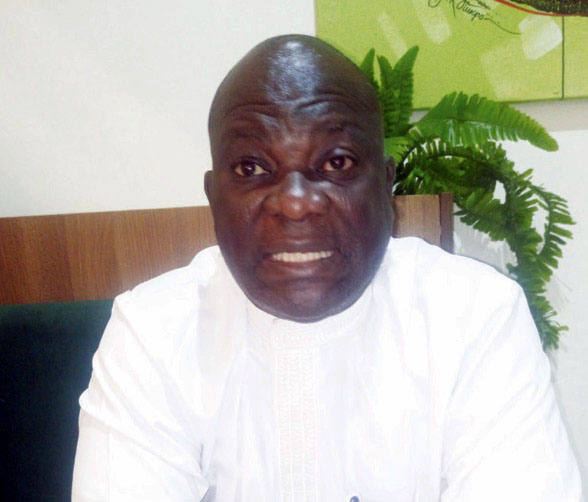
National President of the Association of Tourism Practitioners of Nigeria (ATPN), Prince Ayodele Martins Arokoyo, said that Nigeria’s tourism sector remains at an “infancy stage” despite the country’s huge tourism assets and opportunities spread across its 774 local government areas. To him, Nigeria had continued to focus excessively on hospitality, whereas tourism encompasses a much wider value chain involving transportation, accommodation, food, culture, entertainment, events and local enterprises.
In this interview with Saturday Sun, Arokoyo blamed the slow development of the sector on poor implementation of the country’s tourism master plan, inadequate infrastructure, insecurity, weak coordination and what he described as a lack of government will to attract long-term private-sector investment.
Let’s quickly examine the present status of tourism in Nigeria. Where are we in terms of tourism development compared with other African countries?
Well, Nigeria’s tourism progress, to me, is still at the infancy stage because the opportunities inherent in tourism are huge and enormous.
As you are aware, Nigeria has a Tourism Master Plan which was developed some years back. During the Obasanjo administration, we had a Tourism Master Plan, but up till today, it has not been fully implemented. That Tourism Master Plan had already captured some of the tourism opportunities and attractions in the country and provided a roadmap for achieving tourism development in Nigeria and exploiting the opportunities available to us. Unfortunately, we are still not there.
The tourism opportunities are inherent in the local government areas, which are the domicile points of tourism attractions. In the 774 local government areas, there is hardly any part that does not have tourism opportunities.
The major Issue, however, is government’s will and attention to tourism. There is also poor coordination of tourism activities, which has left tourism largely in the hands of individuals to manage, instead of being developed on a broader scale across the country.
Nigeria is only focusing on hospitality. Hospitality is just one component of tourism because tourism is an array of opportunities and components.
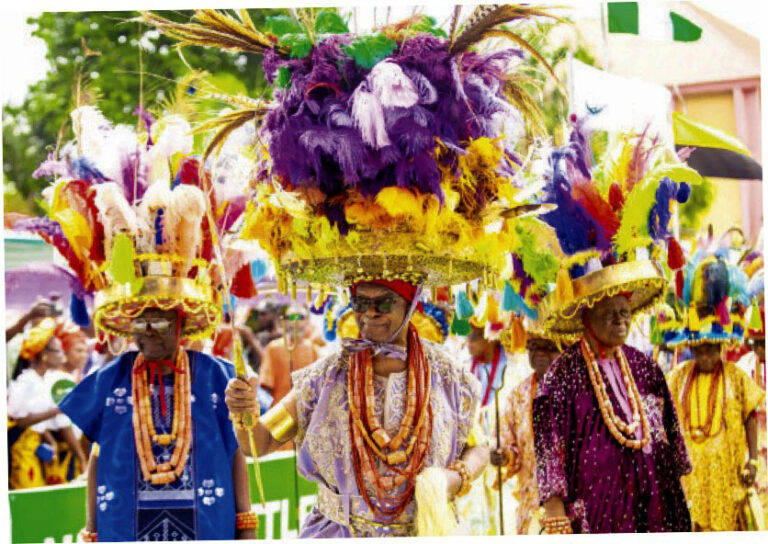
We have culture, for instance, which is also domiciled in the local government areas. This is where we have gastronomy tourism, or food tourism. We have opportunities in food, drinks, culture and other aspects that people want to explore when they visit destinations. But beyond that, there are very big issues: lack of accessibility, insecurity and the absence of other government-enabling environments needed to attract investors into tourism.
We need to localise tourism as expected, rather than looking only at the very huge global dimension of tourism development, which may not work effectively for us. The failure to develop the sector has also created a huge gap in employment. Tourism can provide wider employment opportunities for young people and help take them away from what we are going through with insecurity in Nigeria.
In clear terms, what is the economic value of tourism to Nigeria?
The tourism sector is largely undervalued, but for me, it is a sector that is on top. It is on top because tourism has its own value chain, and that value chain has not been properly exploited.
Let me give you an example. If you have cassava and you are cultivating cassava, you have to empower the farmers to produce more. But the value chain means that you can produce garri, fufu, ethanol, starch and even animal feeds.
I have mentioned about five products, and each of those products can create industries. Imagine those industries existing and multiplying employment opportunities rather than just having people engaged in farming.
Tourism also has its value chain. Transportation, accommodation, food, cultural events and other related activities all provide huge investment opportunities. Take accommodation, for example. During major events and peak tourism periods, hotels may not have enough rooms. People can leave their homes and rent them out to visitors, thereby making money for themselves.
At we need to exploit to take care of our youths who are roaming around without meaningful employment, rather than focusing only on government activities.
So how can Nigeria better exploit its tourism potential in line with the existing tourism master plan?
To exploit tourism in Nigeria, we first need to understand what tourism means to Nigerians and to people outside Nigeria. For example we have what is called domestic tourism, as well as inbound and outbound tourism. We need to look at domestic tourism promotion because if you do not promote your tourism, how do you attract people? So one of the major disconnects is the fact that we are not able to promote tourism domestically.
And why are we not promoting tourism domestically? First, we do not have adequate road networks. Accessibility is another major issue because accessibility is very key to tourism promotion. How accessible are those attractions?
Secondly, the attractions are there, but how enhanced are they? If the attractions are there, you need to rebrand and repackage them to make them more attractive. It is not necessarily about altering the attractions. If you go to Malaysia, for instance, there are ancient roads and ancient artefacts that have not been altered. They are still there.
What they have done is introduce some facilities that provide comfort and make it possible for people to see and experience those attractions. People can pay tickets to access them, and even foreigners can visit. But in Nigeria, many of our tourism attractions are just there. They have not been properly packaged for people to come and see or experience them.
Many tourism attractions in Nigeria are still in their natural state, but they need to be enhanced. That is where projects have to come in. When you enhance these attractions, you create employment opportunities because you need people to service the facilities. You need people to work there, tour guides and other tourism professionals. You also need to develop their capacity so that they can effectively engage in promoting tourism.
Talking about the government, particularly the current administration, in what areas is the government not really encouraging private-sector players who are trying to develop the tourism sector?
The area of concern is that government must remove sentiments. In business, there is no sentiment. Business has roadmaps. One of the things that is very important is for government not to bring people based on personal interests or relationships, but to bring people who can deliver on the promise and take tourism to a certain destination. If you give people who cannot manage tourism projects simply because of your relationship or affiliation, they may not have the capacity to develop such projects.
Government needs to understand the role of public-private partnerships and bring the private sector into tourism development. There are people who have the requisite capacity and funding to support the sector, while government should also provide the necessary funding and enabling environment.
Tourism is a long-term investment, but most of the time we like short-term investments. That is why we are not getting it right. You need to invest for a longer period, allow the investment to grow and regenerate, and in the process create employment.
Secondly, there must be a deliberate policy for intervening in the gaps that exist in the sector. Government must close those gaps. This multiple transition has also limited people’s willingness to invest in tourism. There is also a lack of tourism funding. We need a tourism bank to provide funding because of the nature of tourism investment and to drive the sector. Another issue is that we need to look at the global dimension of tourism and create a pull factor for visitors. If you go to the UK or Dubai, it is not simply because they are the UK or Dubai. It is because of what they have to offer. People want to go to destinations where they can exploit opportunities, do business and have a lot of experiences.
Therefore, we need to re-engineer our domestic affairs as they relate to business, the economy, security and the people as a whole. We also need to build the trust required for people to come and do business with us, visit and enjoy our destinations and attractions.
What about urbanisation? Cities are expanding rapidly. Areas that used to be green spaces are being cleared for development. How is this competing with the tourism potential of critical cities like Abuja, Kaduna, Lagos and Calabar, where we need to have that touch of tourism?
Urbanisation, the clearing of green areas and all that are very important issues. I must give it to the Federal Capital Territory Minister Nyeson Wike for his deliberate effort in this regard. That is what I am saying: you must be deliberate about tourism.
Tourism also has to do with sustainable development because you have to preserve the environment and take care of it. That is what we call sustainable tourism. Sustainable tourism is about preservation and keeping those resources for the future.
In many places, people are cutting down trees and building recklessly. But Wike has deliberately addressed some of those issues, trying to ensure that Abuja is properly managed. Sometimes when you go to some places in Abuja, there are environmental problems because of poor planning. When you build on drainage channels, for instance, you create flooding. That can also be damaging to the environment when drainage areas are blocked.
So, this is a sustainable approach to enhancing the Federal Capital Territory, which is also a face of tourism because of the huge inflow of people into the capital territory. It should therefore be part of tourism planning. I think it is another plus for tourism promotion, and other states should emulate it.
In Kaduna State, for example, some areas of tourism concern have not been properly maintained. Some have even been destroyed, while others have not been enhanced. The government needs to be deliberate. There are places where trees need to be planted. There are places that need social infrastructure, fast-track infrastructure, roads and other constructions to encourage visitors and tourists to visit and relax.
Tourism is about relaxation. It is about leisure. It is about people having memorable experiences. If those things are disconnected, it is not about just going somewhere, spending your money, seeing nothing and leaving.
You must make the experience memorable through deliberate intervention. You have to do what is necessary according to tourism principles and development standards. That is why experts are important. Even in hotels and hospitality, there are things that are needed. If you do not design and develop these facilities properly and people leave with a bad experience, they will have a bad memory of that state. So, it has to be an inclusive approach. Government has to be deliberate and holistically address some of these gaps.
In your association, what are you doing to help the country develop community tourism?
That is part of our concern and why I have been making all these observations.
Take Gamji Gate, Kaduna, for example. I know a lot of people go there, but it has not been properly enhanced. Some years back, I used to go to Gamji Gate and it was very interesting. There are a lot of things there. They need to look for the right people to invest in that place. As an association of professionals, we are looking at how we can collaborate with the right people and see how we can develop such places. We want to create awareness that we have solutions and that government needs to engage professionals in the sector.
We are looking at having a tourism roundtable to address some of these gaps and constraints and make recommendations on what government should do. We want to see how we can form a synergy with government to ensure that some of these issues are addressed while bringing in the necessary experts.
Last year, I was awarded as a Tourism Ambassador for Kaduna State because of my contribution to tourism promotion. I brought the minister and other officials to Kaduna to see what was happening and to draw attention to the tourism opportunities in the state. This year, I am going to be speaking on skills and artificial intelligence for graduates, particularly for employment and entrepreneurship. This is another area of manpower development.
Most of the time, we do not have the right people in the right places. Manpower is very key to enhancing tourism in every sector. So, we are going to be looking at manpower development and how we can affordably enhance people’s capacity through training. We will also look at research-based interventions to identify areas of concern, close the gaps and make recommendations. Then we can facilitate promotion and attract investors to see how we can move and drive a new value chain for Kaduna State in terms of tourism.
If you are to meet the president today, what would you tell him about tourism in Nigeria?
I would tell him to have a deliberate will to change the face of tourism in Nigeria because we have what it takes and we have everything on the ground. They need to have a deliberate will, take intervention actions and collaborate with stakeholders to move the tourism sector forward.
I was formerly a vice-president for the Northwest with the Federation of Tourism Associations of Nigeria (FTAN), and I know that policy gaps have been a major concern.
We have been addressing this and talking about how some of those policies have to be removed or reviewed because they do not enhance private-sector-driven tourism promotion. That is another huge setback.
So, if I am meeting the President, this is what I would tell him: remove policies that are not promoting tourism. Have deliberate policies and the political will to enhance the sector. I will tell him to use his powers to create a tourism bank and establish international incentives for tourism development.
With these measures, we can drive employment creation, enhance the economy and create a new face for tourism in Nigeria.
And finally, security. We must not forget security. We may not be able to completely eliminate insecurity overnight, but we must do a lot to improve security because tourism cannot thrive where people do not feel safe.