Follow Us on Google
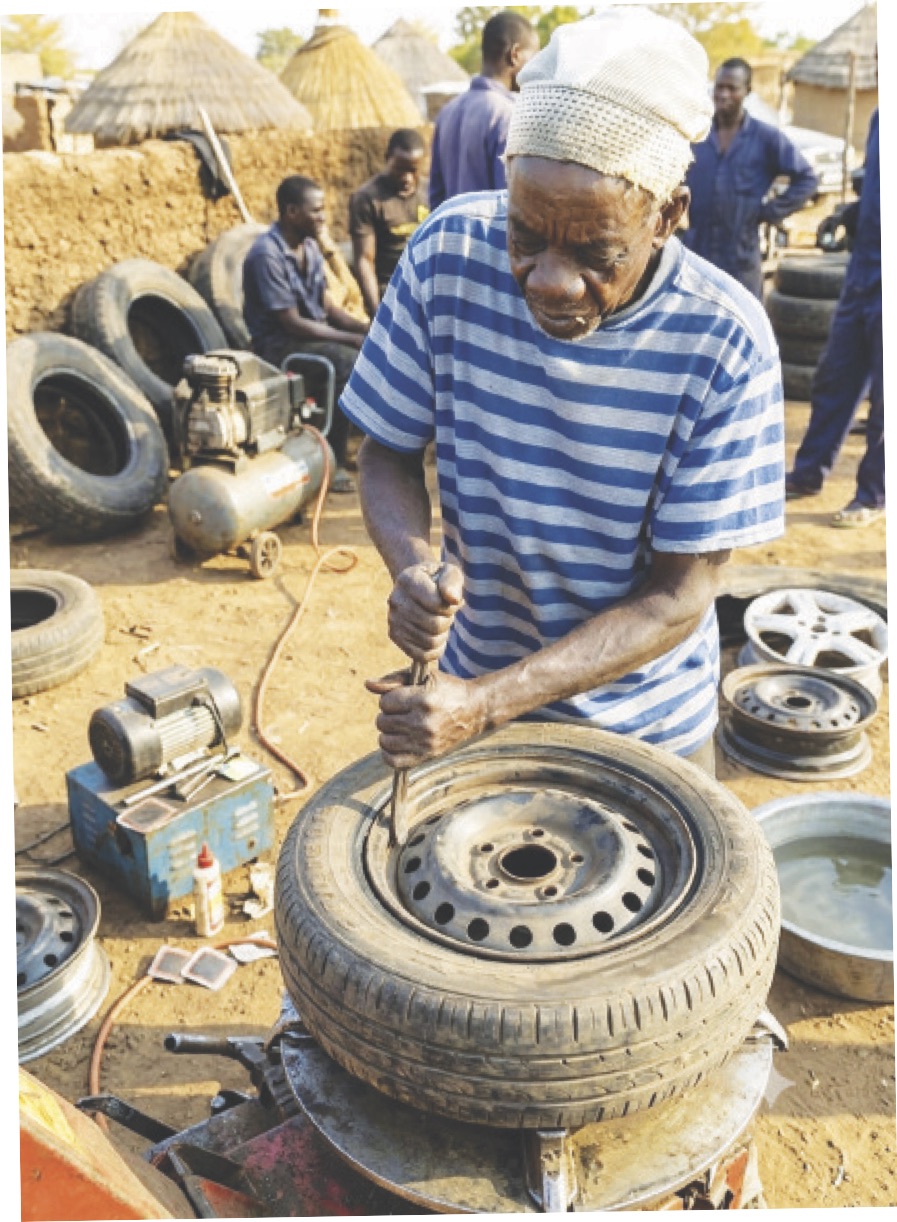
• How Nigeria’s senior citizens struggle for survival as cab drivers, construction workers, others
By Ngozi Nwoke
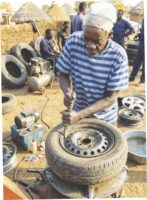
Across Nigeria, a quiet workforce aged 70, 75, and 80 still exists. Among them are bricklayers, vulcanisers, taxi drivers, newspaper vendors, market women, and school teachers. They were supposed to retire. Instead, they wake up before dawn to labour. Not for luxury, choice or hobby, but out of necessity and survival.
Under the Nigerian Public Service rules and the Labour Act, the official retirement age for public servants is 60 years, or 35 years of service, whichever comes first. For workers in the academia and judiciary, the retirement age was extended to 65 and 70 years respectively by law.
But for the vast majority of Nigerians in the informal sector such as bricklayers, taxi drivers, market women, and vulcanisers never have any retirement age written down. Their retirement age is determined by strength, by health, and by how long customers still patronise them.
The current situation in the pension scheme makes it even harder to stop. The Contributory Pension Scheme which started in 2004 only covers workers in the formal sector who were employed after it began. Anyone who is 70 today spent most of their working years before the scheme existed, and artisans, traders and drivers were never enrolled at all. Even for those in the scheme, delays in payment, poor returns, and inflation have made monthly pensions too small to survive on.
The National Pension Commission reports that thousands of retirees are still owed gratuities and arrears years after leaving service. With the cost of food, rent, drugs and school fees rising, many seniors say the money they get cannot last two weeks. So instead of resting, they return to the market, the road, and the building site.
In Iponri market, 65-year-old Mama Nkechi Obidike sells smoked catfish, stockfish, and plantains. She asserted that she wakes at 6:am to get to the cold room. Her husband died in 2011, and her last child just finished NYSC and has a job. She helps her when she is free. Her rent is 1,000,000 naira. She walks with a stick because of arthritis, but she said if she doesn’t sit, she won’t sell.
In Ojuelegba, Lagos, Muri Dantala, aged 72, drives a commercial cab from 6:am to 10:pm six days a week. He said the government still owes him 18 months of pension, and his children are in school in Keffi. With fuel price hovering between N1,200 and N1350 a litre, and a daily target of N12,000 to the car owner, stopping is not an option for him.
He has three grown children and one grandchild, but dislikes to be a burden to be catered for. He admitted that his eyes are no longer as sharp, and that he once slept off at the wheel, but he came out the next day because hunger does not give sick leave.
At Costain roundabout, Lagos, 71-year-old Dotun has sold newspapers since 1997, after working in a printing factory. Rain or shine, he is at his table. He said suppliers give him papers on credit and her legs swell, but if she does not come, customers will go elsewhere.
Other News
At Shitta, Lagos, Augustina Achodo, runs a bottled water business as a distributor with the help of her 53-year-old mother, a retired civil servant. The mother attends to customers and keeps accounts. Augustina said her mother feels useful at the shop and would rather be there than sit at home idle.
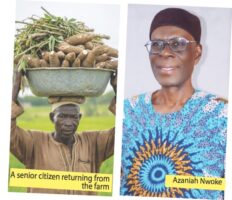
Azaniah Nwoke, an 88-year-old man with six adult children and five grandchildren, is the proprietor of Wokens Ideal Nursery/Primary School and still teaches French to Primary five and six pupils three times a week.
He said he started the school in 2019 with his retirement gratuity because he didn’t want to depend on his children for his upkeep. He prepares his notes the night before because his memory sometimes fails him, but he insists that teaching French keeps his brain young and active.
To understand why so many Nigerians over 70 are still doing manual labour, Joshua Nwigudu, an economist at Baze Centre for Policy Research, Abuja, said the problem is structural.
“Three things collide: low pension coverage, high inflation, and the extended family system. Less than 20 per cent of Nigerian seniors have reliable pension. The ones who do, the money is often delayed or eroded by inflation. Meanwhile, they are still feeding children, grandchildren, even adult children who are unemployed.”
Nwigudu said community and government must step in. He called for an expansion of social welfare, affordable healthcare for seniors, and faster pension payments. He also urged families to support parents in their 50s and 60s before their bodies break down.
Clement Banjoko, a pension administration expert, puts it plainly, “The contributory pension scheme only started in 2004. Anyone who is 70 today was already 48 then. Most of their working years had no pension deductions. And for artisans, traders, drivers, there was never any pension at all. So retirement for them was never planned.”
Bosun Adewusi, a medical doctor at an Ikeja clinic, disclosed that by 70, the body is asking for rest. Joints ache, blood pressure rises, and vision drops.
He warned: “Manual labour at 70 is risky. We see hypertension, arthritis, hernias, back problems, and stroke. Heat and stress are triggers. If you must work at old age, do health checks every six months. Full Blood Count, Electrolyte/Urea/Creatinine, Liver Function Test, blood pressure. Drink water. Don’t lift heavy thing alone and please, take afternoon rest.”
Rachel Isibor, a sociologist, said culture also plays a role, “In Nigeria, to be old does not mean to be dependent. It means to be the pillar. Stereotype says old people should sit, but reality says old people must provide. There is shame in begging. So they work.”
She warned that some common ideas about ageing are hurting both the elderly and the young, “The notion that old people are weak ignores the reality of aged men who still work as bricklayers. The idea that old people have no value dismisses elders who still run companies effectively based on their wealth of expertise and knowledge.
“The belief that retirement means sitting idle does not match a country where most people work in the informal sector with no safety net. The assumption that retirement means poverty has become a self-fulfilling prophecy when pensions are small or unpaid.”
Isibor said the lesson for younger Nigerians is that they must plan early because pension alone will not sustain them at retirement. She advised that gaining skills, having savings, and businesses that can be handed down are more reliable.
She also urged respect for labour, noting that bricklayers, drivers, and fish sellers are holding families together, and that hard work should not be mocked because it is survival.