Follow Us on Google
•We’re still looking for beneficiaries in Niger, Kaduna, Borno, Rivers Abia, others, residents lament •Households have received alerts in Benue, Akwa Ibom, Kebbi, Ogun, Bauchi, Imo, Oyo, officials insist
By John Adams (Minna), Scholastica Hir (Makurdi), Noah Ebije (Kaduna), Isaac Job (Uyo), Timothy Olanrewaju (Maiduguri), Ola Muhammad (Birnin Kebbi), Aniekan Aniekan (Calabar), Tony John (Port Harcourt), Emmanuel Adeyemi (Lokoja), Laide Raheem (Abeokuta), Okey Sampson (Umuahia), Paul Orude (Bauchi), Stanley Uzoaru (Owerri), Oluseye Ojo (Ibadan)
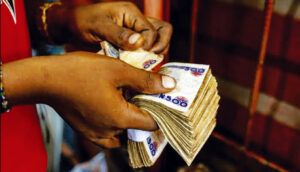
Shock and disbelief trailed a recent claim by the Minister of Humanitarian Affairs and Poverty Reduction, Dr. Bernard Doro, that the Federal Government had in the last three years of President Bola Tinubu’s administration, spent over N600 billion in cash transfers to about 10 million households.

The cash transfers, the minister also claimed, reached about 40 million Nigerians as the government tried to cushion the excruciating economic pains of fuel subsidy removal.
In some states, some residents confirmed that they have benefited from the cash transfer. However, a survey around the country could not quite validate the claim made by the minister as many Nigerians across states who have not benefited from the programme expressed surprise at the method by which beneficiaries are chosen.
Niger
No trace of beneficiaries of cash transfer
There is no identifiable beneficiary in Niger State as both ministry officials and party executives claim ignorance of the disbursement.
The cash transfer was said to have been handled by consultants from the Federal Ministry of Humanitarian Affairs without any input from the state Ministry of Humanitarian Affairs, hence the state could not lay its hands on any documents regarding the disbursement.
Although a staff of the Ministry of Humanitarian Affairs and Disaster Management in the state who spoke to our correspondent on condition of anonymity said they were invited sometimes this year for the flag off of the cash disbursement, the story, however, ended there.
He disclosed that the ministry did not know the number of beneficiaries, the criteria used for selecting the beneficiaries and the amount given to each beneficiary.
The Commissioner for Humanitarian Affairs and Disaster Management, Dr. Ibrahim Inga told our correspondent that the Minister of Humanitarian Affairs had agreed to meet with state commissioners following complaints arising from the cash transfer.
At the All Progressive Congress (APC) secretariat, the story is the same as no party official was ready to comment on the matter, all claiming not to be aware of the cash transfer programme.
A member of the state working committee of the party who did not want his name in print said he was hearing about the N600 billion cash transfer for the first time when our correspondent approached him.
Benue
We’ve been getting cash transfer since 2016 – Official
The Benue State Programme Manager for Cash Transfer, Dr. Emmanuel Waghbo, said that Benue has been on the Conditional Cash Transfer Programme since 2016/ 2017.
“At that time, about 58,000 beneficiaries were receiving a steady cash transfer of N5,000 monthly.” He said the contracted payment service providers would come to Makurdi periodically to make the payments, “Sometimes, they come after one, two or three months and pay beneficiaries for the accumulated months.
“They were initially referred to as Conditional Cash Transfer beneficiaries. So, at that time, we had approximately 58,000 beneficiaries on the programme.
“When Tinubu came into office, the nomenclature changed. “The Household Uplifting Programme was considered slow, and the Federal Government wanted to streamline the process so it could reach about 15 million Nigerians. At that time, fewer than 2 million Nigerians had benefited from the programme.
“The government believed the existing processes were slow and introduced a new system called the Rapid Response Register.”
He said the beneficiaries are captured through the National Social Register and the state has no a hand in who is selected or who receives what at the local government level.
So under the scale up, beneficiaries started receiving N25,000 in three tranches which is N75,000 and it was a one off. Once you collect, you are off any form of payment.
Kaduna
No evidence of cash transfer
The Federal Government’s cash-transfer programme in Kaduna operates through a system that was designed to identify eligible poor and vulnerable households, enroll them through government social-protection structures and ultimately pay the money through formal financial channels.
According to a reliable source, the process involves both federal and Kaduna State institutions, but the actual transfer of funds to beneficiaries was designed to take place electronically through banks, wallets and other authorised payment points rather than through political party offices. The source said that at the state level, Kaduna’s social-protection structure relied on the State Cash Transfer Unit (SCTU) to coordinate the Conditional Cash Transfer programme.
The source added that the SCTU used information from the State Social Register for the intervention and worked with relevant ministries, departments, agencies and local governments on implementation, beneficiary information and grievances.
It was further gathered that the state’s Social Protection Policy identified the National Cash Transfer Office at the federal level and the state Social Investment structure as the responsible institutions for the National Cash Transfer Programme.
The first stage of the process is therefore the beneficiary register, rather than the physical distribution of cash.
“Kaduna’s social-register system uses community-based targeting to identify poor and vulnerable households. The state’s records show that information from the social register is subsequently used by the cash-transfer programme. This means that the household must first appear in the programme’s approved beneficiary data before a payment can be made.”
Akwa Ibom
286, 000 receive cash transfers
No fewer than 286,000 people across the 31 Local Government Areas of Akwa Ibom State have received cash transfer disbursed by the Federal Ministry of Humanitarian Affairs, the state government has said.
The Commissioner for Humanitarian Affairs, Mrs. Emem Ibanga said the cash transfer was done through the supervision of her ministry to ensure that vulnerable people received the cash as envisioned in the Renewed Hope Agenda of President Bola Tinubu to reduce poverty among the people.
According to Ibanga, each beneficiary received an instant cash transfer of N75,000.
She explained that the beneficiaries were selected from vulnerable households while others were captured from the national social register.
She said all the beneficiaries were selected from Local Government Areas to ensure that rural households were captured.
“A breakdown of the cash disbursement to households across Local Government Areas is as follows: Ini -1,383, Ikono – 2,513, Nsit Ibom – 2,145, Oruk Anam – 3,456, Abak – 3,152 and Mkpat Enin – 3,348, among others.
“Beneficiaries received the cash transfers with jubilation, appreciating President Bola Tinubu for his benevolence.”
Ibanga said it was another significant milestone in the Federal Government’s social protection drive as 2,145 beneficiaries in Nsit Ibom Local Government Area received Renewed Hope Conditional Cash Transfer debit cards, each preloaded with ₦75,000, bringing the total value of the intervention to ₦160,900,000
“I was represented at the flag-off ceremony by the Permanent Secretary of the Ministry of Humanitarian Affairs, Deaconess Eno Ime Akpan, who reaffirmed the Ministry’s commitment to ensuring that eligible vulnerable households continue to benefit from government social intervention programmes.
One of the beneficiaries, Aniefiok Udofa told our reporter that he got the cash transfer without passing through anyone.
“I’m from Iwukem in Etim Ekpo LGA local of Akwa Ibom state. I received the cash transfer of N75,000 when the team visited Etim Ekpo. I’m now in a chair battling with stroke. I am not a member of any political party but I received the cash from the government. God bless those who brought this initiative.”
Borno
Residents unaware of cash transfer programme Many people in Borno State claim they are unaware of the cash transfer to households which was said to have been carried out by the Federal Government through the Minister of Humanitarian Affairs.
They maintained they were neither contacted by any government official or agency to submit any information regarding cash transfer. Alhaji Ali Saleh, a retired civil servant and resident of Maiduguri, maintained he and his community members were yet to receive any cash transfer from the government as support to households.
“We’re not aware. We have no such record. I’ve also checked from my neighbour and our community leader. We have no such information,” he told Saturday Sun.
For 42-year-old Bala Yusuf, a security guard, the cash transfer to households may be a plan still in the cooler.
“Maybe the government is still planning to extend the gesture to us in Borno otherwise we haven’t seen any of such support,” he declared.
He said he was only aware of support to schools and educational institutions through the school feeding aid of the government.
Some other residents told Saturday Sun that some government officials and politicians once asked them to submit their names and telephone number of family members to designated desk officers early in the year but said they were yet to receive any cash transfer.
“I recall someone once asked us to submit our names; number of wives and children in our ward with bank account details and we did. It has been almost a year now but we didn’t hear anything since,” he said.
Kebbi
Over 98,000 benefit from cash transfer
Authorities in Kebbi State say no fewer than 98, 000 people have benefited from the Federal Government’s cash transfer initiative.
Kebbi State Commissioner for Humanitarian Affairs, Alhaji Muhammad Hamidun Jarkuka made the disclosure in an interview with our correspondent in Maiduguri.
The commissioner explained that numbers were allocated on a local government basis from Abuja and that the ministry only assisted and supervised the disbursement.
Jarkuka disclosed that beneficiaries received different sums of money ranging from N20,000 to N75,000. The disbursement was said to have been carried out with data generated by SUKUK in the 21 Local Government Areas of the state.
Our Correspondent also learnt that the beneficiaries cut across political divides.
Some of the beneficiaries were selected by the agent of the Federal Government from Abuja while the Ministry for Humanitarian Affairs in the state assisted the agents in the disbursement.
Cross River
Over N12bn spent on 161,247 beneficiaries
The Cross River State Commissioner for Humanitarian Affairs, Dr. Helen Isamoh had disclosed that over N12, 093, 525 was disbursed to over 161,247 beneficiaries across the state.
Dr. said the beneficiaries were drawn from across the 18 Local Governments Areas and were largely those already captured in the National Social Register.
The highest number of beneficiaries in the state came from Calabar Municipal, where 16, 302 beneficiaries received over N1billion while Bakassi Local Government Area had the least number of people with 3,087 who received over N231 million.
Other News
Dr. Isamoh added that the spread covers the rural poor, urban poor within villages, communities and wards.
“The payments covered three months where each beneficiary received a debit card of N25,000 per month amounting to N75,000.
“Payment Service Providers comprises Forties, Tagpay and TeasyPay. However, some residents have expressed frustration with the process saying many people registered and were not selected for the exercise.
Mercy Anwan, a resident of Calabar South said communities were mobilised, they registered and in some cases had to pay N100, 000 per person, yet many were not captured.
She also called for a full publication of the beneficiaries to ascertain the number of people per unit and ward who were captured across the local government.
Another resident, Bassey Etim also alleged lack of transparency in the selection process, saying most people within his area who received the transfer were members of a political party.
Rivers
Rivers residents demand share of the N600bn
With urban poverty in Diobu, Borokiri and Trans-Amadi waterfronts, and deep rural poverty in Ahoada, Emuoha, Andoni, Ogoni and the Kalabari creeks, many residents of Rivers State say they were yet to receive cash transfers from the Federal Government.
Investigation revealed that under the old safety net programme from 2016 to 2020, Rivers had only 9,313 households paid, one of the lowest figures in the country.
The Ministry has not published a new state-by-state breakdown under the current Renewed Hope Cash Transfer that ran from November, 2023 to February, 2026.
Selection, according to the National Cash Transfer Office, is done only from the National Social Register. The process involves poverty mapping of the poorest Local Government Areas, community-based targeting where community leaders help identify the poorest families, and proxy means testing where officials visit homes to verify living conditions. The list is then mined and validated by the National Social Safety Net Coordinating Office, NASSCO, and NIMC.
A chieftain of the All Progressives Congress in the state, Chief Morris Chuku said the disbursement structure has no link to any political party secretariat.
According to him, disbursement flows from the Ministry to NASSCO, to the National Cash Transfer Office, to the State Cash Transfer Unit in Rivers, to Local Government Desk Officers and Community Facilitators.
He reiterated that Party offices are not in that chain. Some petty traders interviewed at the Creek Road Market, New Market Layout, Mile 1 and Mile 3 Markets all in Port Harcourt, said they have not heard about the FG’s cash transfer.
One of the traders popularly called Mama Ejima, at Creek Road Market, who sells tomatoes and peppers, said: “I’m sure no trader here knows about this money. If anyone knew about it, the news would have spread and many of us would have gone for it. Please, if you know where they are sharing it, tell me. Is the money for politicians or for everyone?” she asked.
Kogi
Only few households benefit from cash transfers Although there is much talk about the Federal Government’s cash transfers in Kogi State to vulnerable citizens especially in the rural areas, only very few people have benefitted from the scheme.
Investigations revealed that the disbursements of these cash transfers were often manipulated and politicised such that the beneficiaries were not evenly spread across the three senatorial districts.
The state government claimed it has its own database of vulnerable citizens who are qualified to receive the cash transfers. However, it is not clear whether those who were in charge of the disbursements followed due process or did not allow external influences like party affiliations, tribes, and other considerations to determine who finally benefited from the transfer.
It was gathered that Kogi State has multiple offices in charge of poverty reduction and cash transfers, but it is not clear which of the agencies is responsible for the disbursement of the Federal Government’s cash transfers.
Sources said the Federal Government’s social interventions in the state have been moving from office to office. At a time it was said to be coordinated by Youth Employment and Social Support Operation (YESSO) which is a joint initiative by the Federal Government of Nigeria and the World Bank designed to reduce poverty and increase employment opportunities for the vulnerable.
According to an official source, Conditional Cash Transfer is also Partnering with the World Bank via the Adolescent Girls Initiative for Learning and Empowerment (AGILE) project, the state provides ₦40,000 to targeted schoolgirls in primary and secondary schools to keep them in classrooms and reduce out-of-school rates.
The source further said HOPE and NG-CARES Programmes is managed via the Kogi State Social Investment Programme Agency (KOSSIPA) where vulnerable households receive financial grants structured as one-off payments of ₦75,000 or distributed in multiple instalments to cushion against economic hardships.
For example, a group of women captured in Kabba Bunu local government in 2024 who were expected to be paid N30,000 for at least one year were only paid N20,000 twice and nothing more was forthcoming.
Mrs. Roseline Dada said even though they have their debit card, they have gone several times to the local government secretariat where they asked them to register without any reasonable explanation or further payments.
In Lokoja, a fish seller who identified herself as Mama Yakubu said she only received N45,000 once and nothing has been given again.
For Mama Seri, she complained bitterly that certain ethnic groups in the state were largely favoured in any empowerment programme, adding that bags of rice brought by the wife of the president, Mrs. Remi Tinubu were only shared among an ethnic group who are in government.
Mrs. Ajuma Ojoheneme said: “Oga, I can tell you with all sincerity that these cash transfers and poverty reduction schemes are one-sided in Kogi. Most of the time, we will go to the township stadium or Government House, but people from a certain ethnic group are given preference over others. You can wait for hours, but they will not give you anything. Sometimes, they will say you must present your membership card of their party, and even if you produce the card, if you don’t belong, you don’t belong,” she added.
Ogun
50, 000 benefit from cash transfers
Although the actual numbers of beneficiaries of the cash transfers in Ogun State cannot be made available, an official hinted that between January 2026 and September, no fewer than 50,000 people have benefitted from the poverty alleviation programme across Ogun State. However, it could not be established whether this figure is linked to the N600 billion cash transfers, which the Ministry of Humanitarian Affairs claims to have disbursed to vulnerable Nigerians.
Mrs. Maria Ayede, an orange seller at Omida Market, in Abeokuta South LGA, said she was one of the beneficiaries when the exercise took place in July, 2026.
Ayede said she collected her ATM Card at the LG and immediately activated the card, using a POS machine operator within the premises of the LG.
Another beneficiary, Tunde Akinde, a cobbler, disclosed that he initially missed the opportunity to get his ATM card at his Ewekoro Local Government Area, but was able to get it during a mop up exercise organised by the agency in the Ogun Central Senatorial District.
On her part, Mrs Jumoke Adeyanju, told Sunday Sun that she was part of beneficiaries who got their ATM Cards recently in Ogun Waterside Local Government Area of the state.
In Ogun State, the cash transfer/grant programme of the Federal Government is administered through the Ministry of Special Duties. The registration of vulnerable people is coordinated by the State Operation Coordinating Unit (SOCU).
The unit collaborates with Community Development Associations (CDAs) across the state to capture the vulnerable members who will benefit from the scheme.
The Abuja national office supervises the states. They clean up the data sent to them by SOCU and select the beneficiaries and send the list to the Cash Transfer Office at the Ogun State Ministry of Special Duties.
“ATM cards preloaded with N75,000, N50,000 and N25,000 respectively, are sent to the state for onward distribution to successful beneficiaries. Some beneficiaries get their cash transfer at a single tranche of N75,000, while others get in two or three tranches, depending on their vulnerability status,” an official said. On whether beneficiaries are selected based on their political affiliations, he said the process of mobilising the people and registering them has nothing to do with politics or political parties, pointing out that the programme is designed for vulnerable Nigerians irrespective of their political leaning.
Abia
No trace of cash transfers beneficiaries
In Abia State, the claim by the Minister of Humanitarian Affairs and Poverty Reduction, Bernard Doro, that the Federal Government has disbursed over N600bn in cash transfer to more than 10 million households, may have been done discreetly.
The exercise was so enveloped in secrecy in Abia that none of the respondents interviewed admitted receiving the transfer.
A business man in Umuahia, Emma Uwah said he never heard about the poverty alleviation programme.
“I have not travelled out of Umuahia since the beginning of this year and I never heard about the exercise not to talk of receiving any money from the Federal Government,” he lamented. Ndubueze Agu, a commercial bus driver, speaking in the same vein, said nobody told him about the exercise and that he did not receive any money from any government agency.
“Maybe, they share the money among their party members because I never received any money and none of my colleagues and friends has ever told me he received such money from the Ministry of Humanitarian Affairs and Poverty Reduction.
“They may have given the money secretly to their party members and cronies, otherwise, otherwise, I would have heard of a colleague or friend who benefitted.”
An Insurance broker, Boniface Ugwu equally said he was not aware of such disbursement and never got any.
“As I speak with you, nothing came my way in terms of getting an alert from the Ministry of Humanitarian Affairs and Poverty Reduction, I didn’t even know about the exercise. So, if such money was disbursed, it could be to their party members,” Ugwu said.
There were strong indications that the money for the state may have been disbursed to members of the All Progressives Congress (APC) in the state, using the party secretariat as the distribution point. However, an official of the party in the state who didn’t want his name in print, denied the disbursement of money to only party members, using the state secretariat.
Bauchi
Beneficiaries receive cash transfer
Beneficiaries of the Federal Government’s cash transfer programme in Bauchi State have received a total of N75,000 each in three payment cycles, at N25,000 per cycle.
Findings by Saturday Sun indicate that beneficiaries are drawn from the National Social Register (NSR) and the Rapid Response Register (RRR), with eligibility determined in line with the criteria of the cash transfer programme. The disbursement is carried out at the local government level through Payment Service Providers (PSPs), while the Bauchi State Cash Transfer Unit under the Ministry of Humanitarian Affairs and Poverty Reduction monitors the process.
Each beneficiary receives N25,000 for a payment cycle. In the latest round, beneficiaries received three cycles, bringing the total amount paid to each beneficiary to N75,000.
The programme covers beneficiaries across LGAs, including those in communities outside the major urban centres. However, details of the total number of beneficiaries in the state and the precise urban-rural distribution are still being verified.
There were also questions over whether the disbursement was being conducted through the All Progressives Congress (APC) office in the state and whether party membership was a condition for receiving the funds. However, information obtained by our correspondent indicates that the payment is handled through the government cash-transfer structure and designated PSPs rather than directly through a political party office.
Further clarification is being sought from the Bauchi State Cash Transfer Unit on the number of beneficiaries, their geographical distribution and whether any payment exercise has taken place at an APC office.
Imo
278,727 receive cash transfers
In Imo 278,727 households across the 27 LGAs of the state have benefited from the Federal Government’s cash transfers.
The total amount disbursed under the HOPE-CT programme is N6.635billion as each household got N75,000 in three tranches of N25,000.
The Ministry of Humanitarian Affairs in the State led Chief Kenneth Okafor denies the money is distributed according to political affiliation. The ministry says the programme is entirely free and beneficiaries should report extortion via Grievance Redress channels.
He added that households are drawn from the National Social Register managed by NASSCO/NASSCO state office. The register is built with World Bank support using poverty indicators. Only beneficiaries with validated NIN and BVN are paid.
“The funds go directly to verified beneficiaries drawn from the National Social Register and linked to their National Identification Numbers. Payments are made directly into verified accounts linked to beneficiaries’ National Identification Numbers (NIN) and Bank Verification Numbers BVN,” the state programme manager, Odoemenam Onyemaechi explained. In addition, direct digital transfers are made from the CBN to bank accounts or mobile wallets via the National Cash Transfer Office (NCTO). One of the beneficiaries, Mrs. Esther Onyebuchi, said she used the money to engage labourers in her farm and expressed hopes of improved harvest in the coming months.
Oyo
150, 000 households receive cash transfer
The Oyo State government said over 150,000 households in the state have benefited from the Federal Government’s cash transfer programme as at August 2025, with payments linked to NIN and BVN, officials have said.
The National Cash Transfer Office (NCTO) said recently that beneficiary payments are electronic through verified NIN and BVN records, and the body does not pay cash by hand. It has Payment Service Providers (PSPs), which are like commercial banks, microfinance banks, and mobile money operators.
A source said: “For the current Renewed Hope programme, NCTO distributed NCTO ATM/Debit cards linked to verified NIN and BVN to facilitate digital direct transfers.
“The Federal Government introduced a digital payment system, which entails creation of bank accounts for beneficiaries with their own personal NUBAN account.
“So in Oyo State, if you are selected, you will be given a bank account and ATM card from one of their partner banks. Then, the N25,000 per month is credited directly to that account. The beneficiaries would withdraw with their card at any bank ATM.
“When NCTO says you will get a NUBAN account, it means they will open a regular 10-digit bank account for you in your name, linked to your NIN and BVN, where your N25,000 will be paid. It is not a special type of account. It is just your normal bank account number.”