Follow Us on Google
By Juliana Taiwo-Obalonye, Abuja
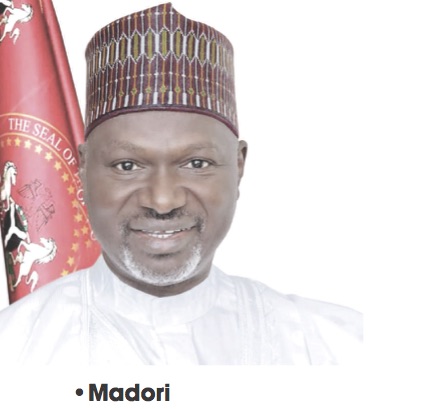
Ahmed Abdulhamid Malam-Madori is the Senator representing Jigawa North-East Senatorial District of Jigawa State. A former Minister of State for Power and Steel Development, Malam-Madori was also Nigeria’s Ambassador to Turkey. He spoke on sundry issues including President Bola Tinubu’s ministerial list, the position of ECOWAS on Niger among others.
Two-and-half months in office, what’s your take on Tinubu’s administration and his Renewed Hope campaign slogan?
Well, three months or less than three months is quite not enough time to assess the performance of a leader, especially a president like Asiwaju Bola Ahmed Tinubu who has inherited many challenges and problems, some of which threaten the very existence of our country and its people.
However, the audacious courage and clear vision behind the solutions the president is offering to the multitude of problems he inherited are commendable and he has demonstrated good leadership so far.
For instance, only a bold and courageous leader with eyes on the country’s progress and economic development would frontally confront the issue of fuel subsidy and stopped payment of the so-called subsidy and, in the process, rescue Nigeria by saving resources that can now be channeled to develop infrastructure.
President Tinubu made the removal of the subsidy a campaign promise, telling the people that if elected, he would stop that and use the money for the development of necessary infrastructure for the people. Honestly, a lot of money has been saved through this means alone. Don’t forget that the subsidy payment gulped a whooping N3.36 trillion in the first quarter of this year.
Though the administration needs to work faster, but it is very clear to all and sundry that the government is now trying to put in place some palliative measures to cushion the biting effects of the subsidy removal on Nigerians. I strongly believe that the economic policies of President Tinubu-led administration will serve the greatest good for the greatest number of our people.
Is there the possibility of saving the nation from an imminent collapse?
Indeed, there is! In fact, there is a huge possibility that the present administration, headed by President Tinubu, possesses some of the best solutions to make Nigeria great again. In appraising the policy options and initiatives of President Tinubu in just one month, I remember that the Reuters news agency said in a tweet that the new Nigerian President Bola Tinubu has moved at lightning speed in his first one month in office implementing a raft of radical changes aimed at finally unleashing the full potential of Africa’s sluggish economic giant. What the Reuters said is true, Nigeria will wake from its slumber and be a true giant.
The three months in office of the Asiwaju Bola Ahmed Tinubu-led administration has been marked by pragmatic solutions and ideas, decisive decisions and breath-taking actions at a fast pace and, soon, I believe that Nigeria will reap benefits from that.
What is your reaction to Akpabio’s recent joke of sending ‘token’ to members of the National Assembly?
If you know the Senate President, Godswill Akpabio, you will understand that he is of the joking type. When he joked about sending token to members to enjoy their holiday, he didn’t mean anything that was out of the ordinary or something that can illegally accrue to any senator. You know, Akpabio is an uncommon Senate President and he sometimes speaks and jokes in an uncommon style. Honestly, what he joked about sending to senators was just a part of their lawful allowances.
What do you make of the calibre of people in President Bola Tinubu’s ministerial list and what appeared like the drama that followed it?
I will answer the last part of your question first. Here, I can recall only one major drama, if we must call it that, when the Senate was about to screen Keyamo and Senator Darlington Nwokocha, from Abia Central, and a point of order was raised on Section 88 of the Constitution, and a motion was moved for the Senate to suspend the screening of Keyamo. Nwokocha recalled that Keyamo ignored the invitation of the Senate Committee in 2020, when he was invited to explain the controversies on the special public works programme of the Federal Government. In the end, though the screening was suspended at the time, Keyamo, eventually, got screened and confirmed after he apologised unreservedly to the Senate.
That development, in my view, shows how dynamic and progressive that the Senate of the Federal Republic of Nigeria can be.
People make mistakes and when they realised how wrong they were and seek forgiveness, they should be forgiven. Keyamo and any other person now know that the National Assembly members and the institution of the legislature are not there to be disrespected.
In answering your first part of the question, I will say that in a system such as ours, the president has a constitutional right to assemble a team of his ministers and advisers to work with him. Though it was my wish to see more women and new faces make the cabinet, the president makes the appointment.
Sometimes, it is not who members of the cabinet are but what the appointer wants them to do. Ideally, a minister is just there to implement the programmes and policies of the president. The president formulates the philosophy and direction of his administration and if he is vigilant and decisive, regardless of whom he appoints as minister, it is the blueprint of the administration that will be implemented by the ministers.
What is your reaction to the claim that the APC is working to undermine Nigeria, considering the party’s apparent tolerance for corrupt individuals – such as the appointment of Ganduje as chairman and the inclusion of over 90 percent of ministerial nominees with corruption cases?
What do you mean by saying that 90 percent of the president’s ministerial nominees are corrupt? Who is corrupt among the nominees? I don’t know where you got your data from.
I also don’t know any established case or cases of corruption against the ministerial nominees by the President. Of course, I have read about allegations of corruption against some persons. But the mistake people make is that once there are allegations, even if unsubstantiated, they tag you as a corrupt person. And our laws are very clear on that. It’s only upon conviction by a court of competent jurisdiction that one can be said to be corrupt because allegations, no matter how heavy or weighty they appear, remain allegations until they are proven beyond reasonable doubt.
Again, I know that the APC government has been fighting corruption with every resource and vehemence that it could muster. However, in the past years, corruption had grown exponentially to the point that the world had come to stigmatise Nigeria and Nigerians as synonymous with corruption.
But the fact that the APC has tried in the fight against corruption cannot be denied. Don’t forget that soon after he came into office, President Tinubu took some measures including accounting and auditing of public funds and harmonising the exchange rate as well as ending the fuel subsidy payment we talked about. These are believed to be the crucial sources of corruption that have, reportedly, enabled few people to become super rich at the expense of millions of Nigerians who, on the other hand, became poorer.
As I said, for the present administration, it is early days but I practically do not see any individual getting allowed by President Tinubu to illegally enrich themselves.
As for our party, the APC, it is my candid hope that it will be reorganised soon to play the role it was established for. The APC has no alternative but to champion the courses of democracy, welfare and emancipation of the common people who will continue to remain solidly behind the party. The party must play its role as the umbrella for all its elected officials, from the president down to the councilors.
What are your thoughts on the fuel subsidy removal and the impact it has had on Nigerians, particularly in the light of threats of strike by the organised labour?
The fuel subsidy regime was reportedly riddled with corruption, manipulation and mismanagement. The combined money allocated for petrol subsidy has surpassed the combined federal budgets for healthcare, education and defence. Nigeria spent about N10 trillion on petroleum subsidy payment between 2006 and 2018. It gulped N5.82 trillion between 2021 and 2022 and N3.36 trillion in the first six months of 2023. These figures indicate a significant drain on the government’s finances, impeding its ability to invest in crucial sectors which could bolster economic growth and people’s well-being.
Now, the elimination of fuel subsidy brings both challenges and opportunities. The withdrawal of fuel subsidy led to a surge in fuel costs across the country.
The Small and Medium-sized Enterprises (SMEs) are facing difficulties in accessing affordable power. Individuals and businesses have a stronger reason to see opportunities in clean energy by embracing cleaner options like electric vehicles, biofuels or solar-powered technologies. The prevailing high cost of petrol will, undoubtedly, stimulate investments in affordable renewable energy infrastructure, leading to a greener economy and sustainable transportation systems. For instance, the buses in major cities, globally, are powered by Compressed Natural Gas. Rather than flaring gases indiscriminately, Nigeria’s 209.5 trillion cubic feet (tcf) of proven gas reserves is capable of powering vehicles which reduces operating cost by 30 percent and carbon footprints by 95 percent. Gas which is priced significantly lower than PMS would foster a diversified energy mix with less dependence on petrol and diesel. The global market for gas as a vehicular fuel is expanding rapidly and Nigeria is better positioned to maximise the gas resources.
Foreign investments in the middle and downstream sectors of oil and gas would increase, while Nigeria can leverage on the African Continental Free Trade Area (AfCFTA) to expand the burgeoning gas market. This, along with increased investments in the gas value chain, as promised by President Tinubu, would allow for the utilisation of domestic gas resources to address energy access, affordability and achieve energy independence. These opportunities, if well utilised by Nigeria, would stimulate economic growth, improve our country’s balance of trade and strengthen its foreign exchange reserves and if that happens, the Naira can up its value and become stabilised and small scale businesses would prosper.
Hence, my call to the organised labour is to exercise little more patience, give this administration some more time and allow Nigerians to adjust their lives to suit the present realities and we shall all be happy with the turn of events in the end.
As a former Ambassador, what do you think are the implications of Nigeria possibly spearheading the war against Niger, especially with the impression that foreign powers are urging Tinubu to do so against realities of our relationship with the neighbouring country?
First, I commend President Tinubu for intimating the National Assembly, particularly the Senate, about the development in Niger Republic. He disclosed his intention to commit the Nigerian military to this collective West African battle as is being championed by the Economic Community of West African States (ECOWAS). He requested military build-up and deployment of personnel for military intervention to enforce compliance of the military junta in Niger to return their country to democratic rule.
I think there has been a misunderstanding of the role of Tinubu as President of the Federal Republic of Nigeria on one hand, and Tinubu as the chairman of the ECOWAS Authority of Heads of State and Government. At the bilateral level, President Tinubu tried to intervene through a special delegation headed by the former Head of State, General Abdulsalam Abubakar and another one headed by Ambassador Babagana Kingibe. And that was very commendable.
At the multilateral level, the decisions of ECOWAS are binding on Tinubu as the President of the Federal Republic of Nigeria because Nigeria is a critical stakeholder in the affairs of ECOWAS. Therefore, the ultimatum and sanctions imposed on Niger Republic were strictly the decisions of the ECOWAS in line with its established protocols and not that of President Tinubu or Nigeria as a country. That distinction has to be made.
Having said that, there is no gainsaying the fact that dialogue remains the most vital instrument to resolve the Niger Republic crisis, and I think that the ECOWAS must explore that option because I am of the opinion that using force is not likely to achieve any meaningful result.
Do you agree with the leader of the junta that ECOWAS’ was hasty in its position on Niger Republic and their plan to use force? What advice would you give in this situation?
We must appreciate the fact that ECOWAS decisions are always in line with its established protocols. These are laid down procedures that guide the operations of the regional bloc, and I don’t think that activating those protocols can be tagged as hasty as you put it.
As I said earlier, while I agree with the ECOWAS on the need to return Niger Republic to a democratic rule, I don’t support the idea of using force to achieve that goal.
I, therefore, urge the ECOWAS Authority of Heads of State and Government which is chaired by President Tinubu to deepen the path of diplomacy and dialogue with the coupists in Niger Republic, which is one of the poorest countries in the world and a victim of a difficult history and geography.
Niger Republic is landlocked, arid and an ugly symbol of the current global crisis. First ravaged by the colonial France, since its independence in 1960, the country has continued to be pillaged by sprawling poverty and underdevelopment.
As a result of the military coup, economic sanctions are imposed on the country by the ECOWAS and Western nations with the effects of the sanctions largely felt by the already very poor Nigeriens. Therefore, I urge the ECOWAS to consider lifting the sanctions and make sure that the sanctions do not make matters worse for the people of Niger after the military rulers eventually leave the stage.
The electricity cut off, for instance, will damage, very badly, an economy already reeling. Therefore, I want the interests of the ordinary Nigeriens to be considered in the imbroglio.
What are the priority areas of the 10th NASS?
Well! Of the three arms of government, the legislature is the closest to the people and, rightly so, Nigerians expect it to live up to their expectations. In playing its constitutional roles, sadly, some Nigerians expect the legislature to be confrontational to, and refrain from working harmoniously with, the executive arm of government. But the ideal situation is where all the arms of government work together, peacefully, and with each serving as a check on another to deepen our democratic practice.
I know that the legislators are passionate about revisiting some of the pending bills that, for some reasons, were not attended to by the 9th Assembly. The lawmakers will also try to pass bills that will have a direct impact on lives of Nigerians.
On the issue of oversight functions on government agencies, the legislators will work to ensure prudent management of resources, especially in view of the fact that the country has huge infrastructure gaps that need to be quickly bridged for the benefit of our people. This is one important area that Nigerians expect the legislature to deliver on in order to ensure optimum performance of government and provision of the dividends of democracy to the people.
As lawmakers, I believe we will also look into the worsening conditions of Nigerians as a result of the prevailing dire socio-economic circumstances in the country. More and more Nigerians are falling into poverty and not able to afford some of the basic necessities of life for a decent living. The withdrawal of subsidy on petrol has exacerbated the situation. Nigerians are looking up to us as lawmakers to ensure that budgetary provisions for government programmes are implemented to cushion the effects of the harsh economic conditions they face.
As the chairman of Senate Committee on Police Affairs, what are your recommendations for a better policing in Nigeria?
The Nigeria Police Force is saddled with the sacred responsibility of protecting the lives and properties of Nigerian citizens. Apart from performing this primary function and conventional duties, the Nigeria Police Force also serves as a buffer to other law enforcement agencies. However, in spite of these important duties that officers and men of the Nigeria Police Force perform to ensure adequate security for the country’s growth and development, the police are largely tainted by the activities of some bad eggs within. Therefore, accusations of bribery and corruption are openly and commonly levelled against the police.
Thus, how to change this ugly situation and make the police work better will be my major recommendation. It is my wish to work with the leadership of the Nigeria Police Force closely with a view to enabling it rid itself of the few bad eggs that form its narratives. It is my wish through working with the authorities of the police force to see the force repositioned with a view to making it become proactive and efficient in tackling criminality within the country.