Follow Us on Google

There are some individuals whose work cannot be measured only by projects completed or titles held. Their influence does not sit neatly inside boardroom reports or quarterly summaries.
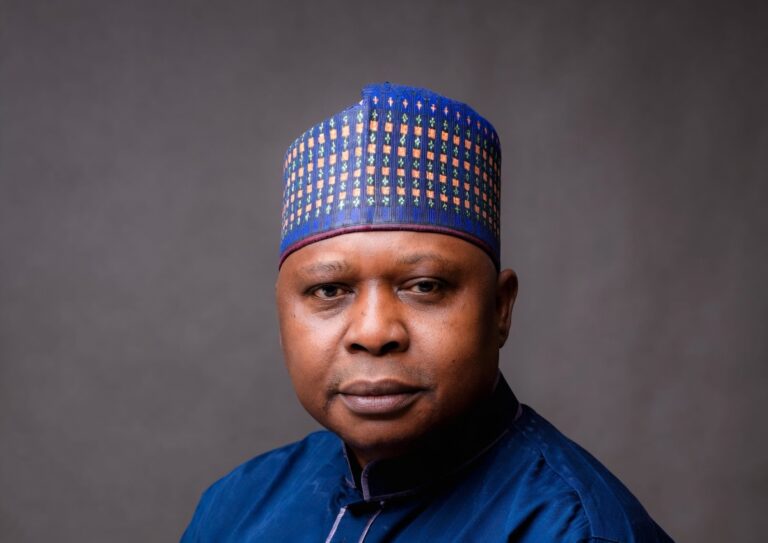
It breathes through systems that continue to serve people long after meetings have ended and applause has faded. Dr Tola Yusuf belongs to this rare group of builders whose impact stretches quietly across time and geography.
At first glance, his career may appear to be about telecommunications, infrastructure, and digital access. It is easy to reduce it to cables laid across landscapes, towers rising above rural skylines, and networks expanding into places once considered unreachable. Yet a closer look reveals something deeper and far more human.
His life’s work revolves around one fundamental question that many overlook but few dare to answer with action. How can societies design systems that allow more people to participate in opportunity rather than remain spectators of progress?
This question has shaped not only his professional decisions but also the philosophy behind his leadership. As the Founding Partner of Infratel Africa, Dr Yusuf has committed himself to expanding connectivity into communities that many institutions have historically overlooked.
These are places that rarely make headlines, yet they carry the weight of untapped potential. Rural regions across emerging markets often exist at the edge of economic visibility. They are vibrant with human energy, creativity, and resilience, yet disconnected from the networks that enable growth in a modern economy.
To many, these regions are seen as difficult terrains filled with logistical challenges and uncertain returns. To Dr Yusuf, they represent something entirely different. They are opportunities to rewrite the narrative of access. They are places where infrastructure is not just an economic tool but a bridge between isolation and inclusion.
Through open access digital infrastructure and renewable energy deployment, he has worked steadily to close the distance between possibility and participation.
What makes his approach distinctive is that it is not merely technical. It is deeply philosophical. He does not see infrastructure as a collection of physical assets. He sees it as a living system that shapes how people experience opportunity. A fiber cable is not just a line of connectivity. It is a pathway to education, commerce, healthcare, and voice. A power solution is not simply electricity. It is the difference between stagnation and growth for entire communities.
In his thinking, infrastructure carries a moral weight. It is tied to dignity. It is connected to fairness. It determines who gets to participate in the unfolding story of progress and who remains on the margins watching from a distance. This belief has led him to challenge conventional models that prioritize profit without considering participation. He understands that sustainable systems are not those that serve a few efficiently but those that include many meaningfully.
Dr Yusuf often speaks about inclusion as something that must be intentionally designed. It does not happen by chance. Exclusion, in his view, is rarely accidental. It grows quietly and often invisibly through policies, investment patterns, and governance habits that fail to ask a simple but powerful question.
Who is being left out?
Over time, systems begin to reflect these silent decisions. Markets evolve in ways that concentrate opportunity. Infrastructure follows paths that favor already developed regions. Innovation becomes clustered within familiar circles. Before long, exclusion becomes normalized, accepted as an unavoidable reality rather than a correctable flaw.
By questioning these patterns, Dr Yusuf positions himself not just as a builder of infrastructure but as a challenger of assumptions.
He seeks to reshape how institutions think about development. His work encourages policymakers to reconsider how resources are allocated. It invites investors to see value where others see risk. It challenges entrepreneurs to build with inclusion as a core principle rather than an afterthought.
His journey has not been without complexity. Expanding infrastructure into underserved areas requires patience, resilience, and a willingness to navigate uncertainty. It demands collaboration across sectors that do not always align easily. Governments, private investors, local communities, and international partners each bring their own priorities and constraints. Aligning these moving parts into a coherent system is no small task.
Yet it is within this complexity that his leadership becomes most evident. He approaches challenges not as barriers but as design problems waiting to be solved. Instead of asking why something cannot work, he asks how it can be reimagined to work better. This mindset has allowed him to move beyond traditional limitations and create models that are both practical and scalable.
Over the years, his contributions have earned recognition within the telecommunications and digital economy space. Awards and acknowledgments have followed, as they often do when impact becomes visible. However, those who study his journey closely understand that recognition is not the foundation of his mission. It is, at best, a reflection of it.
His true motivation lies in building systems that endure. Systems that do not collapse when leadership changes. Systems that continue to function even in the face of uncertainty. Systems that empower people long after their creators have stepped aside.
In many ways, his leadership style reflects a quiet but determined philosophy. He does not chase visibility for its own sake. Instead, he focuses on depth. On creating structures that are strong enough to outlast him. He believes that a system should not depend entirely on its founder to survive. If it does, then it has not been built well enough.
This belief shapes how he thinks about sustainability. For him, sustainability is not just about environmental responsibility, though that remains important. It is about institutional resilience. It is about ensuring that infrastructure continues to deliver value across generations. It is about creating stability in environments where unpredictability is often the norm.
Reliability, in his worldview, is a form of justice. When systems work consistently, people can plan their lives with confidence. Businesses can grow. Students can learn. Communities can thrive. But when systems fail, the consequences are not evenly distributed. It is often the most vulnerable who bear the greatest burden.
Through his thought leadership and writing, particularly his ideas on Inclusion Architecture, Dr Yusuf extends his influence beyond physical infrastructure into the realm of ideas. He invites a broader conversation about what development should truly mean. He challenges the assumption that growth is simply about increasing numbers. Gross domestic product, investment figures, and expansion metrics tell part of the story, but not the whole of it.
For him, real growth is measured by participation. How many people are able to access opportunity. How many voices are included in decision making. How many communities are connected to systems that allow them to contribute meaningfully to the economy.
This perspective has profound implications. It shifts the focus from accumulation to distribution. From scale alone to inclusivity. From short term gains to long term impact.
As Africa continues to navigate its digital transformation, the importance of such thinking becomes even more evident.
The continent stands at a critical moment where decisions made today will shape the trajectory of generations to come. Infrastructure will play a central role in this transformation, but the way it is designed will determine whether it becomes a tool for broad based empowerment or a mechanism that deepens existing divides.
Dr Yusuf’s work offers a blueprint for a different path. One where infrastructure is designed not only for efficiency but for equity. One where technology serves as a bridge rather than a barrier. One where development is defined by how many people are brought into the circle of opportunity.
His story is still unfolding, as all meaningful stories are. There are chapters yet to be written, challenges yet to be faced, and systems yet to be built. But even at this stage, one truth stands out with clarity.
When future conversations about Africa’s digital transformation are written, the work of Dr Tola Yusuf will likely be remembered not only for the networks he helped build, but for the lives those networks touched. Not only for the infrastructure that connected regions, but for the sense of belonging it created among people who were once disconnected from the promise of progress.
In the end, that may be his greatest contribution. Not just building systems, but building belonging into the very architecture of development.