Follow Us on Google
From Juliana Taiwo-Obalonye, Nairobi, Kenya
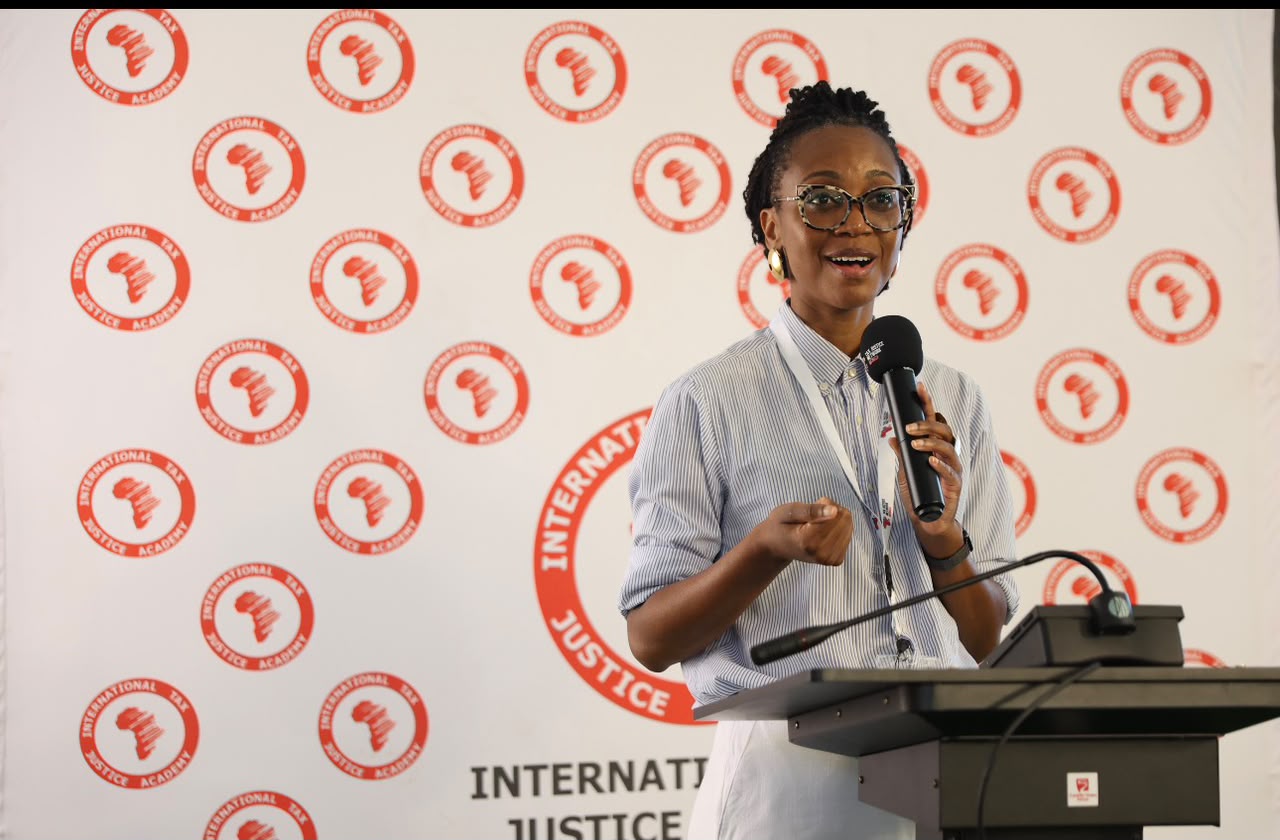
The Executive Director of Tax Justice Network Africa (TJNA), Chenai Mukumba, on Monday urged civil society, the media and academics across the continent to deepen their engagement on tax policy as geopolitical instability and technological change push resource mobilisation to the top of national agendas.
Speaking at the opening of the International Tax Justice Academy (ITJA) intermediate training course aimed at strengthening civil society organisations (CSOs) and media capacity on tax justice across Africa, convening in Nairobi, Mukumba said TJNA was founded to “democratise” conversations about tax — moving them out of closed technical rooms and into forums where ordinary people and diverse stakeholders can shape policy.
“This conversation is incredibly important, but also too important to be left to a few technical experts locked up in a small room,” Mukumba told participants. “Many of us live with people who are paying tax, and it has very real implications on our lives. We wanted to expand the number and types of people who participate in this conversation.”
Mukumba framed the academy as both a training and network-building platform. She noted that many attendees had completed the ITJA foundation course and that the current programme aims to elevate technical knowledge so civil society actors are taken seriously in advocacy and accountability work.
“It’s important that this work is grounded in strong, evidence-based conversations so people have to take you seriously,” she said. “But understanding your work is not enough — building connections across countries and sectors is essential. We’re not going to push agendas alone; partnerships are one of our core values.”
Mukumba said the debate over domestic resource mobilisation has moved from specialist circles into mainstream policy because recent global shocks have made financing development more urgent. She referenced shifting geopolitical dynamics and reductions in development funding as factors driving governments to seek more revenue internally.
“There is growing demand for this work,” she said. “But the need for civil society and media to hold governments to account is even more pressing. Many ways governments will try to raise resources risk squeezing the most vulnerable, and there needs to be a line of people to speak out.”
Mukumba additionally warned about the long-standing problem of resource extraction and illicit flows, stressing that as multinational companies and capital enter African markets, citizens must ensure their countries benefit rather than suffer further losses.
Other News
In a keynote address, Dr Lyla Latif warned that artificial intelligence is reshaping who writes the rules of global finance — and African countries must act now to avoid being sidelined.
Latif, a specialist in tax, public finance and technology governance, argued that AI is not only a technical tool but also a political instrument that will influence how international financial architecture (IFA) is designed and governed.
“We are seeing new global institutions at the UN level — an AI advisory body and a wider framework for governing AI — that will affect how countries teach, regulate and deploy these technologies,” she said, urging participants to study the UN’s technology fund, which she noted remains largely untapped by developing countries.
Latif said digital transformation and curriculum development must be priorities for African states seeking to shape AI governance. She called on civil society and governments to explore UN support for building local capacity so that national education systems can prepare for technological shifts that will affect taxation, finance and public policy.
Beyond capacity-building, Latif framed AI as part of a broader push to “rupture” longstanding power structures in global finance. She argued that Africa must couple digital policy change with strategic institutional shifts — including greater regional integration under the African Continental Free Trade Area (AfCFTA) and the development of continent-based financial infrastructure.
“Why should African resources be priced in London and Singapore?” Latif asked, pointing to commodity pricing on overseas exchanges as one example of how decision-making remains external to Africa. She urged the creation of an African metals exchange and other regional mechanisms to reclaim pricing and governance authority.
On debt and currency, Latif recommended localising financial contracts as a means to challenge existing systems dominated by foreign currency-denominated debt. “Refuse denominating debt contracts in foreign currency but in the currency of the state that is borrowing,” she said, framing the move as a strategic rupture that could undermine hyper-dependence on the dollar and the current Swift-dominated settlement regime.
Latif acknowledged that dismantling entrenched institutions will be slow. “This is not going to happen in a month or in a year or in 10 years,” she said, likening the effort to undoing structures that were built over centuries. Still, she highlighted recent steps — such as the nascent Africa Credit Rating Agency in Mauritius — as indicators of progress.