Follow Us on Google

By Vivian Onyebukwa
Dr Olatunbosun Yesufu works with Krown Hospital, Iyanapaja, Lagos, a multi specialist facility that collaborates with specialists. In one of the world’s deadly diseases, Obesity.
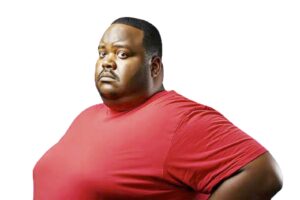
A new research has shown that more than a billion people are living with obesity around the world. The figure includes about 880 million adults and 159 million children, according to a 2022 data. Obesity can increase the risk of developing many serious health conditions, including heart disease, Type 2 diabetes and some cancers.
A Lagos-based doctor, Olatunbosun Yesufu, in this piece, gives an insight into the causes, dangers and solution to obesity.
He said: “Normally in an African environment, weight gain is seen as a sign of good living, so much so that if one is on a big side and eventually took a decision against it to improve one’s health, some people would begin to ask questions whether the person has cancer, or something happened. This is because to us, weight gain is a sign of good living. But it is not really so. There is the right amount of weight gain that everybody should have. Once you stray away from it, it becomes a health problem. Even the World Health Organisation (WHO) has identified obesity as a state of illness. So, you see most people working around with excess weight than is ideal for their height, and they don’t see it as a problem, whereas, that singular fact that they are obese is the majority of the problem that they have.”
In a lay man’s understanding, Dr Yesufu described an obese person as someone who is excessively big. He then defined obesity as when the Body Mass Index (BMI) is above a certain volume.
“BMI is simply the ration of your weight to your height. So there is an acceptable volume, a range where we strive to be, and there is a certain range, that if you are in this range, you need to do something about your weight.”
Causes of obesity
Dr Yesufu mentioned some of the causes of obesity to include excessive intake of calories. His words: “It is about what one eats, choice of diets. That’s why generally when one is gaining excessive weight, the person is advised to control what he eats. Again, obesity is caused by the level of your activities which indicates the amount of excess fats that you are able to burn. Our routine is majorly house, work, and back at home. During the weekends, you would want to relax if there is no party to attend. So our routine is such that there is little space for physical activity. For some of those who are affluent a little bit, they move from their cars with air conditioning system, to their air-conditioned office and back to an air-conditioned home, and you don’t care. You are busy eating, packing all these calories and cholesterol and there is no time to burn them. As you can see, in the society we are living, you have to make ends meet. So this keeps continuing. It is a cycle.”
The risk factor
Other News
There is need to shed weight as a result of its risk factor. Dr Yesufu identified obesity as a risk factor for a lot of illnesses such as hypertension, diabetes and cancer, with women mostly affected.
“The women begin to complain earlier than men of same age with them, starting from their knees and waist. The normal BMI, which is the ratio of your height to your weight is between 18.5/ 25.9. Between 25.9/ 29.9 is regarded as overweight. Anyone from 30 and above is obese.”
He, therefore, advised women to lose weight so that they can be there to take care of all those responsibilities that society, family and the main reason that being a woman has imposed upon them. “It is not easy to raise children. It is not easy to co-exist with some type of men. It is not easy to have successful children. It is not even easy for them to live a healthy life. Some women strive so hard to raise their children, send them to school, but when it is time to relax and enjoy the fruits of their labour, they are hit with strange diagnoses and would have limited time to live.”
Solution to obesity
In bringing solution to the problem of obesity, Dr Yesufu mentioned some approaches. Hear him: “When we get this weight, first apply a non-interventional approach. Watch what you eat, and the timing too. Also, there are drugs for weight loss. There is a time when you use them and they become effective, and there are times all these do not work. Or better still, you are finding it hard to cope with these solutions, even after seeing a nutritionist who must have given you advice which you tried few months and relapsed. After all these things, one of the interventions is surgical approach.”
Such surgeries, he mentioned, include gastric sleeve, gastric binding, and gastric bypass. Explaining how they work, he stated: “The surgical approach is non-reversible. Once you do it, you can’t change your mind. That is, the size of the stomach you have to put up with. It means that you have to relieve up to 75 per cent of the stomach. That is why they call it gastric sleeve so that the remnant in the stomach will look like a sleeve. The aim is to reduce the volume of the stomach. So you have to reduce the quantity of food that you can take in. In that way you solve the problem of excessive calorie intake. That is an intervention.”
For those who are scary of surgery and are struggling with their weights, Dr Yesufu said there are solutions too.
“For those who have tried exercise, but it did not work, intra-gastric balloon is the solution. This means that once you reduce the volume of your stomach without cutting it, once you reduce the quantity of your calorie intake without putting a permanent non-reversible intervention in place and it keeps relapsing, try intra-gastric balloon. It entails a form of small collator balloon, a silicon made, so it is very acceptable to the body. It is a balloon with the aid of endoscopy. It is a device like a tool with a camera at the tip and a light source. They pass it through your mouth and it goes into your stomach. So with the guidance of endoscopy, they pass it into your stomach and then inflate it with slime water which will occupy a particular percentage of your stomach, thereby reducing the amount of food you can store in your stomach. So it helps you to take a little food because the capacity of your stomach has been limited. Intra-gastric balloon can stay for at least six months as recommended by the manufacturer after which you can take it out having established a new eating regimen. It has no side effect. It is largely tolerable to the body to a great extent. It is normal to have nausea and vomiting which typically would last for 48 to 72 hours, after which it comes out and the body is more tolerant to that balloon. It is a foreign body, it is not part of the person, so the body has to get used to it. So in the intermediate time, there is a lot of body trying to throw tantrum. There are some medications needed to reduce this feeling of nausea and vomiting that would help to allow one cope without the new device”.
However, Dr Yesufu explained that for a little percentage of some people, the feeling of nausea and vomiting would persist which has been seen to further help them in their weight loss journey, noting that, with the vomiting and nausea, they are able to shed more weight.
He warned that not everyone can do intra-gastric balloon.
“For instance, someone who has done gastric slim surgery cannot do intra-gastric balloon. Also, anyone that has previous procedure on the stomach cannot do intra-gastric balloon. Again, anyone that has issues with blood clot cannot have intra-gastric balloon. There are other options for them.
He then advised those whose marriages are at risk because of excessive weight, those whose hearts are at risk because of their excessive weight gain and those battling hypertension or diabetes and have to regulate what they take in, to try intra-gastric balloon.