Follow Us on Google
•NNPCL stripped of access to internally generated funds
•It reverses key elements of PIA – Africa Energy Council
•It’s a troubling signals to investors –PENGASSAN
•Amendment of PIA will deliver legal clarity –Industry experts
By Adewale Sanyaolu
The Executive Order 9 signed by President Bola Tinubu, has ignited one of the most consequential debates in Nigeria’s oil and gas industry since the Petroleum Industry Act (PIA) was enacted in 2021.
The Order is drawing sharp reactions from labour unions, state finance commissioners, energy lawyers, retailers and policy analysts over its implications for fiscal governance, investor confidence and the future of NNPC Limited.
Under the new directive, all oil and gas revenues due to the federation, including royalty oil, tax oil, profit oil and profit gas, are to be paid directly into the Federation Account. It also suspends certain revenue retention mechanisms under the PIA, notably the 30 per cent Frontier Exploration Fund, the 30 per cent NNPC Limited management fee on profit oil and profit gas, and the redirection of gas flare penalties into the Federation Account.
Industry experts believe that what might appear as a technical fiscal adjustment has quickly evolved into a broader contest over the architecture of Nigeria’s petroleum reforms and the balance between constitutional revenue control and commercial autonomy.
The African Energy Council (AEC), an independent energy think tank, argues that EO9 effectively reverses key elements of the PIA’s commercialisation framework. According to the council, by mandating direct remittance from Production Sharing Contract contractors to the Federation Account — bypassing Nigeria Upstream Investment Management Services — the Order strips NNPC of its cash flow management role and weakens its commercial rationale.
The AEC maintains that reducing retained earnings and limiting access to internally generated funds constrains NNPC’s ability to finance joint venture and PSC obligations, potentially pushing it back toward its pre-PIA identity as a revenue collector rather than a commercially driven national energy company.
It also criticised the suspension of gas flare penalties flowing into the Midstream and Downstream Gas Infrastructure Fund, warning that the move undermines the “polluter pays” principle and weakens funding for Nigeria’s gas infrastructure ambitions under the Decade of Gas strategy.
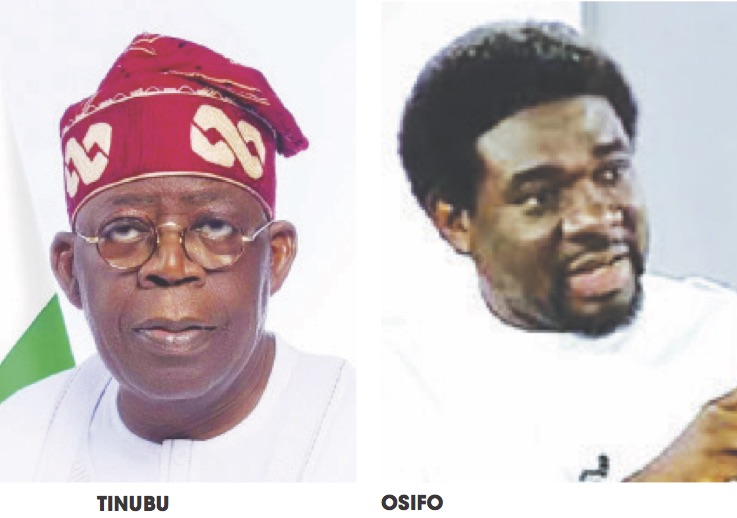
Organised labour shares similar apprehensions. President of the Petroleum and Natural Gas Senior Staff Association of Nigeria (PENGASSAN), Mr. Festus Osifo, said the union was blindsided by the directive. According to him, stakeholders had anticipated an Executive Bill to amend the PIA through the National Assembly, not an Executive Order.
“In oil and gas, certainty is everything,” Osifo said, warning that abrupt policy shifts in a capital-intensive industry sends troubling signals to investors. He noted that offshore drilling rigs can cost upwards of $1.5 million per day, while upstream projects require billions of dollars in upfront capital modelled over decades.
Osifo argued that Nigeria’s estimated 37 billion barrels of proven reserves do not guarantee sustained investment. With countries such as Ghana, Senegal and Mozambique emerging as competitive oil provinces, he cautioned that capital is mobile and will flow to jurisdictions perceived as stable and predictable.
He further linked potential investment slowdowns to macroeconomic risks, stressing that reduced foreign exchange inflows could exert pressure on the naira, erode wage value and intensify inflation.
Beyond economic considerations, Osifo questioned the legal and institutional balance, observing that an Executive Order cannot repeal an Act of the National Assembly.
The PENGASSAN President said the development reopens deep concerns about the operational independence of NNPC Limited, stressing: “When the former NNPC transitioned into a limited liability company under the PIA, expectations were high that political interference would give way to corporate governance and global best practice.”
Osifo acknowledged that the current board and management of NNPC Limited comprise seasoned professionals drawn from leading international oil companies, insisting that expertise without autonomy achieves little.
“If you appoint professionals but do not allow them to operate independently, then the transformation becomes cosmetic. The whole idea of commercialisation is to reduce political interference. If that interference continues, investors will see it,” Osifo pointed out.
He added that the implications stretch beyond industry boardrooms as oil and gas remain Nigeria’s primary source of foreign exchange earnings, and those inflows underpin the naira and public finances. He disclosed that PENGASSAN would consult with its sister union, NUPENG, and convene its National Executive Council to determine an appropriate response.
Energy policy analyst and Partner at Bloomfield Law Practice, Mr. Ayodele Oni, provided a more measured assessment.
Oni acknowledged that EO9 reduces NNPC Ltd’s automatic access to internally retained revenues — including the previous 30 per cent management fee on profit oil and gas and allocations to the Frontier Exploration Fund — thereby affecting immediate liquidity for upstream and midstream operations.
He argued that the directive also creates pressure and opportunity for NNPC to sharpen efficiency, strengthen commercial discipline and pursue alternative financing and partnerships.
In his view, the reform aligns revenue management practices with constitutional provisions by eliminating discretionary deductions and enhancing transparency across federal, state and local governments.
Other News
Oni admitted that EO9 conflicts with certain PIA provisions that allowed NNPC to retain portions of profit from oil and gas. Nonetheless, he suggested that the Order could be interpreted as an interim fiscal correction pending judicial review or legislative amendment.
Permanent changes, he said, would ideally require harmonisation by the National Assembly to provide lasting legal clarity and institutional stability.
He added that legislative amendment of the PIA would deliver lasting legal clarity and institutional stability; permanent changes to revenue allocation are best achieved through the National Assembly to avoid ambiguity.
Foremost legal practitioner, Olisa Agbakoba (SAN), also weighed in on the legal debate. While acknowledging that an Executive Order cannot repeal an Act of Parliament, Agbakoba argued that allowing NNPC to deduct substantial portions of oil revenue before remittance raised serious governance concerns.
In his view, the President acted within constitutional bounds to address what he described as a flawed fiscal structure, though he agreed that legislative action would ultimately remove ambiguity. On the other side of the spectrum, the Forum of State Commissioners of Finance has strongly endorsed EO9. Its Chairman, Akintunde Oyebode, who also serves as Ekiti State Commissioner for Finance, framed the directive as a constitutional and governance reform rather than a revenue windfall.
Oyebode estimated that the suspended management fees, frontier exploration allocations and gas flare penalties could add roughly N1.5 trillion annually to the Federation Account. However, he emphasised that this represents a single-digit increase in an account that receives more than N30 trillion each year.
“In monetary terms, this is not even a significant increase,” Oyebode said, stressing that the real objective is restoring constitutional custody of federation revenues and addressing structural leakages in Nigeria’s oil revenue architecture.
He added that for states grappling with wage bills, debt obligations and infrastructure deficits, predictability and transparency in remittances matter as much as incremental revenue gains.
“It’s not about states getting more revenue. It’s about adherence to the Constitution. It’s about doing what is proper,” he said, insisting that public debate should focus on safeguarding federation revenues rather than framing the order as a windfall for sub-national governments.
While labour unions, including PENGASSAN, have warned that the directive could unsettle the industry and discourage investors, Oyebode dismissed the notion that the measure was about states cornering more funds.
He argued that the most consequential revenue losses lie beyond the specific items targeted by the order, pointing to what he described as a dramatic collapse in joint venture inflows following the implementation of the Petroleum Industry Act.
According to him, joint ventures contributed about $12 billion to the federation before the Act, but that figure has since dropped to roughly $2 billion.
“That’s an area that no one is even talking about,” he said, citing concerns over the transfer of joint venture assets without proper valuation and governance safeguards.
For the states, he suggested, the deeper challenge is correcting systemic distortions in revenue flows rather than debating the incremental gains from management fees and penalties.
Oyebode also downplayed fears that the order could destabilise NNPC Limited, arguing that the sums involved are small relative to the company’s scale. He noted that the national oil company reported a N4.5 trillion profit in 2024 on revenues he put at about N45 trillion, describing the amounts under contention as marginal in that context.
Responding to concerns about executive overreach, he declined to offer a legal opinion but maintained that any constitutional disputes should be resolved in court. He added that investor reaction would hinge on how the order is implemented, noting that a government committee has been set up to work out guidelines.
“If there are valid agreements, contracts in place, it will not affect the repayment of those contracts,” he said, urging stakeholders to await the committee’s framework before drawing conclusions.
Beyond the executive order, Oyebode pushed back against criticism that states are dependent on federal generosity, stressing that revenues in the Federation Account belong to the entire federation and are shared according to constitutional provisions.
He said domestic debt levels in many states have declined by between 15 and 20 per cent in the past two years, while increases in foreign debt valuations were largely driven by exchange rate movements rather than fresh borrowing.
For its part, the Petroleum Products Retail Outlets Owners Association of Nigeria (PETROAN), led by its National President, Dr. Billy Gillis-Harry, also backed the Order.
Gillis-Harry described EO9 as a bold and reform-driven step that enhances fiscal discipline, eliminates opaque deductions and strengthens public confidence in petroleum revenue management. He argued that compelling NNPC Ltd to remit revenues directly reinforces its evolution into a commercially disciplined entity aligned with global best practices.
The broader industry question, however, is whether fiscal centralisation can coexist with commercial autonomy. The PIA was designed to insulate NNPC from political interference, convert it into a limited liability company and enable it to compete globally.
Critics fear that restricting access to internally retained funds could limit project execution capacity at a time when Nigeria urgently needs fresh upstream investment to reverse declining production.
Supporters counter that commercial entities worldwide operate without discretionary revenue retention and must raise capital through transparent financing structures.
From that standpoint, EO9 could accelerate governance reforms within NNPC, compelling it to operate strictly on commercial principles while ensuring that constitutionally due revenues flow directly to the Federation Account.