Follow Us on Google
From Juliana Taiwo-Obalonye, Abuja
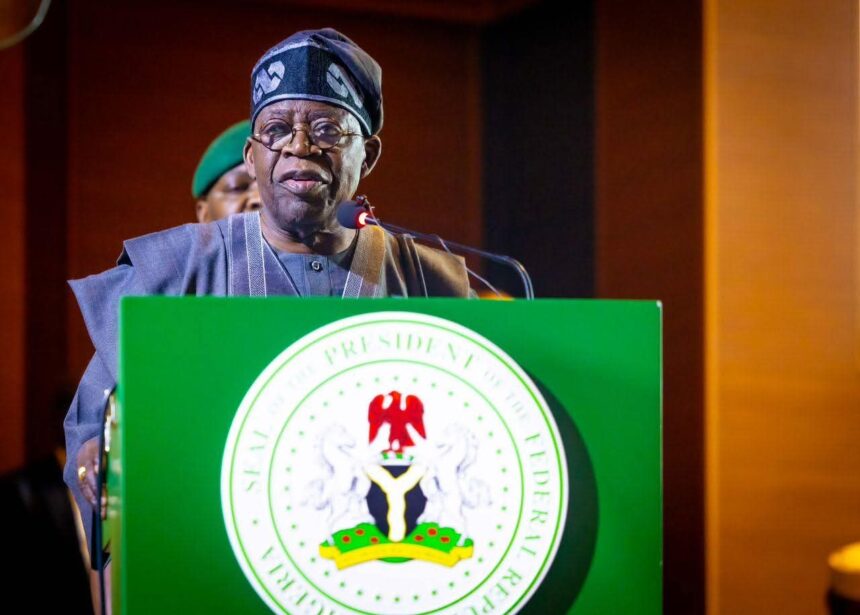
President Bola Tinubu has called for stronger international cooperation and people-centred policies to tackle the escalating crisis of climate-induced mobility, labeling climate change as “one of the most significant drivers of human movement in the world today.”
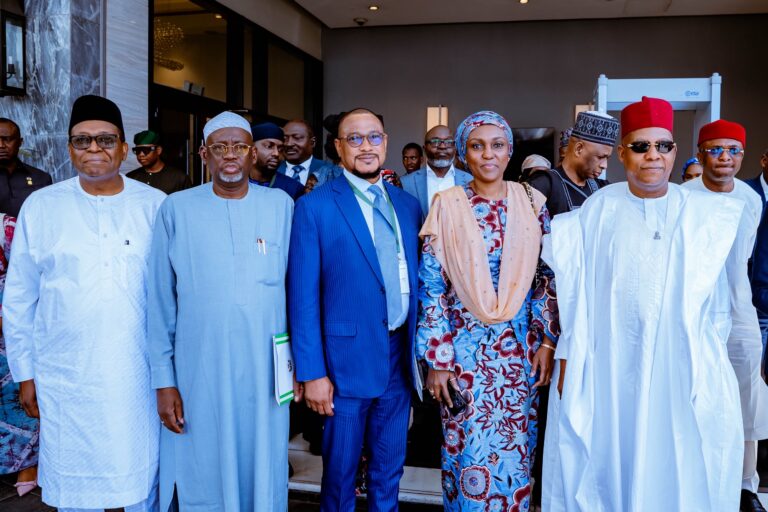
Delivering the opening statement at a Special Event on Climate-Induced Mobility under Nigeria’s Chairmanship of the Rabat Process, Tinubu, represented by the Secretary to the Government of the Federation, George Akume, underscored the urgency of coordinated global action. The event, Nigeria’s final official meeting as Chair, gathered senior officials and international partners to discuss climate change’s intersections with migration, development, and security.
In a statement by Special Adviser on Media and Publicity to the SGF, Yomi Odunuga, President Tinubu described hosting the event now as “both deliberate and symbolic,” reflecting Nigeria’s view that climate change profoundly impacts “peace, security, development, and human dignity across Africa, Europe, and beyond.” He emphasized that for Nigeria, “climate-induced mobility is not a distant or abstract issue but one deeply rooted in the country’s history, geography, and lived realities.”
The President noted that while “mobility has traditionally served as a way for communities to adapt to environmental and economic change,” recent climate pressures have transformed migration patterns. He added that “mobility itself is not inherently negative,” and with “sound policies, legal protection, and adequate investment,” it can become “a legitimate adaptation strategy that enhances resilience and preserves human dignity.”
Other News
Drawing on Nigeria’s experiences, Tinubu highlighted the 2022 floods that “affected over 4.4 million people nationwide and displaced about 2.4 million people across more than 30 states,” submerging communities, destroying homes, inundating farmlands, and disrupting livelihoods with ongoing threats to food security and stability. He also cited the Lake Chad Basin’s degradation, where the lake’s shrinkage has upended fishing, farming, and pastoralism; rising sea levels eroding coastal infrastructure and desertification hitting agriculture elsewhere.
Under the Renewed Hope Agenda, Tinubu said his administration has pivoted “from reactive responses to proactive climate disaster preparedness.” Key initiatives include the Global Flood Disaster Management Project (GFDMP) for early warnings, resilient infrastructure, and community engagement, as well as the newly announced Climate-Resilient Livelihoods Empowerment Programme for Displaced Populations (CLEP4DPS)—a 10-year, US$250 million effort focusing on climate-smart agriculture, renewable energy, green jobs, and women/youth tracks. “The programme is built on the premise that economic empowerment is a critical form of climate adaptation,” he stated.
The Federal Government has also provided cash/material aid, resettling families into planned communities like the Resettlement City Project with livelihood support overseen by humanitarian agencies.
Tinubu stressed that “climate-induced mobility is a transnational challenge that no government can address alone,” urging “shared responsibility, strengthened international cooperation, and sustained solidarity.” Nigeria remains committed to “evidence-based policymaking, inclusive partnerships, and principled dialogue” via the Rabat Process. He thanked Switzerland, the European Union, the International Centre for Migration Policy Development (ICMPD), and others, hoping for “concrete collaboration linking climate action, migration governance, and sustainable development.”