Follow Us on Google
By Enyeribe Ejiogu
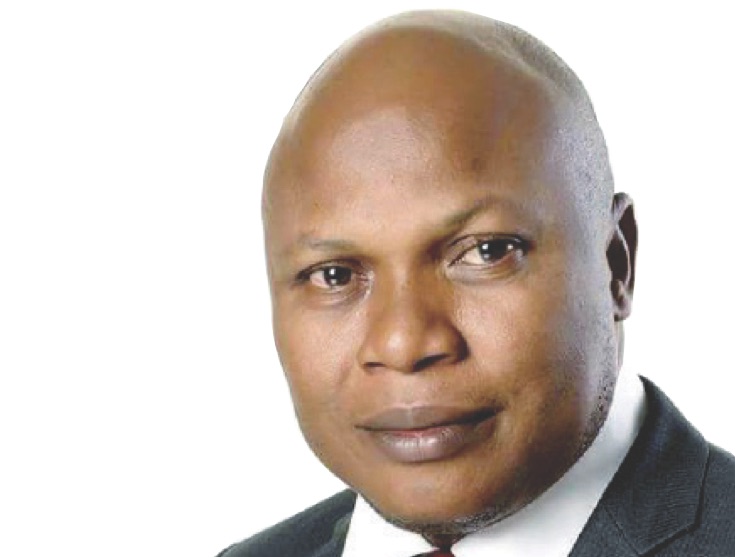
Founder of Southern Atlantic Polytechnic, which is in the process of being converted into a university, Pastor Bassey James, is quite disturbed by the damage being done to technical education by the growing menace of illegal facilities operating from three bedroom flats and buildings of primary schools and claim to be offering polytechnic education in affiliation with other tertiary institutions. He laments that the government needs to move urgently to eradicate the menace. In this interview, he makes a call for synergy between the government and the universities to produce solutions that will grow the economy.
It is well known that you founded Southern Atlantic Polytechnic, which is now being converted to a university. What is the reason?
The reason for the decision is in two dimensions. There is the issue of illegal “polytechnics” that are springing up in the state. When I came into polytechnic education, I was very happy because I had a desire to contribute to growth of the technical aspect of education in the country, and boost the acquisition of technological skills that polytechnic education bestows on graduates. But in less than two years, I found out that almost everywhere in the state, the South South and South East, you now have mushroom facilities which claim to offer polytechnic education in three bedroom flats and some other buildings like primary schools without the approval of the National Board for Technical Education (NBTE). These illegal places say they are affiliated with some other institutions. Polytechnic education has nothing to do with affiliation to other institutions. These mushroom places have no technical laboratories or requisite facilities to offer polytechnic education. On the hand, proprietors of the legal private polytechnics invested huge amounts to acquire land, built and equipped lecture halls, provided appropriately equipped laboratories and also went through rigorous accreditation process to get the approval of the National Board for Technical Education, NBTE. Clearly, these illegal places are bastardising polytechnic education, thereby making prospective students to lose interest in pursuing polytechnic education in the school. It is demoralising seeing the illegal polytechnics all over the place. This made me to rethink and then decided to convert it to a university. We have started the process by expanding facilities. We are expecting the National Universities Commission, NUC, to come and evaluate what we have on ground. I want to appeal to the Federal Government to take this issue of illegal polytechnics very seriously. There should be deliberate effort on the part of the Federal Government to stop it. It must be decisive in dealing with the menace of illegal polytechnics, which is putting a prominent stain on polytechnic education in the country and making prospective students treat it with disdain.
As it is today, what is the time-line for the take off of the university. In other words, when will the new university be ready to admit students through the Joint Admissions and Matriculation Board, JAMB?
We have done everything, we have submitted our documents as required. So, we are ready; we are just waiting for the NUC to visit for verification, which I hope will happen in the next few weeks or thereabout.
The next JAMB admission cycle will soon start, when students begin to register for the Universal Matriculation Examination (UTME). How soon after the NUC verification will the institution inform JAMB that it is ready to admit students, and into which courses of study?
The NUC is a highly respected organisation that follows due process in discharging its mandate of regulating university education. There is no illegality in what the NUC does. The verification process is rigorous. Incidentally, I am a man who follows due process. I do not promote illegality in any form. We are not cutting corners, we are strictly following the NUC guidelines. We want to make sure that the university goes through the normal accreditation process. We have done so much, we have built more facilities. I am happy with the extent of structures and facilities we have on ground. So, we are good to go. We are waiting for NUC verification. Also, my people are happy about the conversion from polytechnic to university, because it is the first private university in the whole of Ibibio Land. We have never had a private university. So, almost every Ibibio person is proud of what we are doing. We have had visitors, known and unknown, who have visited the site of the proposed university to pray for us, and encourage us.
Now, there is University of Uyo (which is a federal tertiary institution). There is also Akwa State University, in Mkpat Enin and the new second federal university to be located in Ikot Abasi. With these three public universities in Akwa Ibom State, what will the proposed Southern Atlantic University, Uyo, do differently that will set it apart?
The proposed Southern Atlantic University will be the normal conventional university but it will focus on training the students in practical entrepreneurship in different areas at degree level. In other words, we will inject a heavy dose of business into the curriculum. You will not find the university offering courses like History, CRK, Education and such other courses. Students who want to study courses in the arts and humanities will have to seek admission into other universities. It is not enough to just get a certificate. You must have knowledge and skills that allow you add value. We want to produce graduates who will create wealth, jobs and grow the economy through entrepreneurship. We want to produce graduates who will easily function in the digital economy that is rapidly emerging; graduates with digital abilities and talents who can deploy innovative thinking to solve problems and in the process create wealth for themselves. So, in essence, we want our graduates to gain knowledge, get practical experience and of course a degree after the four-year or five-year course.
In practical terms, we are setting up shoe-making units that will not only train students in the art and science of making shoes, but will teach them to see it as profitable business. We will be strong in agricultural production and processing that will operate at near-commercial levels that will meet the internal needs of the university and also sell to the public in a well-organised manner. In that regard, we will go into commercial aquaculture. We have acquired land in Mkpat Enin Local Government Area and another place, where we will run the agriculture enterprise programmes, to train our students in practical commercial agriculture and agro-processing. But the biggest headache we have is that the banking industry is simply not ready to support micro, small and medium enterprises (MSME) with credit facilities. Take the case of the Central Bank of Nigeria CBN) Anchor Borrowers Programme (ABP). The CBN officials who supervised the ABP came to evaluate our school and were satisfied with what they saw. The CBN gave us a letter of recommendation, stating that we were qualified to apply for the ABP loan, and advised us to approach a bank that would work with us to process our application for the loan. The CBN was willing to grant the loan, but the bank made it impossible to access the facility.
Nigerian banks are the worst in encouraging enterprises; all they want is for you to deposit money with them, nothing more. The banks become deaf and dumb when you ask them for money.
Our curriculum will be fully focused on training our students on how to apply technology to development of the agricultural value chain. Just look at what Israel has done with agriculture. We want to focus on teaching our students how to add value. So, our students will key into our entrepreneurship development programme. We started this under the polytechnic curriculum, but we are up-scaling this under the university curriculum. By the time our students graduate, they will be fully ready to set up their own enterprises.
The United States and many other countries harness and extensively utilise the intellectual resource base of their universities for national economic development. What is your message to the new Bola Tinubu Administration in this regard?
I would say that Bola Tinubu has come at the right time. First, he has removed the worst form of corruption in Nigeria called subsidy. He has shown that he has the capacity to reposition the country and move it forward. Now to answer your question directly, let me first note that in the United States, Britain, Israel, South Korea, Russia, Germany, and several other developed countries, the governments in those nations consistently support their universities with funding to do research studies that produce solutions which can be commercialised to solve problems.
I want to him to look into how the enormous intellectual resource base of the universities can be used to grow the economy. Nigerians have capacity for innovations. What has been lacking is the right leadership that would deploy the necessary political will to harness and deploy the intellectual resource base of the country’s universities to produce home-grown solutions to several of the problems we have through appropriate initiatives.
National economies grow when the SMEs are doing well and to creating jobs. Given that given that you are focused on producing graduates that can create wealth, what advise can you give the government to ensure that there is synergy between the universities and organisations that can utilise the research results to set up SMEs?
We have started something like that already, where we take the theory into the practical setting to set up small enterprises which give the students hands-on experience. The government should establish a framework that would allow the banks to fund SMEs set up by universities and grant them favourable medium-to-long term credit facilities under arrangements that would be properly supervised by respected and relevant private sector credit rating organisations that would interface between the banks and the universities.
We have large acreages of agricultural land. If a reasonable corporate investor approaches us with a good proposal for an agricultural joint venture that would utilise our land for agricultural production and processing, I assure you that the university would be interested in it. Such project would fit in perfectly into our quest to give our students hands-on, practical, entreprenurial education on how to run wealth-creation enterprises.