Follow Us on Google
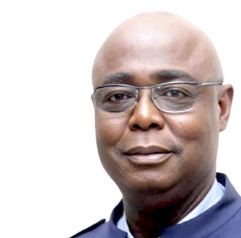
By Enyeribe Ejiogu
QUOTE:
The World Health Organisation has established the fact if you want to improve the health of the people or improve the quality of health services, you start by improving the quality of laboratory services. Unfortunately, and sadly, that has not been the case in Nigeria.
The Nigerian health sector is contending with increasing siege and depletion of well-trained personnel who are relocating in droves, to greener pastures overseas. For those who are still within the Nigerian healthcare system and giving their best, detrimental government policies that have existed for a long contribute to the rot they have to deal with as they strive to render services. Like other concerned professionals, the National President of the Association of Medical Laboratory Scientists of Nigeria, AMLSN, Dr Ifeanyi Casmir earnestly desires that both President Bola Tinubu, who is pursuing the Renewed Hope Agenda of his administration, and the Coordinating Minister of Health and Social Welfare, Dr. Ali Pate, will doggedly reenact the Eyitayo Lambo magic in the health sector.
Taking an overview of the health sector, what are your thoughts and the expectations of medical laboratory practitioners from the government?
We must take very measurable steps to reverse the downward trajectory of our health indices. Within the African continent and globally, our health indices have been among the poorest. We have consistently occupied the lower rungs of the ranking within the African continent and globally. It is not just that we are low, but we are at rock bottom positions: 52 out of 54 in Africa and 192 out of 194 globally.
The reasons for this are largely due to high infant mortality and high maternal mortality. Why are these indices so high? They are high because we have a very weak medical laboratory service structure. Across the globe, the sine qua non for good health indices is the strength of the nation’s medical laboratory service. This fact is accepted globally. Even across the West Africa sub-region, the ministers of health and interior concede to this fact. The World Health Organisation has established the fact that if you want to improve the health of the people if you want to improve the quality of health services, you start by improving the quality of laboratory services. Unfortunately, and sadly, that has not been the case in Nigeria.
We are glad that President Ahmed Bola Tinubu, who came with the Renewed Hope Agenda (RHA), has successfully translated his campaign promises in the RHA manifesto to some form of policy under the auspices of the Coordinating Minister of Health and Social Welfare. That is commendable. We particularly commend the flag-off of the health package which was done to commemorate the Universal Health Coverage Bill. Whereas we stand with the President on that promise, we are concerned that the package is deficient in the area of medical laboratory components. We are calling the attention of the President and the Coordinating Minister of Health to that fact. If we want to turn back the negative trend in health indices, we need to take bold steps to operationalize our national medical laboratory policy, which has been lying dormant. The document was produced by the Federal Ministry of Health. What we are also saying is that primary healthcare (PHC) service is the closest point of healthcare access to the people. We had received a promise from the erstwhile Buhari administration that it would turn around 10,000 primary healthcare centres in Nigeria to look like the Kuchingworo Model PHC. Unfortunately, that remained an “audio” or lip service promise. If you go to the majority of PHCs across the country, those that still have roofs are serving at best as pens for goats. We need to take measures to revamp, rejuvenate, and politically reform our PHCs. On March 5, 2022, there was a review of the minimum package for health arising from the one percent allocation from the Consolidated Revenue Fund, prescribed under the National Health Act, to shore up the quality of healthcare through laboratory testing and equipment of the PHCs. Unfortunately in that review, there was no provision for medical laboratory services.
So, at both the primary healthcare service and the universal coverage, if we do not integrate medical laboratory components, if we do not strengthen medical laboratory services across the country (federal, state, and LGAs), then what we are doing is promoting voodooism, and our health indices would not get better. As critical stakeholders and core professionals in this area, we are ready, willing, and committed to supporting the Bola Tinubu administration, we are ready to work in synergy and cooperate with the Coordinating Minister of Health and Social Welfare, Dr. Ali Pate. What is happening is that over the years, medical laboratory professionals have sacrificed financially and materially for the nation’s health system. There is a lack of the political will to put in place the necessary structure.
There has been an issue between pathologists and medical laboratory scientists because the pathologists want to head medical laboratories. Has this matter been resolved?
The truth needs to be told that any pathologist who is interfering with medical laboratory services is not worth his salt. Primarily, the pathologist is a consulting physician. When you abdicate your role and job calling because of filthy lucre, and become meddlesome, you have at best reduced yourself in value and in your contribution to the healthcare system. Now, the same government gives licence to you to practice as a medical officer/physician, and gives licence to another person to practice as a medical laboratory scientist, is there any point of conflict? The answer is no. Any time the pilot leaves the cockpit and goes into the cabin to struggle for the duty of the air hostess or cabin crew, certainly something is wrong with that pilot.
I recall very well that Senator Olorunimbe Mamora, a former Minister of State for Health once said that it is unimaginable that a pathologist who primarily is a physician would abdicate his consulting room, his duty of consultation and care to his patient to go jostle with the medical laboratory scientist on the bench on how to test blood, urine, and stools. So, what is the duty of a pathologist? He is a consulting physician, who has to first deal directly with a patient in the consulting room, clerk the patient, make prescriptions, and interpret laboratory results to physicians who do not specialize in laboratory medicine. Consider where a patient comes for care and a general practitioner for instance or a physician with a different specialty (whether paediatrics, internal medicine, or family medicine) who is seeing the patient, and requests laboratory investigation. When such results are obtained and the particular physician does not know what to do with the results, he is supposed to interface with a pathologist who would jointly review the patient or ask that the patient be referred to him. He will review the patient based on the laboratory results. He will then give advice, either directly to the patient or the family physician primarily caring for the patient. Very many years ago, at the University of Nigeria Teaching Hospital, Enugu, we had pathologists. Those of them with specialization in Chemical Pathology had their metabolic clinics. So, if somebody had diabetes that was becoming intractable, they would be there to attend to the patient. That is not a laboratory-based work; it is a physician’s duty. If we also have patients with hemoglobinopathy, they are referred to pathologists who have a specialization in heamatology. These are the primary duties of a physician, not testing for blood group or genotype. Unfortunately in Nigeria, pathologists have abdicated these duties and have been posturing themselves with contractors to supply chemicals, reagents, and equipment for use in the laboratories.
Way back in 1971, the scheme of service of the then-medical laboratory technologists was very clear. Under the relevant section, they were to “take charge of the medical laboratory.” If you are empowered by law and assigned the duty of taking charge, who should then superintend you? So, medical laboratory scientists are not middle-level manpower. They are trained to determine the tests, and the methodology for the tests, give the interpretation of results, its administration, and all matters connected to the laboratory. So, the type of scenarios being created in Nigeria is terrible. Nigerian pathologists should stay in their lane. Having been trained with the nation’s resources as physicians they should not abdicate their duty of care to the people and come into the laboratory because they think it is juicy. This thing can only happen in Nigeria.
Now that there is a new minister, has the association made any representation on how to resolve it?
The new Minister of Health is someone who has been in the system before and he is familiar with the process and procedure for managing the health sector. He was not in tandem with the status quo and that was why he left voluntarily. Now that he has been returned to the Health Ministry, we expect that he will not follow in the footsteps of his predecessors who fostered hegemonistic practice in the sector. The only time Nigeria recorded tremendous progress in the health sector was when we had Prof Eyitayo Lambo as health minister. He came as a global expert in Health Economics. He gave the different professionals in the health sector a sense of belonging, gave what was due to them, and insisted that each of the professionals should remain within the frontiers of their professional charter. In America, Britain, and other parts of Europe, you don’t find clinicians or physicians running or leading hospitals. I don’t know why in Nigeria we have made the headship of health facilities the exclusive preserve of clinicians or physicians, or why they must be the Minister of Health. We have done this repeatedly through the various regimes and civilian administrations. The only time we did it differently, we got good results when Professor Eyitayo Lambo was the Minister of Health. I want to urge President Tinubu to reenact the Eyitayo magic under his Renewed Hope Agenda and implement the Eyitayo leadership template in the health sector. Anything short of that will leave the sector in a worse state than he met it.
xxx