Follow Us on Google
From Juliana Taiwo-Obalonye, New York
President Bola Tinubu has established the Presidential Humanitarian and Poverty Alleviation Trust Fund for Nigeria, with 30 per cent of the funding expected to come from the Federal Government and the remaining expected from the United Nations, donor agencies, philanthropic individuals, and the private sector.
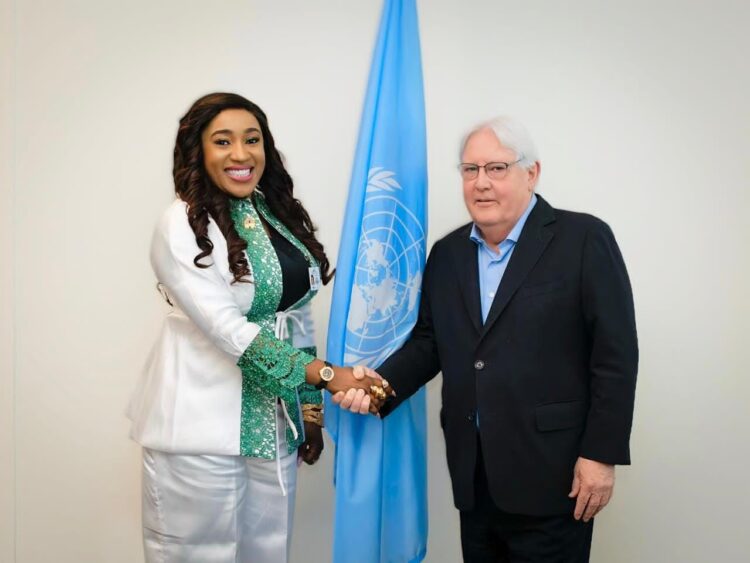
Minister of Humanitarian Affairs and Poverty Alleviation, Betta Edu, made the disclosure Friday in New York at a high level meeting on building partnership for durable solutions at the sidelines of the 78th United Nations General Assembly (UNGA), which has ministry hosted.
She said: “The President has approved the Presidential humanitarian and poverty alleviation Trust Fund for Nigeria, and this will have several governing cadres with a structure that will show accountability and transparency.
“The essence is for us to be able to adequately address the issues which we face on ground as a matter of urgency. I’m sure we already know that the president declared a state of emergency on food security in Nigeria. He equally had a state of emergency on other things like humanitarian crisis and our ability to provide durable solutions.
“Finally, I want to say that Nigeria is counting on the support of the international community, development partners, donors and friends that are in the room today to give us the right network, to attract the right support to really address the needs that we have in Nigeria. And as we make plans to come in and address this need, what must be key at the back of our minds is providing durable solutions.
Edu said the government is seeking urgent international support to address human and climate-induced displacement and poverty in the country.
She said: “Lots of commitment is needed at all level to see that Nigeria is able to overcome its challenges especially as it has to do with persons who are affected by humanitarian crisis, where we have about 16 million registered persons that are affected by humanitarian crisis.
“And suffice to say that this number might actually be doubled because there are persons who are affected but they are not registered and they live within communities and have not come forward for the formal registration.
“So, we might be dealing with close to 35 million persons that are directly or indirectly affected by humanitarian crisis.”