Follow Us on Google
•Nigerians not holding govs, council bosses, councillors accountable
From Christy Anyanwu, London
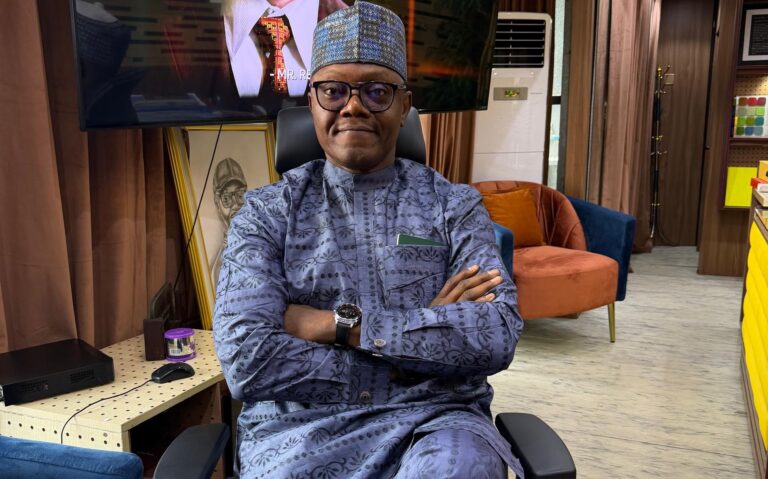
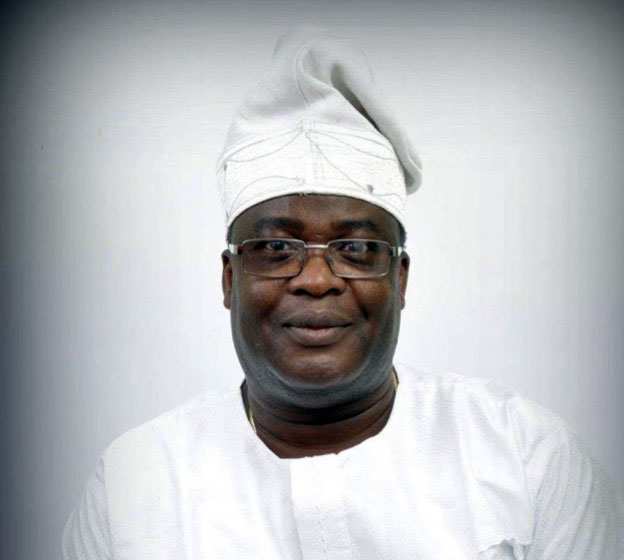
Adedamola Aminu is a Nigerian-British academic and politician recognised for his contributions to politics, academia and community development in the United Kingdom. He is president of the Association of Nigerian Academics UK (ANAUK), a founding member and former chairman of the Association of Nigerian-British Councillors in the UK, and author of Nigerian-British Politicians in United Kingdom and Republic of Ireland, a book examining the contributions of Nigerian-born politicians abroad.
In this interview, Aminu speaks on President Bola Tinubu’s administration, the proliferation of political parties, the cost of governance, opposition politics, diaspora participation, youth unemployment, vote-buying, insecurity and foreign military bases in Nigeria. He argues that Nigerians must look beyond the Federal Government and hold state and local government officials accountable for their stewardship of public funds.
What is your view on the number of people contesting presidential elections in Nigeria?
The number is excessive. Everybody wants to become president, even without the necessary political structure or grassroots support. This wastes resources and time, including the time spent counting votes. Already, about 18 candidates have reportedly registered for the 2027 presidential election, yet some of these parties have no structures across the country, no functional secretariats, and no local government chairmen or councillors. Nigeria needs to consider constitutional and electoral reforms to reduce the number of political parties to between three and five. Aspirants with alternative programmes and manifestoes could come together under a common platform rather than establishing parties that lack the capacity to compete effectively. Any party seeking to participate in an election should demonstrate that it has functional offices and structures across the country. Those without the necessary structures should not be allowed to contest elections simply to have their names on the ballot.
What is your assessment of President Bola Tinubu’s administration?
President Tinubu is trying his best, and Nigeria’s problems cannot be solved overnight. I do not believe President Tinubu alone is Nigeria’s problem. The problems are also rooted in the conduct and attitudes of Nigerians themselves. However, the president is not perfect, and there is still much to be done, particularly in the economy and security. The cost of living is too high, and the government must urgently find ways to ease the burden on ordinary Nigerians. Corruption is widespread, extending beyond government offices to the civil service and individual citizens. We see it in the production of fake goods for excessive profit, the theft and vandalism of public infrastructure, and the way people treat one another. We must all examine how our actions contribute to the problems confronting the country.
As a lecturer and management consultant, I welcome the Nigerian Education Loan Fund (NELFUND), which provides loans to eligible students to finance their higher education. Such interventions can reduce the pressure on parents struggling to pay their children’s educational expenses. I also support economic policies aimed at attracting investment and encouraging the processing of raw materials locally rather than exporting them without adding value. This approach can stimulate industrialisation, create jobs and strengthen the economy. Another important issue is the performance of state and local governments. We have devolved substantial responsibilities and financial resources to state governors, local government chairmen and councillors, yet many communities continue to suffer from poor infrastructure and inadequate public services.
According to the figures cited for August 2026, the Federation Account Allocation Committee distributed N2.338 trillion to the three tiers of government. States reportedly received N794.313 billion, while local government councils received N555.142 billion. The question is: what are these governments doing with the money? There is no justification for a state or local government to owe workers their salaries or pensioners their entitlements for months while receiving allocations from the Federation Account and generating revenue internally. Citizens must hold their governors, local government chairmen and councillors accountable. They should demand explanations about how public funds are spent and what projects are being executed in their communities. The problem is not necessarily the absence of money but the failure to translate available resources into tangible improvements in people’s lives.
You have also criticised the cost of governance. What changes would you recommend?
The cost of democracy in Nigeria is too high. In one of my previous interviews, I suggested scrapping the House of Representatives or making it a part-time institution, with members paid sitting allowances rather than maintaining the current expensive arrangement. The savings could be redirected to local governments, where communities urgently need roads, schools, healthcare facilities and other basic amenities. A substantial amount of money is allocated to constituency projects, but the intended beneficiaries in many communities do not always experience the expected impact. The government should also establish an independent committee to audit and investigate how state and local governments utilise their budgets. Such a mechanism would promote transparency, strengthen accountability and help ensure that public money serves the people.
What is your assessment of opposition parties and their role in holding the government accountable?
I do not believe Nigeria currently has an effective opposition. I have said this several times. After elections, opposition parties often go to sleep for almost four years, doing little to organise themselves or monitor the performance of the government. They become active again as the next election approaches, when politicians begin moving from one party to another in search of tickets. An effective opposition should provide constructive criticism and offer alternative policies that can improve governance and the economy. Opposition parties should have credible candidates and spokespersons in place throughout the electoral cycle. They should also develop the capacity to scrutinise ministries, monitor ministers and examine government policies, offering credible alternatives where necessary. The frequent movement of politicians from one party to another suggests that many lack a clear political ideology or commitment to particular principles. Nigeria cannot develop effective opposition politics if parties wait until shortly before elections to select candidates and begin political mobilisation. They must build their structures, develop their policies and hold the government accountable throughout its tenure.
You spoke about establishing a diaspora political party in 2022. Do you still believe such a party is necessary?
That was my position at the time, given Nigeria’s economic and political circumstances. The current administration has been making efforts to improve the economy, although I do not expect everything to change overnight. My broader argument was that Nigerians in the diaspora have been marginalised in governance despite their experience, skills and contributions to the country’s economy. Nigeria would benefit considerably from the knowledge of citizens who have excelled abroad in fields such as education, medicine, engineering, politics and local government administration. Rather than allowing this wealth of experience to remain untapped, the government should create opportunities for diaspora professionals to contribute to national development. I also believe Nigerians living abroad should be allowed to vote from their countries of residence. I hope the government and the National Assembly will pursue the necessary legal and constitutional reforms to make diaspora voting possible.
How would you assess the Tinubu administration’s efforts to support SMEs and tackle youth unemployment?
My personal assessment is that the administration is making slow but steady progress. The government has expanded social investment interventions aimed at supporting small businesses and young people. Initiatives associated with the First Lady, Senator Oluremi Tinubu, including the Renewed Hope programme, have also provided financial assistance to women petty traders seeking to expand their businesses. However, these interventions have not yet generated industrial employment on the scale required to absorb Nigeria’s large youth population. The government has also invested in road infrastructure, rail transportation and major projects, including the Lagos-Ibadan and Abuja-Kaduna rail lines and coastal road projects. Such investments can improve the movement of goods and people, reduce transportation difficulties and support economic activity. Nevertheless, the fundamental conditions needed for small and medium-sized enterprises to thrive remain inadequate. These include reliable electricity, affordable credit, manageable inflation and an improved business environment. The government must pay greater attention to the interest rates commercial banks charge small businesses. High borrowing costs discourage entrepreneurs from investing and expanding their operations. Interest rates need to be substantially lower to encourage productive borrowing, although achieving this will require broader economic and monetary reforms. I would also like the government to reconsider the place of coins and lower-denomination banknotes in the economy. When smaller denominations are unavailable, traders may round prices upwards, placing additional pressure on consumers. Restoring practical lower denominations could improve everyday transactions, although it would not, by itself, solve inflation. More broadly, I want to see African countries cooperate more closely on economic development. Africa possesses enormous mineral and natural resources that the rest of the world needs. If African countries work together strategically to establish manufacturing industries and process their raw materials before exporting them, the continent can create jobs, retain more value from its resources and strengthen its economies. With effective regional cooperation and industrialisation, Africa can significantly increase its economic influence globally.
What is your view of Nigerians travelling abroad for education?
I would not condemn Nigerians who travel abroad to study. International education provides valuable exposure and opportunities to acquire knowledge and skills. However, the government must invest more in vocational and technical education to meet Nigeria’s economic needs. Many university graduates struggle to find employment. Technical and vocational training can equip young people with practical skills that enable them to establish businesses and become self-employed rather than waiting indefinitely for formal employment. The government must also invest more in primary and secondary education. Many primary schools have deteriorated because of inadequate infrastructure and funding. Some secondary schools receive support from their alumni associations, but the broader education system requires sustained public investment. We also need curricula that reflect Nigeria’s development priorities and prepare students for changes in artificial intelligence and modern technology. Education should equip young people with the skills required to compete in a rapidly changing world.
Vote-buying and vote-selling have become recurring features of Nigerian elections. What do they say about the political class and the electorate?
Vote-buying and vote-selling have been persistent problems in Nigerian elections since 1999. Election observers, including the European Union, have raised concerns about these practices in successive electoral cycles, including the 2023 general election. Although electoral inducement exists in different forms in other countries, its persistence in Nigeria is closely connected to the country’s socioeconomic conditions and the character of its politics. For the political class, vote-buying reflects weak party ideology and the excessive emphasis on personalities and money rather than manifestoes and policy alternatives. When parties fail to present clear, credible programmes, voters have fewer meaningful policy choices. The high cost of politics is another factor. When nomination forms cost tens of millions of naira and campaigns require enormous financial resources, some politicians approach elections as investments from which they expect quick returns. Rather than building grassroots support and demonstrating good governance over four years, they may resort to distributing money on election day to secure votes. Poor governance also contributes to the problem. Some politicians may believe that delivering infrastructure and public services will not guarantee electoral victory if opponents can simply buy votes. This undermines incentives for long-term development. However, it is also important to understand the circumstances of the electorate.
It is easy to blame voters, but politicians exploit poverty and economic hardship. For people struggling to meet their daily needs, an offer of N5,000 or N10,000 on election day can be difficult to reject. For some, accepting such money is a response to immediate economic desperation rather than a deliberate rejection of democratic principles. There is also a crisis of confidence in public institutions. Many voters see little improvement in their communities despite successive elections. Schools remain poorly equipped, roads deteriorate, and public services fail to meet people’s needs. When citizens believe that their votes will not translate into better governance, some may decide to collect whatever they can during elections. Distrust in electoral institutions, including concerns about result transmission and the ability of the police and courts to protect electoral rights, can further weaken confidence in the democratic process. To address vote-buying, Nigeria must reduce poverty, improve public services, strengthen electoral institutions, enforce existing laws and encourage issue-based politics. Political parties must also demonstrate that their manifestoes represent credible commitments to the electorate.
What should the government do to address insecurity in Nigeria?
Security in Nigeria is not a single problem. It consists of several interconnected threats, which means that no single solution can resolve the crisis. The country faces banditry, kidnapping for ransom, illegal mining, insecurity in ungoverned forest areas and the movement of weapons across the Sahel. Boko Haram and ISWAP terrorism also remain concerns, while cultism, oil theft, youth unemployment, cybercrime and misconduct by some security personnel present additional challenges. The government must address the economic incentives sustaining insecurity. Banditry and kidnapping have become lucrative criminal enterprises. If perpetrators can make millions of naira from a single kidnapping, the government must find ways to make such crimes more difficult and less profitable. Financial surveillance is one possible intervention. Authorities should strengthen the tracking of ransom payments, investigate suspicious transactions and work with financial institutions to identify and disrupt criminal networks. The linkage of identity and financial records, including the National Identification Number and Bank Verification Number, could support investigations when implemented lawfully and with appropriate safeguards. Agriculture must also become more profitable and secure. Farmers need protected farming corridors, adequate storage facilities, reliable electricity and access to markets. When agricultural activities become viable, communities have stronger economic alternatives to criminal activity. The government should also address illegal mining by improving regulation and enforcement. Where mining activities are legalised and properly regulated, operators can pay taxes, work under established security arrangements and contribute to the economy. Authorities must, however, prevent licensed mining from becoming a cover for criminal operations. Policing also needs to become more community-oriented. Nigeria needs security personnel deployed closer to vulnerable communities, rather than relying excessively on large barracks far from the areas they are expected to protect. State policing and community policing deserve serious consideration. Security outfits such as Amotekun have demonstrated the potential value of locally informed security arrangements in parts of the country, although their effectiveness depends on proper training, accountability and coordination with other agencies. Constitutional reforms to permit state police could help address security gaps, provided adequate safeguards are introduced to prevent political abuse and protect citizens’ rights.
Technology should also play a greater role in securing forests and national borders. Drones, satellite surveillance and intelligence-sharing systems can help authorities monitor remote areas and identify suspicious movements. The welfare of security personnel is equally important. Soldiers and police officers must receive adequate remuneration, proper accommodation, appropriate equipment and the training required to perform their duties. Poor working conditions can undermine morale and make personnel vulnerable to corruption. Finally, education is critical to long-term security. The government must address the growing number of out-of-school children and expand opportunities for young people. Education alone will not eliminate insecurity, but a combination of schooling, employment, community engagement and effective law enforcement can reduce the conditions that criminal groups exploit. Nigeria can also learn from countries that have invested in community-based security and stronger cooperation between citizens and law enforcement. Local communities must be able to report suspicious activities without fear and trust that the authorities will respond appropriately.
What is your position on the possibility of another country establishing a military base in Nigeria?
I do not think it is the right approach. I have no objection to military cooperation or strategic alliances, but I do not support another country establishing a military base in Nigeria without a genuinely reciprocal arrangement. The question is whether that country would permit Nigeria to establish a similar base on its territory. If the relationship is reciprocal and mutually beneficial, it is a different matter. But a one-sided arrangement raises serious concerns. African governments should work towards developing their own military alliances and strengthening regional security cooperation. Neighbouring countries can collaborate by sharing intelligence, coordinating operations and providing technical assistance. Recent tensions involving Iran, the United States, Israel and Gulf states offer important lessons about the complexities of regional security and the potential consequences of military alliances. A foreign military base can become a source of tension or expose a host country to the strategic interests of an outside power. Under certain circumstances, such arrangements may also complicate domestic political stability. I believe countries can assist one another through technology transfer, intelligence-sharing, training and the provision of equipment without necessarily establishing permanent military bases on each other’s territory. African countries should prioritise cooperation that strengthens their own defence capabilities and protects their sovereignty. Ultimately, our security arrangements must serve our national interests and contribute to lasting regional stability.