Follow Us on Google
By Merit Ibe, [email protected]
AS Nigeria’s business environment continues to deteriorate amid domestic and global headwinds, manufacturers across the country are urging the Federal Government to urgently intervene to revive the sector in order to boost local economy. The call is coming against the backdrop of the nation’s harsh business environment that has forced many companies to relocate to neighbouring countries while several new investors are scared of venturing into the unfriendly environment to burn their fingers.
The question to ask therefore, would be how government can grow economy and Gross Domestic Product (GDP) when the manufacturing sector, the backbone of any economy is in doldrum.
Many have argued that the absence of a vibrant industrial and manufacturing sector in Nigeria has exacerbated numerous economic challenges, like rising inflation and an unstable currency exchange.
Over the years, the nation’s business environment especially for manufacturers has been quite difficult with many businesses groaning over multiple taxation and insecurity, dearth of infrastructure and increasing business cost among others.
In the course of a recent survey conducted by the Manufacturers Association of Nigeria (MAN), it was established that MAN CEOs’ Confidence Index (MCCI) Q4 2022, identified and ranked the current challenges of the sector in order of severity of impact to include scarcity of forex/high exchange rate; high cost of diesel/energy/gas; multiple taxes; unavailability of Raw materials/Delay in receiving imported raw materials/High cost of raw materials; Inadequate power supply; High cost of credit; over-regulation by government agencies; high cost of production; low patronage; high inventory of unsold manufactured goods; high cost of transportation; poor road infrastructure; scarcity of genuine machine parts; insecurity problem and gridlock at theApapa ports. Although the quarter recorded marginal change in Index Score, the performance indicated that manufacturers maintained their confidence in the economy. They were however able to navigate the harsh operating environment in the quarter to sustain production.
However, the decline in the IS in the quarter is also a presage that operation of the sector was loosing momentum in the face of innumerable challenges.
Manufacturers ague that the state of the sector calls for urgent intervention and therefore critically important that the identified challenges be quickly taken up by the government with priority attention, so as not to allow for further degeneration in the activities of the sector. These binding constraints that have limited the day to day survival of the sector have lingered for too long and have crippled the sector to an extent and limited its competitiveness.
Operators had noted that the myriads of challenges have forced many firms to shut down, while others scaled down their production, by reducing staff strength and remuneration of workers to remain in business.
Consequently, more than half of the surviving firms are classified as ailing and posing serious threat to the survival of the manufacturing sector.
These constraints attest to the fact that the new administration has a lot to do beyond mere promises to review the industrial policy and other policies that have retarded the growth of the sector.
Challenges
Prominent among the key challenges of the manufacturing sector un the outgone Buhari administration are forex unavailability and exchange rate crisis that have combined with high energy costs to hobble a manufacturing sector that contributes merely eight per cent to the Gross Domestic Product (GDP).
MAN had always asked the Federal Government to prioritise forex interto support the raw materials and machine needs of the industries; improve forex allocation to industrial sector and enhance the capacity of designated banks to efficiently process application of forex by manufacturers; grant concessional forex allocation at the official forex market to industries for importation of productive inputs that are not locally available; unify the various forex windows in the country.
Electricity
Moreover, that have also described the poor supply of power as antithetical to economic growth.
Energy cost is seriously eroding manufacturers’ profitability, so a prompt reversal of the trend to increase production capacity and profitability in the sector is needed.
As President Tinubu assumes office as Nigeria’s 16th President, the operations of manufacturing firms are being threatened by their inability to generate electricity to power their day-to-day activities due to the inadequate power supply.
Data from the MAN revealed that over 300 manufacturing companies have shut down operations while several others have left the country due to the unstable power supply. Diesel and petrol-powered generators are reported to account for about 25,000MW, while the national grid provides about 4,000MW. This is far less than what is needed for economic growth and development.
President of MAN, Francis Meshioye urged government to identify and break the power broker militating against the completion of the Ajaokuta Steel Complex to make available raw materials for our steel and automobile industries.
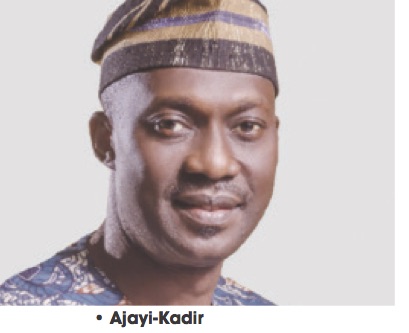
Should manufacturing companies already battered by multiple taxes, poor access to foreign exchange and over 200 per cent increase in price of diesel be advised to shut down operations? Should we fold our arms and allow the economy to slip into the valley of recession again?” Director-General of MAN, Segun Ajayi-Kadir, asked.
Local patronage
Beyond the provision of basic amenities to support local manufacturing, patronage of locally produced goods and services is key to encouraging local manufacturers who have, overtime, complained of poor sales and rising inventory.
Meanwhile, Director General, Standards Organisation of Nigeria (SON), Mallam Farouk Salim, has asked Nigerian consumers to always insist on patronising made-in-Nigeria products.
According to him, local industries have the capacity to meet the nation’s needs, urging Nigerian consumers to always insist on only quality made-in-Nigeria products.
Also speaking, Meshioye said government must promote the use of local content by mandating the patronage of Made-in-Nigeria products by all government parastatals, agencies and ministries as enshrined in Executive Orders 003 and 004.
“Let us not forget that the manufacturing sector is also not doing well due to inadequate support for local content development in the sector by government parastatals, agencies and ministries. Production and manufacturing of essential goods will stop the dependence on imported goods and go a long way in revamping the economy and strengthening the naira.”
He noted that the government as the biggest spender, as seen in budgets must ensure that MDAs patronise made-in-Nigeria goods and services to give the manufacturing sector the patronage it deserves.
Excise duty
On excise, Ajayi-Kadir, said the increase in excise tax for 2023 and 2024 as provisioned in the said 2023 fiscal policy was worrisome. He said apart from above challenges faced in the business environment, manufacturers also have to contend with currency devaluation and increasing inflation among others.
“All these are without regard to the industry’s contribution to the Nigerian economy in the way of significant taxes being paid (excise, corporate income tax, value added tax/VAT etc.); export revenue in foreign currency; employment of thousands directly and indirectly including supply chain partners in the Small and Medium Enterprises (SME) sector as well as Corporate Social Responsibility (CSR) to the local communities and other stakeholders nationwide.” He pleaded that in addition to the issue of excise tax increase, the Import Adjustment Tax (IAT) on Motor Vehicle (Chapter 87) and single use plastic surcharge of 10 per cent should be reconsidered. He, however, said the latter is ill timed and hasty. He said the proposed increase in the recently released 2023 guidelines on Beer, Wines and Spirits and Tobacco, has the potential to trigger unprecedented distortions in the affected industries as well as the entire manufacturing sector.
The MAN appealed to the new government, to order a reversal of the unwarranted violation of government‘s three-year excise escalation roadmap on alcoholic beverages and tobacco.
Multiple Taxation
Operators have continued to cry out over imposition of new taxes on businesses rather than expanding the tax net, citing concerns for increased tension in a struggling business environment.
The increase in taxation in whatever form or guise would be counterproductive, retard the contribution of the manufacturing sector to the GDP and cause a great setback on the ability of the real sector. MAN stated that manufacturers in the country have been groaning under multiple taxations from the three tiers of government, calling on government to spare businesses further taxation. Manufacturers pay over 30 different taxes, levies and fees to agencies of the Federal, State and Local Governments, Ajayi-Kadir said.
Way forward
On the way out of the conundrum, Ajayi-Kadir said: “Our expectation is that government will reduce to the barest minimum the incidences of a multiplicity of taxes and ensure that only approved taxes/levies/fees are charged; widen the tax net to capture those not currently paying taxes and consider reducing the various tax rates which have been the global trend in recent times to encourage investment inflow, particularly into the manufacturing sector.
“Taking a cue from key recommendations espoused in our MAN Blueprint 2.0 that was launched recently, the government should urgently consider reducing the corporate tax rate to 20 per cent to encourage investors in view of the various challenges
Also speaking on the way forward, NACCIMA president John Udeagbala said: “The government should find a way to reverse this trend by expanding tax-net to a greater number of taxable businesses and the working class and not increase tax rates as is being presently done. The focus should be for government agencies to search out companies that are not paying taxes presently to increase their tax base and not to suffocate businesses by increasing tax rates.”
On his part, Yusuf said: “This multitude of taxes is a crippling investment in the Nigerian economy. There is a need for an urgent review. The current tax regime is in conflict with the National Tax Policy which prescribes that there should be less emphasis on direct taxation in order to incentivise investment.”
He advised the Central Bank of Nigeria (CBN) to adopt effective monetary policies that would strengthen the value of the naira.