Follow Us on Google
• HOPE Edu to reach 30m children, 65,000 schools
• HOPE PHC to upgrade thousands of facilities, cut maternal and child deaths
• Senate pledges enabling laws, oversight to ensure success
From Juliana Taiwo-Obalonye and Isaac Anumihe, Abuja
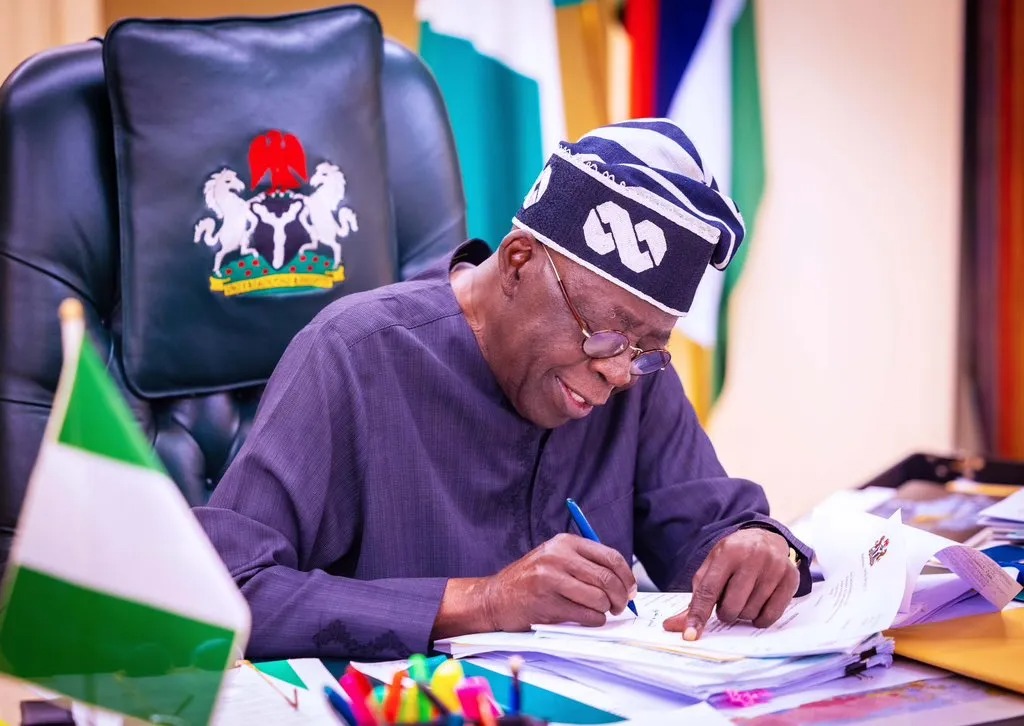
President Bola Tinubu on Thursday unveiled five synchronised social and development programmes worth about $3.05 billion aimed at accelerating poverty reduction, strengthening community resilience and investing in human capital.
Speaking at the launch through the Minister of Finance and Coordinating Minister of the Economy, Taiwo Oyedele, President Tinubu said the initiatives — the Nigeria Community Action for Resilience and Economic Stimulus Additional Financing (NG-CARES), the Solutions for Internally Displaced and Host Communities programme (SOLID), and a three-in-one Human Capital Opportunities for Prosperity and Equity package (HOPE Gov, HOPE PHC and HOPE Edu) — will convert recent macroeconomic gains into tangible improvements in livelihoods across wards and local communities.
“This is not just a set of programs; these are promises kept,” he told governors, ministers, development partners, business leaders and the media. “On our renewed Hope agenda, we came into office pledging to reform our economy, secure the nation, and invest in our people. Today, we act on that pledge — protecting the vulnerable, empowering communities, and building the human capital that will carry Nigeria forward.”
President Tinubu outlined the financing and focus of each initiative: NG-CARES will receive about $1.25 billion in additional World Bank financing and target smallholder farmers and small businesses; SOLID is a $300 million World Bank-backed intervention aimed at bridging humanitarian relief and development for internally displaced persons and their host communities; and the HOPE package is a $1.5 billion flagship investment to strengthen primary healthcare, foundational learning, teacher support and governance in public education.
“These five programmes are not separate efforts. They are one coordinated national strategy for poverty reduction, human capital development and community resilience,” he said. “Livelihoods, healthcare, education, social protection, and support for displaced communities reinforce one another where it matters most — at the grassroots.”
The President used recent economic indicators to argue that the country’s recovery can now be widened to reach households.
“Our real GDP grew by 11.2 percent and nearly 10 percent per capita income growth in U.S. dollar terms last year, and we are on track for a repeat this year,” he said. “Our foreign reserves have surpassed $50 billion. Inflation has fallen sharply from its 2024 peak. These are not abstract figures; they are the foundation for the next phase of our national development.”
He added that expanded cash transfers have already reached 15 million vulnerable households, “lifting an estimated 7.5 million people out of poverty,” and said the new programmes will build on that momentum.
Tinubu urged a whole-of-government and multi-stakeholder approach, asking federal, state and local governments, development partners and implementing agencies to deliver effectively.
“NG-CARES succeeds through your implementation. HOPE succeeds through your commitment to reform, and SOLID succeeds through your engagement with communities,” he said. “I ask every federal, state and local government partner, every development institution, and every implementing agency to rise to this moment along with us.”
He praised key ministers responsible for budget and economic planning, education, and health and social welfare for their leadership in designing and coordinating the programmes, and said the funds would be used to align federal, state and local actions “around a single goal: making every ward a place of real service delivery, real opportunity, and real improvement in people’s lives.”
He framed the interventions as part of a long-term push towards a $1 trillion economy by 2030, anchored on a renewed National Development Plan for 2026–2030 focused on economic diversification and human capital.
“That roadmap is built on economic diversification, human capital development and stronger states,” he said. “NG-CARES, SOLID and HOPE are how we turn that roadmap into reality.”
He reiterated the administration’s ambition to eradicate extreme poverty, ensure access to quality education and healthcare for every child, and strengthen community resilience.
“That is our vision. That is our promise,” he said as he formally launched the packages. “Today we launch that future for millions of Nigerians in every ward, in every state.”
President Tinubu said federal and state agencies, together with international development partners, are expected to begin programme roll-outs and coordinate implementation plans, including targeting mechanisms, community engagement and monitoring frameworks.
Observers will be watching how quickly funds move to states and local governments, whether reforms required by donor partners are implemented, and how effectively the initiatives reach the most vulnerable households and displaced communities.
“The success of these programs will rest on delivery and transparency,” said a development-sector official at the event who asked not to be named. “The scale is promising; now the work is to make sure the money and services actually reach people.”
The launch closed with a call for national unity and prayer.
“May God continue to bless the Federal Republic of Nigeria,” President Tinubu said.
On his part, the Minister of Budget and Economic Planning, Atiku Bagudu, detailed how the new $3.05 billion packages will tackle the cost-of-living crisis, poverty and human capital development, noting that every reform must touch the poorest first.
Bagudu described the initiatives as a “whole-of-government” response to external shocks and domestic vulnerabilities.
“This event represents yet another milestone in our collective efforts to translate the vision of the Renewed Hope Agenda of Mr President into concrete interventions that directly touch the lives of poor and vulnerable Nigerians,” Bagudu said. “This is a manifestation of the broad commitment of this administration to building a resilient, inclusive and prosperous nation where development opportunities reach every citizen, especially at the grassroots.”
He said the programmes were carefully crafted to address “the twin areas of both livelihood, cost-of-living challenges, the doctrine of poverty, as well as support in the human capital efforts” undertaken by the Federal Government in recent years.
Other News
“These programmes have been carefully designed as strategic programs to reduce the impacts of the cost-of-living crisis that the world is witnessing, particularly as a result of the downstream challenges of the Ukraine–Russia war as well as the Middle East war, which have affected energy prices,” he said. “Nigeria being a major user of fertilizer as well as petroleum, and gas prices being a major determinant of costs, we are also facing similar shocks.”
On NG-CARES, Bagudu said the additional financing builds on the original $750 million NG-CARES programme implemented between 2021 and 2025, which reached 17.6 million direct beneficiaries across Nigeria, including poor and vulnerable households, farmers, nano, micro and small enterprises, and communities affected by the pandemic and other socio-economic shocks.
“This additional financing of $500 million will further deepen the impact and strengthen livelihood support, food security, community resilience and social protection systems,” he said, adding that the new phase is squarely aimed at bolstering domestic production among the “lowest additional producers” — smallholder farmers, fishing and livestock communities, and micro and small enterprises operating from the ward level through local and state governments.
The Coordinating Minister of Health and Social Welfare, Prof. Muhammad Ali Pate, outlined the specifics of the HOPE Primary Health Care (HOPE PHC) programme, saying it is designed to improve access to quality essential health services, reduce maternal and under-five mortality, and strengthen the resilience of Nigeria’s health system for about 40 million people.
Speaking at the launch of the broader human capital package, Pate said HOPE PHC is a $570 million component of the $1.5 billion HOPE programme, focused specifically on primary healthcare for women, children and adolescents across all 36 states and the FCT.
He said the intervention will support the revitalisation of thousands of primary healthcare centres, expand access to essential medicines and equipment, and improve service quality through performance-based financing tied to clear, measurable results.
Pate noted that under the wider PHC reforms already under way, more than 3,000 primary healthcare centres have been upgraded to Level 2 status, with another 1,000 nearing completion, while over 69,000 frontline health workers have been trained and 60,000 provided with uniforms and kits.
He said quarterly visits to PHCs have risen from under 10 million in early 2023 to 45.5 million, adding that HOPE PHC will deepen these gains by strengthening governance, expanding financial protection and integrating climate resilience into health system planning and infrastructure.
“The HOPE-PHC program aims to reduce maternal and under-five mortality rates and enhance the resilience of Nigeria’s health system, benefiting around 40 million people,” Pate said. “This is about ensuring that a woman in a rural community does not fear childbirth, children access lifesaving vaccines, and families receive treatment for malaria, hypertension and other common illnesses close to home.”
The Minister of Education, Tunji Alausa, described the education sector as one of the biggest beneficiaries of Tinubu’s reforms, saying the newly launched HOPE Edu component of the human capital package will extend the administration’s Nigeria Education Sector Renewal Initiative to nearly 30 million children across all 36 states and the FCT.
“Education remains the biggest investment any responsible government can make for its citizens,” Alausa said. “And this is where the President is doing exactly that.”
He said the $562 million HOPE Edu investment, supported by the World Bank and the Global Partnership for Education, will target 65,000 public schools, support 500,000 teachers and fund innovations and new school construction, with a focus on improving foundational learning, expanding access for vulnerable children and strengthening state education systems.
“No nation can rise above the quality of its education,” Alausa quoted the President.
“Our administration remains committed to ensuring every single Nigerian child has access to quality education and opportunities needed to succeed in the modern world.”
The minister said the programme is designed to reduce learning poverty, deliver structured pedagogy for foundational literacy and numeracy, and decentralise the management of education funds to state and local government levels, backed by a new Nigeria Digital Management Information System that tracks teachers, pupil-teacher ratios and other indicators down to the ward.
“This is a programme [where] the sub-national government will achieve certain deliverables, and they’ll be paid based on that,” he said, adding that HOPE Edu will serve as a “catalyst” for the Renewed Hope Agenda on human capital development and underscore a “one government in action” approach.
World Bank Country Director Matthew Verghis, in his goodwill message, said the flagship NG-CARES, SOLID and HOPE programmes affirm that “Nigeria’s greatest asset is its people” and are designed to strengthen resilience, expand opportunities and improve access to essential services.
“Through the HOPE series, we are investing in stronger education and health systems, supported by more effective institutions that can deliver results for Nigerians,” he said, adding that the success of such ambitious reforms ultimately depends on “the commitment of the leadership that will allow delivery of results,” which he commended in President Bola Tinubu, participating governors, and the ministers of budget, education and health.
The Minister of Humanitarian Affairs and Poverty Reduction, Dr Betta Edu, described the programmes as “statements of national intent that no Nigerian, however remote or displaced, is beyond the reach of this government’s care,” and pledged full alignment of her ministry’s “one humanitarian, one poverty response system” to ensure displaced households move “from emergency relief to resilience, to self-reliance and productivity.”
Speaking for the Nigeria Governors’ Forum, Ondo State Governor Lucky Aiyedatiwa (representing the Forum’s chairman) said the launch marks “another key step towards turning the Renewed Hope Agenda into tangible benefits for Nigerians,” affirming the 36 states’ commitment to collaborate with the Federal Government and development partners to “ensure that the promise of renewal is experienced by every Nigerian in every state of the Federation.”
Senate President Godswill Akpabio, represented by Senator Mohammed Sani Musa of the Senate Committee on Finance, pledged the National Assembly’s full support for the NG-CARES, SOLID and HOPE programmes, describing them as a “renewal of hope” and a national commitment to lift vulnerable citizens from poverty, displacement and exclusion.
Akpabio said the greatness of any nation “is measured by how it uplifts its most vulnerable citizens,” and stressed that the new packages must move beyond rhetoric to deliver “tangible results for families, farmers, traders and entrepreneurs” through targeted appropriations and measurable outcomes.
He committed the legislature to pass enabling laws and strengthen oversight so that funds appropriated for health, education, livelihoods and social protection translate into real services and restored livelihoods.
“We will ensure that these appropriations produce measurable outcomes,” the message said, calling for coordinated action among the executive, legislature, judiciary, private sector, development partners and citizens.
Describing SOLID as an affirmation of national solidarity that ensures displaced and vulnerable Nigerians “are not forgotten,” Akpabio said health and education are central to building long-term prosperity, adding that “hope is confidence built on deliberate actions” and that the programmes must deepen social inclusion across all 36 states.