Follow Us on Google
I have always sought a better explanation why political choices have made the difference between Nigeria and other democracies that are making more progress than ours. It’s for this reason that I often look forward to an opportunity that will elevate conversations on politics and economic management with a better, more nuanced information, and a clearer context on why Nigeria has fallen into its present economic and political crises despite the abundance of talented economists and human resources.
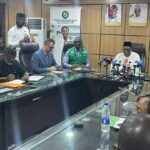
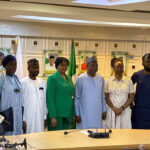
The opportunity presented itself last Thursday.The event was the TheNiche 2026 Annual Lecture series, held at the Nigerian Institute of International Affairs, Victoria Island, Lagos, with the theme: “Governing the Economy: Choices, Trade-offs and National Priorities”. Perhaps there could be no better choice of a Guest Lecturer to do justice to the topic than Dr Alex C. Otti, Governor of Abia state, a First Class Economics student and a reputable banker. The array of personalities at the event was also compelling. If there’s one fearless personality who can do with many friends as much as a pack of enemies, it’s the former Governor of the Central Bank of Nigeria, and current Emir of Kano, Khalifa Muhammad Sanusi II.
His choice as the Chairman of the occasion, together with the Obi of Onitsha, Igwe Alfred Nnaemeka as Royal fathers, was apt. Also present were Gen. Ike Nwachukwu(retd), Rear Admiral Allison Madueke(retd). Accomplished professionals who graced the public lecture, include Dr Uma Eleazu(95 years+), Mazi Sam Ohuabunwa, Prof Pat Utomi, Olisa Agbakoba, SAN, Comrade Joe Ajaero, President of the Nigerian Labour Congress, Dr. Jumoke Ogunleye, among other coterie of personalities. HRH Okechukwu Onyegbule(a.k.a Okey Bakassi) a veteran in Nigerian entertainment industry, made sure there was laughter and banters in the filled auditorium amid the gloom in the country right now.
The picture that emerges from the above is the larger canvas that provided the invaluable look at the TheNiche 2026 Public Lecture. Now comes the real issues for conversation. Look around the country and the people, what do you see? Despair has supplanted hope. That’s the affliction that the Tinubu government has unleashed upon the country and the citizens. How do you describe what’s going under Tinubu’s watch? In their excellent book titled, “Common Sense Economics”, James Gwartney, Richard Stroup, and Dwight Lee assert that “a nation of economic illiterates is unlikely to remain prosperous for very long”. That’s where we are today as a nation.
The paradox of Nigeria’s situation is that in spite of having financial and economic experts, the government of the day has decided to hand over the management of the economy to semi-literates and tax masters to drive its economic policies. As Governor Otti noted in his lecture, “true progress cannot run on self-deceit”. As Emir Sanusi II observed, “Nigeria is in a serious economic crisis. You can’t remove subsidy and still be borrowing”. Nigeria, he argues needs leaders who are ready to serve, not masters. “If you are in government with the focus on making money, your interest in government will be to continue to make money”, Sanusi said, matter-of-fact. He added that unfortunately, “what you get is what you have voted for”, noting that people respond to what their leaders do, not what they say.
Emir Sanusi II further lamented that the economy is in crisis because of lack of fiscal discipline, transparency, and that you cannot expect growth when corruption is the order of the day. According to him, the government is yet to follow the three basic pillars of democracy, the rule of law, free and fair election, and the protection of fundamental human rights. Gen. Ike Nwachukwu, in his brief comment said, “Nigeria needs to return to proper democracy”. For him, that is the only way to govern the country. Does that make any sense to the government in power?
Governor Otti, in a calm, masterful, thoughtful lecture, dissected what is wrong with the country’s economy under the present leadership and offers the way forward. To him, politics and economy are inseparable. He sees the foundation of economic governance as the capacity and efficiency of institutions at developing rules, processes and systems that mitigate abuses. It’s also defined by political behaviour, he says. I agree with him that it will be “impossible to separate incompetent political leadership from the manifestation of economic decline”. Neither will economic solution be found by frequent “foreign trips” by the political leadership.
His reason is anchored on sound, irrefutable evidence: “economics does not respond to emotions or sentiments. It’s guided by thoughtful decisions and the judgement of those who wield the instruments of power”. Is this government listening? According to Gov Otti, it’s important to achieve accelerated economic development when those who sit at the decision-making table are conversant with economic laws and dynamics. This is because the foundation of economic governance is built on the decision made by those who pull the levers of power. Ultimately, the outcome of their choices impact on our daily experiences.
Other News
Sadly, Tinubu’s choices in almost three years of his presidency have only favoured his family, political cronies, business associates and few political elites, at the detriment of the larger populace currently crushed by high poverty, cost of living conditions, unemployment and endemic anxiety. I don’t think President Tinubu has the strength of character and political gravitas to make better things happen in Nigeria. I also doubt if he understands the dynamics of public welfare. That’s perhaps why he’s not moved by the suffering of the people.
In that connection, it’s hard to fault Gov Otti’s argument that “in a political system driven by mercantilism, desperation for power and corruption across multiple nodes in the value chain, things are bound to go from bad to worse, because no system has endless supply of resources to feed the bottomless greed of political actors, including voters who see wares for sale to the highest bidder”. Isn’t that where we are today? That is why, to borrow the words of Otti, “poverty and prosperity, employment and joblessness, security and anxiety, prudence and rascality will all be on the ballot” in next year’s elections.
Already, voter apathy is on the increase, from 57 % in 2011 to less than 30% in 2023. It’s likely to go further down in 2027. This is ought to be a cause for concern. Trust in the government of the day is eroding like nothing we have seen in 27 years of the present democratic dispensation. Things are favouring only those with deep wallets to buy votes, compromise electoral officials. Gov Otti also claims in his lecture that media practitioners and the instruments of violence have been compromised. He may not be far from the truth. With all of this in play, it might be nigh impossible to build a robust economy on the foundation of political corruption.
The political class should ponder over Otti’s statement that “reckless leaders don’t build strong institutions, and those who win elections by dishonest means cannot abide by the demands of ethics and prudence while in office”. That’s why it will be difficult for Nigeria under the present dispensation to have a proper sense of stewardship among those in leadership positions. Though there may not be a silver bullet for the present economic and security challenges, and nobody is calling for quick fix solutions, the fact remains that under the present parochial leadership, there no silver lining yet in the horizon.
Taken together, this is why President Tinubu is struggling for any kind of affirmation message for re-election. The short-cut is to decimate the opposition so that he could be the sole presidential candidate in the 2027. It’s also why Mr Peter Obi, who has proved in the last election to be Tinubu’s nightmare, is being harassed in every front. He is not even allowed to deliver public lectures in some Universities, including Obafemi Awolowo University(OAU). The president’s aides, including his Chief of Staff, Femi Gbajabiamila, was caught on camera last week, telling a renegade of the African Democratic Congress(ADC), Hon Leke Abejide to remain in the party, “fight them, scatter them, we like what you are doing”. Gbajabiamila was following in the footstep of his principal.
Last year, the president taunted the opposition parties, as a “sinking ship”. He also mocked the PDP and Labour Party, saying, “it’s my pleasure to see you in disarray”. Early this year, the president dismissed the coalition of opposition figures under the ADC platform as “Internally Displaced Persons (IDPs) and gangsters”. These are comments unbecoming of a president and Commander-in-Chief. Yet APC is attacking Gov Seyi Makinde over his comments on “operation wetie”, a reference to the political violence in Western Nigeria(1962-1966).
Why should the APC be in panic and called Makinde’s remarks ‘reckless’, when its members and the president himself have said worse things? It’s a case of kettle calling pot black. That’s what you get when you vote the wrong candidate into office. Truth is, there’s anger in the country. People are disillusioned about how the country is governed. Nigerians desire a new leadership and a strong direction for the country. When a leader seeks the highest office in the land and sees it as a prize to be won, not a duty to perform, you can’t expect good behaviour. The office becomes what a president uses as raw power to actualise an aspiration, bend people to his will, rather than use power to achieve greater purposes. The question: do Nigerians deserve the choice they made in 2023? You answer!