Follow Us on Google
From Juliana Taiwo-Obalonye, Abuja
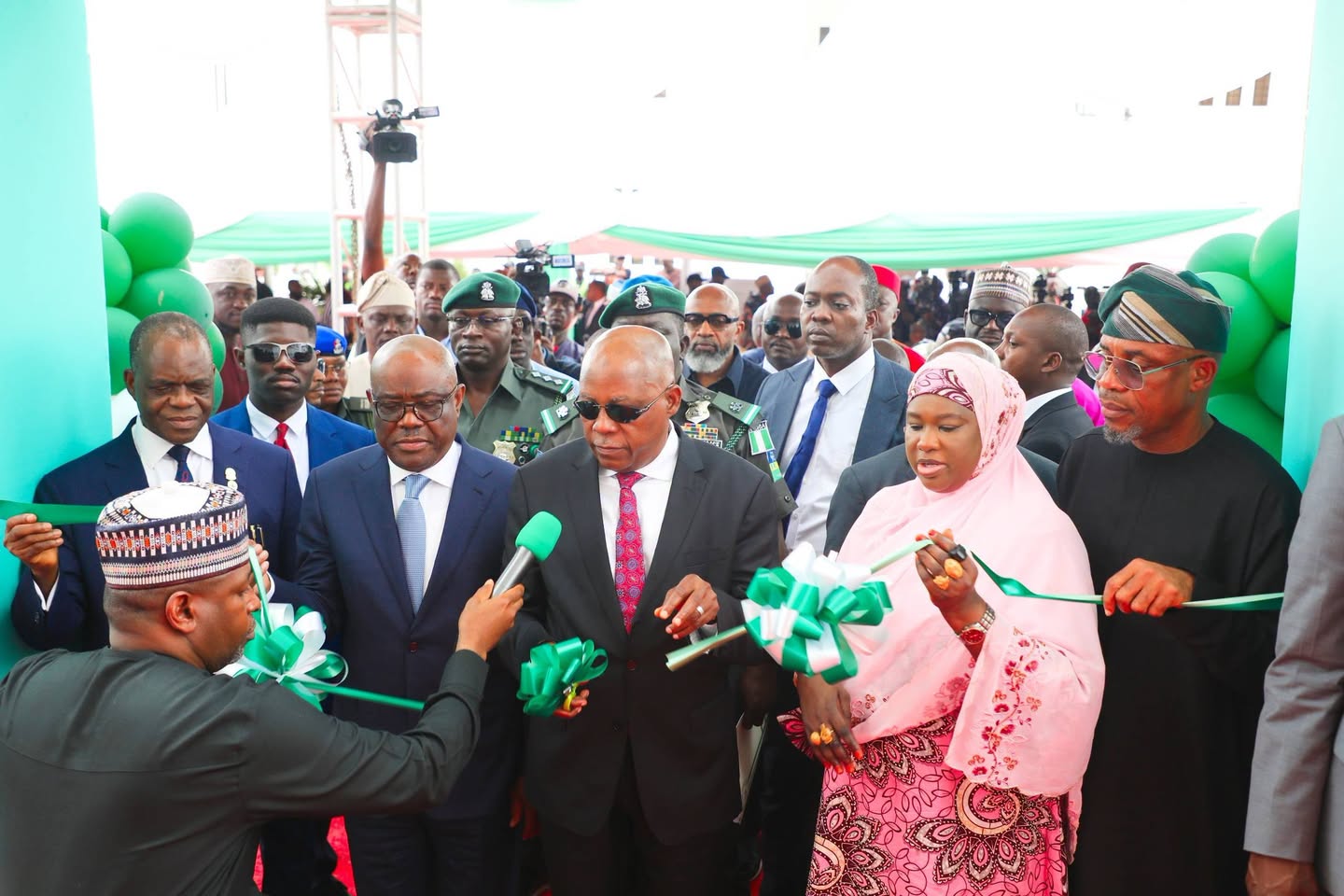
President Bola Tinubu yesterday commissioned 10 newly completed residential units for Federal High Court judges in the Katampe district of the Federal Capital Territory, saying the houses were part of the efforts to strengthen the judiciary and protect its independence.
Represented by Vice President Kashim Shettima, he described the housing project as a “definitive physical step” under the administration’s Renewed Hope Agenda to restore institutional trust and ensure the rule of law.
“I’m immensely proud to stand before you today in Katampe district of the Federal Capital City to commission these recently completed 10 residential accommodations for judges of the Federal High Court,” Shettima told invited guests.
“We are here, not just to commission buildings but to fortify the vital pillar of our democracy, the judiciary.”
The vice president said the provision of secure and comfortable housing was essential to judicial independence. “You cannot expect judges to dispense justice without fear or favour when their basic comfort, security and peace of mind are left to chance,” he said. “True judicial independence is rooted in the dignity of our judicial officers. By providing this set of residential quarters, we are ensuring that our Federal High Court judges operate from a place of security, comfort and stability.”
He praised the Minister of the FCT, Nyesom Wike, for delivering on the administration’s urban transformation agenda. “When I gave Wike the assignment to transform Abuja into a world-class city, I knew his capacity to deliver; he has not disappointed me,” he said, crediting the minister with fixing road networks and ensuring the timely completion of projects.
He also highlighted cooperation between the executive and the judiciary, calling it “a proud example of intergovernmental harmony for the collective good of our people.”
Addressing the judges who will occupy the homes, Tinubu urged them to reciprocate with “an unwavering commitment to the swift, fair and transparent dispensation of justice.
“The Renewed Hope Agenda is anchored on equity and justice,” he said. “As we provide infrastructure to make your lives easier, we ask in return for an unwavering commitment to the swift, fair and transparent dispensation of justice. May these homes be centres of deep reflection, integrity and honour.”
He framed the project as one of several reforms meant to show early signs of change under the Tinubu administration. “Abuja is changing. Nigeria is changing. The reforms we are putting in place across all sectors might require patience, but the proofs are beginning to show,” he said, adding that the government “will not relent until every sector, including justice, infrastructure, economy or security, reflects the true greatness of our nation,” he said.
Other News
In his remarks, Wike said the housing rollout for judges was part of a broader, continuous push to provide secure, high-standard accommodation for judicial officers across Abuja. “Yesterday, we commissioned the 10 justice quarters for the Court of Appeal. Today, we’re here for the Federal High Court. On July 7, we’ll be doing that for the FCT High Court, which has the highest number of 22, but all are of the same standard,” he told the gathering, adding that the initiative reflects the administration’s commitment to judicial independence through improved welfare and working conditions.
He also warned contractors, stressing a strict delivery and maintenance culture, recounting frequent site visits and insisting that standards must be preserved. “I think I’ve been here more than 20 times traversing this project. If you collect our money during the rainy season, you must also work during the rainy season. No excuses of how it was raining,” he said, while urging the ongoing to keep up so the estate will still look like this when officials return next year.
He announced plans to protect the precinct, calling it the forthcoming judges’ zone and said a police station would be built to bolster security around the judges’ residences.
Minister of State for the FCT, Mahmoud Mariya, earlier thanked President Tinubu, Vice President Shettima and the National Assembly for backing the project and commended Wike and the contractors. “We are witnessing the official commissioning of such a major project, the quarters for the Federal High Court judges, consisting of 10 beautiful houses,” he said, handing over keys and praying that the homes “provide comfort to our judges, strengthen our justice system and serve as a symbol of integrity, hope and promise.”
Chief Judge of the Federal High Court, Justice John Tsoho, described the long-standing accommodation challenges facing judges as a matter of deep concern for decades, acknowledging that efforts to address them had drawn mixed reactions in the media.
Tsoho commended President Tinubu and the FCT minister for taking bold steps despite critics to provide befitting accommodation for judges and improve the welfare of judicial officers.
“As judges, while we shape the legal direction of the society on a daily basis through the pronouncements we make in the courtroom, we seldom have the occasion to speak publicly without courting controversy or being misunderstood.
“It is deeply encouraging and gives immense hope to the judiciary and the nation at large to see that the welfare of career professionals is being taken seriously. This commitment allows our judicial officers to find peace and stability in their vital roles,” he said.
Earlier, the acting Executive Secretary of the Federal Capital Development Authority (FCDA), Richard Dauda, explained that the project was awarded in September 2024 for the design and construction of 40 Judges’ Quarters at Katampe district.
Dauda revealed that 10 of the houses were specifically for the judges of the Court of Appeal, while the recently commissioned 10 units were for the Federal High Court.
He said the scope of work includes the construction of 10 fully furnished five-bedroom duplexes with boys’ quarters for each house, along with other supporting facilities.