Follow Us on Google
From Isaac Anumihe, Abuja
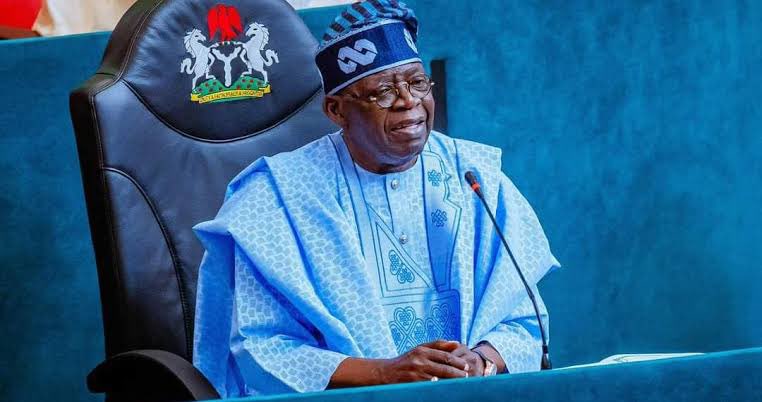
President Bola Tinubu has approved the payment of over N4 trillion debts owed the electricity market, a long-standing liability that has crippled operations and discouraged new investments in Nigeria’s power sector.
Minister of Power, Adebayo Adelabu, disclosed this on Thursday at the event marking the 20th anniversary of the Nigerian Electricity Regulatory Commission (NERC) in Abuja. He explained that the president’s approval covers a N4 trillion bond to clear verified debts owed generation companies (GenCos) and gas suppliers, a move aimed at restoring liquidity and stability to the sector.
“I am pleased to inform you that Mr. President has recently approved a N4 trillion bond to clear verified GenCos and gas supply debts. Alongside this, is the commercialisation effort at developing a targeted subsidy framework to protect vulnerable households,” Adelabu announced.
The minister noted that the government was also deepening reforms to strengthen the financial and operational capacity of the distribution companies (DisCos), including the introduction of minimum capital requirements during licence renewals.
“While we are implementing reforms to strengthen the financial and operational capacity of the distribution companies (DisCos), including considering minimum capital requirements during licence renewal, we must not neglect generation and transmission. We are also advancing the Presidential Power Initiative (the Siemens Project) and have sustained generation capacity at an average of 5,300MW,” he said.
Adelabu also called on state governments to hold DisCos and the Transmission Company of Nigeria (TCN) accountable to better serve citizens.
“At the Federal Ministry of Power, our vision is one of co-operative federalism in the electricity sector, where both tiers of government work together in harmony for the common good. To this end, we are developing a National Electricity Policy Co-ordination Framework to ensure consistency and regulatory clarity, align federal and state actions, support states establishing new regulators, and strengthen investor confidence through policy,” he stated.
According to the minister, while the Federal Government has provided the legal and policy framework for reforms, states now have the autonomy to act, while the private sector brings in capital and innovation to accelerate growth in the industry.
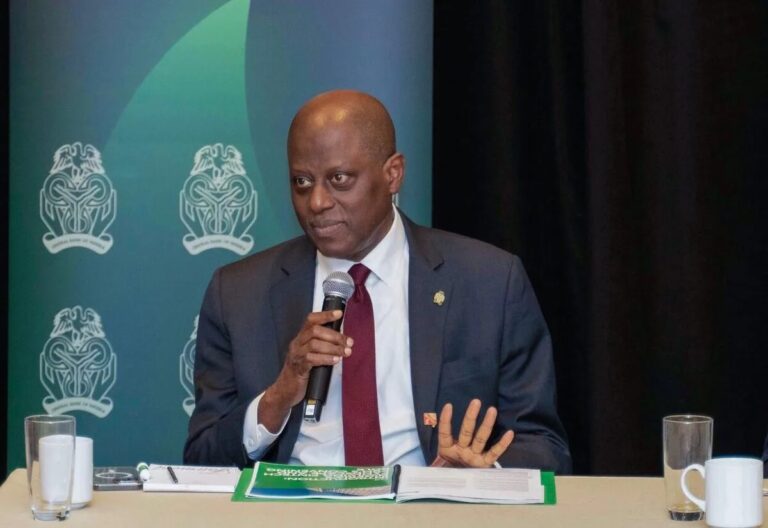
In his remarks, Vice Chairman of NERC, Dr. Musiliu Oseni, said that over the past 20 years, not less than 30 per cent of electricity consumers have witnessed significant improvement in service delivery.
He revealed that through effective regulation, the Commission has saved the Federal Government several trillions of naira in subsidies, contributing to the nation’s fiscal stability.
“As we continuously strive to provide regulatory oversight to ensure improved reliability of supply, the Commission shall focus more attention on unlocking private investments, especially in the transmission segment of the value chain. Our transmission networks require significant investments. However, our fiscal realities have shown that the government alone cannot fund it,” Oseni stated.
He noted that the Commission has already initiated the Transmission Infrastructure Fund (TIF) to attract private financing and would continue to push for fiscal discipline and transparency at TCN.
“The commission shall continue the regulatory process for the transition to bilateral trading, and handholding of the state regulatory commissions for capacity development,” he added.
Oseni further urged the Federal Government to adopt a deliberate policy to power industries for economic prosperity.
“You can power access through mini-grids, but you can’t power your economy to prosperity,” he cautioned, while calling for a policy rethink on the $2 billion fund currently available to the Rural Electrification Agency (REA).
He advised that a substantial portion of the fund should be channelled into end-to-end solutions that address the power challenges facing Nigeria’s industrial hubs, saying this would yield far greater economic impact than scattered interventions.