Follow Us on Google


President Tinubu, on Monday evening, October 19, 2026, at an event held at Aso Villa in Abuja declared that the country cannot “go back to Egypt”. This is Tinubu’s reference to his policy of removing fuel subsidy and his vow that Nigeria will not return to the fuel subsidy regime.
He compared the removal of the fuel subsidy and economic reforms to the Biblical and Quranic exodus of Moses (Musa) leaving Egypt, stating, “You cannot ask Moses to go back to Egypt.” Tinubu maintained he has no regrets about scrapping the subsidy on his first day in office, asserting that the country was heading toward bankruptcy with no funds left to sustain it.
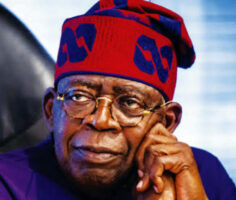
The scriptural assertions of Tinubu on the issue of subsidy and going back to Egypt reveal a total lack of spirituality of the incumbent President of Nigeria. One wonders why Tinubu will be crucifying himself on an issue he is not competent to comment on.
Egypt, spiritually, is a place of bondage for children of God. It is a nation that enslaved the children of God for a long time. The modus operandi of Egypt was making the children of God to do the most jobs, but making them to enjoy the least standard of living in the world. The children of God voluntarily went into Egypt and became very prosperous. The indigenous Egyptians who didn’t know the first leaders of Israel, who brought their children to Egypt, grew jealous of the children of God called Israelites and decided to subdue and subjugate them to slavery and servitude. They were working like elephants but were eating like rats.
It came to a point where the Egyptians decided to wipe out the children of God. Every male child was ordered to be killed, leaving only women to exist. It was at this juncture that the children of God cried unto God for deliverance and God sent Moses to deliver them out of Egypt. Moses miraculously divided the Red Sea and landed the children of God in the wilderness where they spent 40 years, after which they entered the Promised Land.
The mere assertion by Tinubu that Nigeria will not go back to Egypt is a confession that presently under him, Nigeria is in the wilderness and is closer to Egypt than it is to the land flowing with milk and honey. Since he even stated that Nigeria has crossed the red sea, let us assume that we are at a stage where Nigeria has crossed the red sea, which is also the wilderness.
The characteristics of wilderness include lack of security, hunger, lack of potable water to drink, presence of dangerous animals like serpents and scorpions that kill human beings as enemies, lack of good roads to navigate around, lack of industries to manufacture clothing and shelter for the people.
It is important to note that at certain times in the journey towards the Promised Land, some leaders threatened to go back to Egypt and rebelled against Moses, and in each occasion Moses did not tell them to go to hell, Moses provided for them their needs. The children of Israel did not go back to Egypt because all the promises that Moses made to them before bringing them out of Egypt were all fulfilled.
Other News
The first challenge they encountered after leaving Egypt was insecurity. Immediately they left Egypt, the Egyptians felt they made a mistake in allowing the Israelites to depart. They realised that human resource is the most important factor of production and the departure of Israelites would put their economy in danger. They marshalled their armed forces to forcefully bring back the Israelites to Egypt through kidnapping them and murdering them if they resist their plans to kidnap them back to Egypt.
When the children of God saw the Egyptians who want to kidnap or kill them in the wilderness, believing that they were trapped, they rebelled against their leaders. Exodus 14:10 reported that “when Pharaoh drew nigh, the children of Israel lifted up their eyes, and, behold, the Egyptians marched after them; and they were sore afraid: and the children of Israel cried out unto the LORD.” They rebelled against Moses and said, “Is not this the word that we did tell thee in Egypt, saying, Let us alone, that we may serve the Egyptians? For it had been better for us to serve the Egyptians, than that we should die in the wilderness.” (See Exodus 14:12)
God was not angry with them for this rebellion because he understood that security is the basic responsibility of government. God understood that Moses would lose every credibility in the eyes of Israelites if he failed to protect the people against their enemies. God understood that the people would prefer to be alive as servants in Egypt where they had security to being killed in wilderness as dissidents. God also agreed that the people had a legitimate right to rebel against a government which failed to provide security for them. Moses assured the people that God would fight for them against the Egyptians, and God did fight for Israelites against the Egyptians that day as the red sea drowned the Egyptians who came out to fight Israelites.
When the people became hungry in the wilderness and murmured against Moses, Moses provided food for them. For the avoidance of doubt, Exodus 16:2-4 states: “And the whole congregation of the children of Israel murmured against Moses and Aaron in the wilderness. And the children of Israel said unto them, Would to God we had died by the hand of the LORD in the land of Egypt, when we sat by the flesh pots, and when we did eat bread to the full; for ye have brought us forth into this wilderness, to kill this whole assembly with hunger. Then said the LORD unto Moses, Behold, I will rain bread from heaven for you; and the people shall go out and gather a certain rate every day, that I may prove them, whether they will walk in my law, or no.”
God indeed rained bread to them for 40 years throughout their sojourn in the wilderness. The lesson to learn from this is that even God understood that there is no reception to theology when a man is hungry; that people have legitimate right to rebel against their leaders when their leaders want to kill them with hunger. It can be seen that God was not angry with the people when they asked for food. God treated this as a human rights matter. This may be the origin of treating provision of food by the government for the people as a human rights matter – a right not a privilege.
Another important lesson we must learn is that this manna from heaven is a subsidy provided by God to help cushion the effect of the wilderness experience on the people. They did not pay for the food and couldn’t even be able to pay for it because they were in the wilderness where they had not cultivated anything because they were on the move and the economic environment was hostile. Most importantly the people preferred being in Egypt, where they sat by the flesh pots, and where they did eat bread to the full, to the wilderness where they would perish by hunger.
Same thing also happened when the people became thirsty in the wilderness because of lack of potable water. They rebelled against Moses. The scripture reported in Exodus 17:3 that “the people thirsted there for water; and the people murmured against Moses, and said, Wherefore is this that thou hast brought us up out of Egypt, to kill us and our children and our cattle with thirst?” God didn’t pick offence but provided water for them.
President Tinubu, while campaigning to be President, promised to provide electricity for the people, secure and make Nigeria better for all. From the first day in office, he removed subsidy from oil and devalued naira, thereby making cost of living and transportation cost to skyrocket. Hunger and poverty resulted as fuel sells for N1500 instead of N195 he inherited. He promised that if he removed fuel subsidy he would use the saved money to provide infrastructure for Nigerians.
He did remove the subsidy, failed to provide electricity or security, or any other infrastructure, and worse of all, he has ballooned our debt to almost N166.6trn since he came into office to the extent that Nigeria has become technically bankrupt and needs to borrow to cover the cost of servicing its debt. In the first half of 2026, our cost of servicing our debt was N7.7trn while our revenue was N6.2trn.
A borrower is a servant to the lender. It is a situation worse than being in Egypt for a country to become servants to another country on account of its borrowing. Tinubu has made us a beggarly nation, a hungry, insecure nation without food to eat and water to drink. He brought us to the wilderness without subsidy and without assistance. People are now rebelling against his regime and saying loudly that life in Egypt is now better than life in Nigeria. It is certainly true because life in Tinubu’s wilderness without subsidy is certainly worse than life in Egypt. If Tinubu actually means that Nigeria will not go back to Egypt, then Nigeria must deliver themselves from Tinubu’s life in wilderness without subsidy come 2027. Nigeria needs a government that will give them subsidy to cushion the effects of the wilderness experience before getting to the Promised Land.