Follow Us on Google
• 2027 will be defined by religion, regionalism, tribalism, North-South dichotomy
• Why proposed allocation of special seats for women won’t work
By Juliana Taiwo-Obalonye
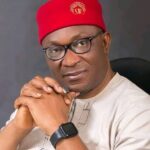
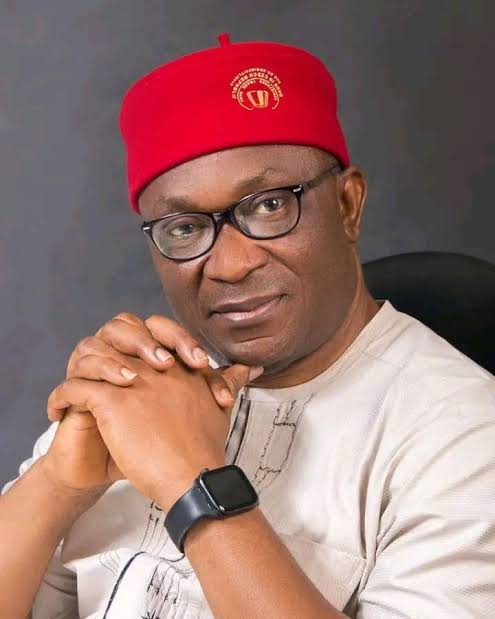
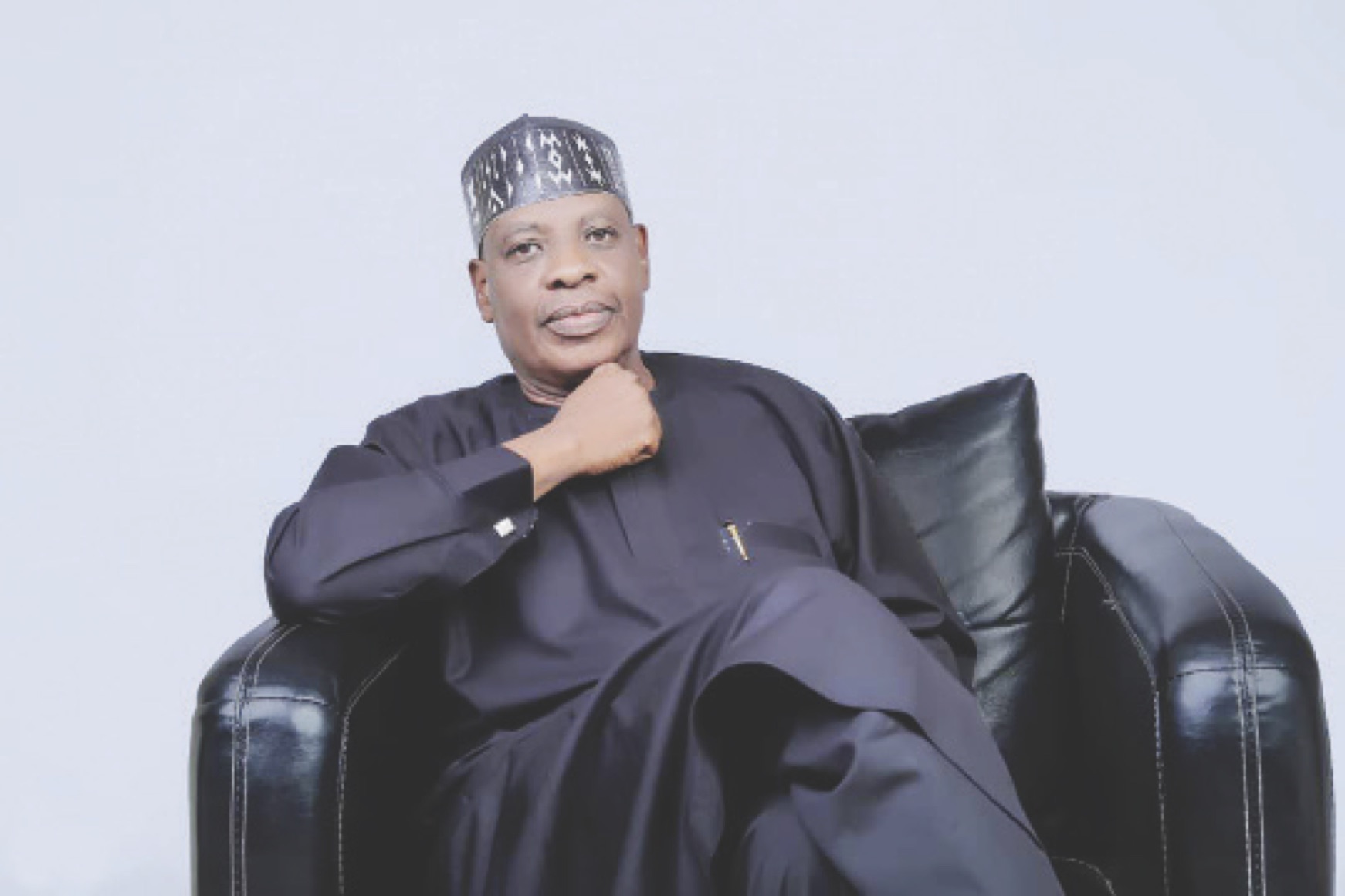
Hon Ibrahim Zailani, a lawyer is Bauchi State’s former Attorney General and Commissioner for Justice. He is also a former House of Representatives member and former Executive Director at the Cabotage and Maritime Services of Nigerian Maritime Administration and Safety Agency (NIMASA).
In this interview, he warns that the 2027 elections will highlight Nigeria’s deep divisions—fault lines, regionalism, tribalism, religion, and North-South tensions.
He questions if Tinubu’s success in Lagos can work nationwide.
He urges stronger action against Boko Haram, bandits, and terror groups, even as he expresses support for the military help by the United States for Nigeria’s security challenges, among others.
Ahead of the 2027 elections, how do you assess Nigeria’s evolving political landscape amid party alliances, defections, and negotiations?
Well, let me start by saying the permutations of 2023 have completely changed. So, anybody deceiving themselves by using 2023 permutations for 2027 might not succeed. Firstly, people did not know Bola Ahmed Tinubu then, but with nearly three years in office, Nigerians can now better assess who Bola Ahmed Tinubu really is. Many factors are at play: then they used the Muslim-Muslim ticket to woo the North; the Igbos pitched their tent with Peter Obi and Atiku Abubakar, but he chose the wrong Vice President pick. If it were me, I would have picked Nyesom Wike, because whatever votes Wike delivers, the rest follows. So, 2027 will usher in all the fault lines, regionalism, tribalism, religion, North-South dichotomy. Everything will come into play. It depends on how President Tinubu manages it. Forget these defections; a month or two in politics is very crucial, anything can change. People say he succeeded in Lagos, but can we say the same nationally today? I am not saying he has not done well, please get me right, but then in Lagos, he operated in a small area before, and now as president he is operating nationally. To succeed as a politician, you must be guided by fairness, the country’s rules, and existential realities like poverty and insecurity. Thus, 2027 will be a litmus test for both leadership and followership.
What’s your impression about Rivers State and the governor? Despite his defection to APC, he’s still being threatened with impeachment…
Well, I am not well-versed in Rivers State’s politics, but all I know is that a fight between a sitting governor and a sitting minister and former governor will definitely be very tough. What’s happening in Rivers is that you have a governor who is inexperienced, who is not a politician, facing a very rugged politician who started as a local government chairman, graduated to Chief of Staff, from Chief of Staff to Minister of State, from Minister of State to Governor for eight years, and now back as Minister for Federal Capital Territory. I think Fubara should have done his assessment: you either lay low and follow Wike or fight to finish. That is where he is lacking.
Do you not see him surviving this?
Well, with the current situation, the powers that be should support Fubara because for him to dump his party and move to APC, he was clearly seeking protection. So, I believe the President should intervene and save Fubara. But Fubara needs to do much more, he is letting Wike play very dirty roles in Rivers. As a sitting governor with immunity and all gubernatorial powers, he should have subdued Wike by now. But that is his big minus.
Towards 2027, can the APC effectively manage these possible implosions amid the wave of defections?
In Nigeria today, the Peoples Democratic Party (PDP) is effectively gone and can do virtually nothing, while the Labour Party also cannot perform. We are left looking at APC versus African Democratic Congress (ADC), Atiku and his allies remain hard nuts to crack. ADC’s leadership features a powerhouse like David Mark, an experienced Nigerian system player: ex-military man, multiple-term Senator, and Nigeria’s first two-term Senate President, beyond intimidation or threats. They also brought Rauf Aregbesola, a strong figure from Bola Tinubu’s Lagos State who served as his commissioner and can keenly assess him. With the national mood, Mr. President and APC must do more. These defecting governors, some of whom may not even deliver their states in free, fair elections. Still, politics boils down to interests and negotiations: if interests align and deals are struck, ADC will give APC a serious run for its money.
Is the APC acting arrogantly like PDP, boasting of endless rule before collapsing? Why does APC fear a thriving opposition ahead of 2027 when PDP tolerated one?
Well, for me, what is happening shows some degree of desperation in the APC, which they need to manage. If you can win an election outside government, there is no reason you cannot win another while in power. But it will all come down to the people’s perception, what have you achieved? Whether you join APC or stay put, Nigerians will decide in 2027, if they are happy or not. Remember, when we were in the House of Representatives, between 1999 and 2003, you could even leave your car outside in Abuja. It will be intact. But not so now. The crucial issues now are poverty, insecurity, national cohesion and unity, and carrying everybody along. The APC needs to reflect deeply on these four points.
In your assessment, will the administration’s economic policies, decision like the tax reform, unification of exchange rate, fuel subsidy removal and its aftermath determine Tinubu’s return in 2027?
Well, I am sorry to say I am not an economist, I am a lawyer. But I am following what is happening in the polity. I can only quote, not pass judgment. One, on unifying the exchange rate – can we say the country is better for it? Two, on the fuel subsidy removal – can we say we are better? Then the taxation. I have read many experts saying you do not build a country on taxation. With about 136 million Nigerians reportedly below the poverty line, multi-dimensional poverty, how do you tax the same people? How can taxation solve these problems? For me, the critical issue in salvaging Nigeria is tackling corruption. Have we really fought corruption? If we are able to fight and remove corruption, then with or without taxation, Nigeria will be a better place.
How effective are President Tinubu’s appointments and directives to security chiefs in tackling insecurity? Are they sufficient, and how can Nigeria improve?
You see, to me, the Boko Haram insecurity was inherited by President Bola Tinubu. It would be uncharitable to ascribe it to him. But you offered yourself for leadership, and securing lives and property is a fundamental objective of governance as enunciated in the 1999 Constitution. For over 15 years, Boko Haram has persisted; I just cannot understand why Nigeria military cannot root it out. Recently, the Borno State Governor, Professor Babagana Zulum said Boko Haram is bouncing back, taking over more local government areas in Gonin Gora, making life unbearable. I am alarmed that in a country where riff-raffs like Boko Haram can kill a Brigadier General and nothing happens – something is very wrong. When we were in government, there was the Odi incident in Bayelsa State, in which seven policemen were killed, and President Olusegun Obasanjo moved in, stood his ground, and addressed it. There is laxity on the government’s part now. Can any Nigerian soldier proudly say, “Yes, I’m a soldier,” now when riff-raffs hold them ransom for 15 years despite a well-trained national military? I would not say if they are well-equipped, but Mr. President needs to do more.
Many say Obasanjo’s military background made it easier. He was a general before becoming civilian president. Don’t you think so?
What of President Muhammadu Buhari, was he not a general? For eight years he was in power, what did he do to uproot Boko Haram? To me, it is much more than we think, and we all need to wake up to fight it. These issues are now multifaceted, it has graduated from Boko Haram to Lakurawa, banditry, and what have you, all due to laxity from either the leadership, the military, or both. So, I appeal to Mr. President to do more, because you must have life before you can enjoy it, not just Boko Haram, but banditry, Lakurawa, and all other terror groups.
Leaders calling killers “our brothers” may embolden them to continue their attacks. Shouldn’t these leaders face arrest to send a strong message?
I believe you are referring to Dr. Ahmed Gumi. Dr. Gumi, whether anybody likes it or not is Hausa-Fulani, and the bandits are Hausa-Fulani too. So, he is right to say, yes, we are blood brothers. But does he believe in what they are doing? I do not think he believes in what they are doing. It’s completely unheard of in the culture of a typical Fulani, if you don’t know, the Fulani are very timid types. You hardly can understand the Fulani man because the Fulani of those days never betrayed you, never lied to you, and were very courageous. So, to me, Gumi is saying the right thing. I am Hausa-Fulani; if the bandits are Hausa-Fulani, should I deny my brothers? They are Hausa-Fulani too. But I do not believe in what they are doing, and Gumi does not believe in what they are doing. They should be rooted out in all ramifications. And do not forget, the beginning of this, especially the Lakurawa and so on, they are not Nigerians; they came into the country and are causing havoc. Historically, yes, the ancestry can be located from the same place, but that does not mean they should not be uprooted. So, I do not think Gumi is saying yes, because they are my brothers, we should let them do what they are doing. What he is saying is, yes, we are brothers, but they should be killed.
What is your view on the United States intervention in Nigeria’s security challenges, and what sustainable solutions do you propose?
To me, I believe if you are incapacitated in addressing an issue and someone comes to assist, what is wrong with that? For me, the US intervention is commendable, in fact, we should seek more. But international politics, like in Sudan with U.S – Russia divisions, complicates it; if I sought Russian help, America might object. Overall, America’s intervention has brought sanity, reduced banditry, and improved security in the North-West. There is nothing wrong with it. During Buhari administration, he wanted international assistance. I do not know what stopped it. If I were president, I would seek help from anywhere to root out this problem. To me, it is a good thing.
How can constitutional amendments deliver tangible results, especially the stalled women’s special seat bill, what is the core issue, and how can it pass amid shifting opinions?
Well, firstly, I believe the constitutional amendment is right. It is a process that should continue because life is dynamic, issues will keep cropping up, and you need to address them. But on the issue of the women’s bill, well, I am sorry to say, I do not know how to implement that, how you would implement it. Because I am a practising politician as well as a lawyer. If you want to reserve 30 per cent of seats, for example, in the National Assembly for women, how will you do it? Will you come to my constituency and say, no, you must vote only for females? How will you do it? It is easier in an appointive position as ministers, commissioners, special advisers, you can do that. But in elections, anything you do to impose on any candidate means it is no longer democracy. So I am of the view that I have not seen how they can implement this issue of affirmative action – 40, 30, 20 per cent, in elected positions. I do not know how they can do it. Democracy is “go and sell yourself”. People buy you and vote for you. How can you implement it?
So, what would be your advice to women now?
My advice to women is to let them face the men in a competitive process. Let us all go to the field. Go, contest elections, win elections, and go to the National Assembly. But the issue of this affirmative action, as far as I am concerned, is superficial. It is not implementable.
The US has no such policy, yet women serve in Congress. Nigeria has women in the National Assembly though few. Why do you think the promoters of this bill push it?
For me, the comparison is untenable. Because in Nigeria, we have two major cantankerous issues in our politics: the issue of ignorance and poverty. So, comparing the US with Nigeria may not work well, because they are two different environments. But to me, yes, there are some courageous women sitting in the National Assembly. So let the women come out and question them. Women are the majority in the voting population. Go and convince your sisters. Go and convince your mothers, you know? Let them vote for you as a woman contesting elections. But for you to say reserve a certain percentage of electoral positions for women, it is not a good outcome to me.
Well, they are saying women from different political parties should vie for that seat, not like an appointment. That is the explanation.
No, I agree with you. That is what I am saying. Women should not stay in their homes and say, “Okay, give us 30 per cent, give us 20 per cent,” let them come and face the men. In fact, they are the majority, there are more women than men. Why can’t they convince their gender to vote for them? I cannot and I will not support the issue of affirmative action. It is not a good idea.
That is if they even get to that position. Before scaling the primaries and emerging as flag-bearer…
(Cuts in) I think there is a constitutional amendment coming on, pushing for independent candidates. If you feel you have people who can elect you, go and stand on your own.
Are you in support of independent candidates?
Very much. I support it because that will encourage people to run for office on their own reputation, credibility and public acceptance. If they are disappointed by their political parties and their people support them, they can go back to their people, and their people will elect them. So, I’m in support of independent candidates.
What impact do you think it will have on politics?
The impact will be more credible elections, make more credible options, more credible elections.
What provisions in the Constitution will you suggest the National Assembly focus on in this amendment ahead of 2027?
Well, basically, the issue of independent candidacy. But I think they should consider two things. When we were in the House, during the amendment of the 2002 Electoral Act, we recommended that all elections should be held the same day. But it did not see the light of day because the powers that be then, President Obasanjo, thought it would undermine his second term. But I am telling you, the panacea to election rigging is holding the five elections on the same day. The House of Assembly candidate will be pursuing his own election. The House of Representatives candidate will be pursuing theirs. Senatorial, Governorship, and Presidential candidates will be pursuing theirs. Little interferences. If a voter comes to the polling unit, you will get five voting papers: House of Assembly, House of Representatives, Senate, Governor, and President. Go and cast your vote. So, by doing this, we will be addressing two issues. One, everybody will be concentrating on their own election. If I am running for Senate seat, I will not leave my election to pursue Juliana who is running for House of Representatives seat. I will concentrate on my own. So, there will be more credible elections. Two, it will be more cost-effective. Rather than separate dates for two elections, do it all on the same day, and costs will be reduced. So, I believe the National Assembly should consider holding the five elections on the same day.
But can’t we get it right if we go electronic voting?
Electronic voting? You are in Lagos or maybe Abuja. If you go to my area, if you go to some of our interior parts of the country, they do not even know what a computer is. No light, no roads, no infrastructure, no nothing. It’s a combination of illiteracy.
That’s another key issue we keep raising. Who is responsible?
The government should educate Nigerians. Provide infrastructure.
Which of the governments, the state or the federal?
The three-tier government, local government, state government, and the federal government. We must all deploy to make the system work.
That is why President Tinubu is pushing for local government autonomy. Do you think that will yield results?
Yes, a hundred per cent, I support him hundred per cent. Local governments should be allowed to operate within their own context, without interference from the state governments. Take it and compare: what do you think will happen in Nigeria if President Tinubu decides to interfere in the states? There will be hell – hell will be let loose. So local governments must be 100 per cent independent.
What is your take on diaspora voting? Should it be reconsidered?
Well, for me, if we cannot manage the home, how can we manage outside of Nigeria? Try to manage the home front first. How do we ensure free, fair, and credible elections? You know, Nigerians are very smart. How can you determine foreign votes, diaspora votes coming to Nigeria? So, well, it is good in theory, but I think we have not reached that stage now. I will discourage diaspora voting for now. Let us concentrate on what is happening at home. After all, what is the percentage of diaspora voters compared to those at home? I do not think they are up to 10 per cent. They may not even be up to five per cent. So, I think we should deploy our energies to do what is right at home.
As a former Attorney General of Bauchi State, what specific changes to Section 15(5) on abolishing corruption would you like the National Assembly to make?
This is a huge area. I have said it before, and I want to repeat it: the biggest problem in Nigeria today is corruption. If we are able to fight corruption, then we will be home and dry. So, whatever it will take us to deploy to fight corruption, I think we should do it. It was during our time in National Assembly that we passed the Economic and Financial Crimes Commission (EFCC) Act and also the Independent Corrupt Practices and Related Offences (ICPC) Act. Initially, we declined to have anything to do with the ICPC Act because we believed it was already contained in the Criminal Code, provided for in the Penal Code, provided in our laws. And we told President Obasanjo: reinforce the police, let them do their work. So, President Obasanjo told us, no, that an extraordinary situation needs an extraordinary solution. He knew about it, but corruption had grown to a level that we needed a special vehicle to fight it. So, he appealed to us to reconsider our position and pass both the ICPC and EFCC Acts. And for your information, we were sponsored to visit several jurisdictions to understudy what obtains in other climes. We went to Malaysia, Hong Kong, Germany, as well as South Africa. We studied their anti-corruption laws, which informed and shaped our understanding of the ecosystem. So, I am recommending that we pay very serious attention to anti-corruption.
So, what is your take on these new tax laws and the controversy, including the allegations of forgery that trailed the gazetted version?
First, assess the 2025 Tax Act and four tax laws. To build public confidence, the National Assembly should pass them through an open process: first reading, second reading, public hearings, and final passage. The Acts Authentication Act requires the Clerk to verify and communicate passed bills—has this happened? I don’t know. With proper gazetting, I recommend the Assembly re-pass these laws afresh to reassure Nigerians.
What were your experiences as NIMASA Executive Director, and what lessons apply to the government’s current maritime sector plans?
Yes, I was in the National Assembly when the NIMASA Act 2003 was passed. I played a role in passing it. And then later on, for 12 years, I found myself implementing the same law we passed. But with the benefit of hindsight, if I had the opportunity today, I would not pass the NIMASA Act the way it was passed, because now I have an insider view of the maritime sector. With particular reference to the Cabotage Act, cabotage is built on three legs: one, shipbuilding; two, ship repairs; three, maritime labour. At the time we passed the law and because I was not well informed, for example, I did not know Nigeria did not have shipbuilding and ship repair yards. Most of our ships are built abroad, but one of the requirements of the Cabotage Act is that shipbuilding and ship repairs should be done in Nigeria. So, coming to that, I am saying we passed the Cabotage Act on almost nothing. So, if given an opportunity now, I will not do the same, because I know the impediments in the maritime sector.
So, are you calling for an amendment to the Cabotage Act?
Well, yes, because for you to have shipbuilding yards and ship repair facilities, this is a long-term project. So, it is either the government pursues these critical issues, or they should amend the law and run cabotage with the current situation we have. And do not forget, there is a shortage of labour in the maritime sector because right now many ships are waiting for Nigerians to man them. So, one or two things must be done: one, improve infrastructure in terms of shipbuilding and ship repairs; and then pursue effective labour that can manage the maritime sector.