Follow Us on Google
From Juliana Taiwo-Obalonye, Abuja
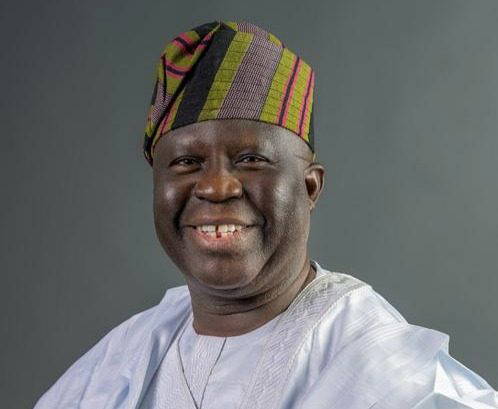
A coalition of more than 300 women’s rights organisations under the Womanifesto has challenged the Senate’s due diligence process in the confirmation of former Vice-Chancellor of the Federal University Oye-Ekiti (FUOYE), Abayomi Fasina, as an ambassador.
The coalition, in a petition signed by its Co-Convener, Wumi Asubiaro-Dada, urged the Federal Government to reverse or reconsider the appointment, arguing that the Senate proceeded with the confirmation despite petitions, pending court cases and unresolved allegations against the nominee.
Rather than focusing solely on the allegations against Fasina, the coalition questioned the institutional process through which the Senate arrived at its decision, insisting that the confirmation raised broader concerns about accountability, public trust and the standard of scrutiny applied to nominees for sensitive diplomatic positions.
Womanifesto faulted explanations reportedly given by Senate President Godswill Akpabio during the confirmation process, particularly claims that there was no opposition from Lagos State, that no petition substantiating allegations of sexual harassment had been received and that Fasina had been cleared by the police and the FUOYE Governing Council.
The coalition disputed the claim concerning Fasina’s state of origin, saying that despite his extensive education in Lagos, he is from Abeokuta South Local Government Area of Ogun State.
It also maintained that petitions against the nominee were formally received by the offices of the Senate President and the Chairman of the Senate Committee on Foreign Affairs.
According to the groups, the petitions, dated June 25 and 29, 2026, drew the Senate’s attention to two cases allegedly pending before the National Industrial Court in Abuja and Lagos.
One of the cases, Suit No. NICN/ABJ/201/2025, was instituted by a female FUOYE staff member who allegedly accused Fasina of sexual harassment.
Womanifesto said the case included a 37-minute audio recording which it alleged contained conversations in which Fasina made advances towards the woman.
The coalition, however, stressed that the allegations remained before the courts and had not been judicially determined.
The second case, Suit No. NICN/LA/61/2025, allegedly involved another female staff member who accused Fasina of harassment and victimisation after rejecting what she considered inappropriate advances.
The organisations alleged that the woman subsequently suffered denial of promotion and loss of employment following a dispute over her assessment while litigation was ongoing.
Womanifesto said the existence of the cases should have triggered a more rigorous scrutiny of the nominee, given the nature of an ambassadorial appointment.
“Ambassadorial appointments are public trust appointments requiring the highest standards of integrity and public confidence,” the coalition stated, stressing that ambassadors represent Nigeria before foreign governments and international organisations.
The groups also questioned the Senate’s reliance on an alleged police clearance, arguing that such clearance could not constitute a definitive determination on allegations of workplace sexual harassment.
They claimed that the police report referenced during the screening did not comprehensively address the allegations and that one of the complaints had allegedly not been investigated.
The coalition similarly challenged the independence of the FUOYE panel said to have cleared Fasina.
It alleged that four of the panel’s eight members were university employees, while some of the external members were allegedly connected to the university’s governing council.
Womanifesto argued that these circumstances raised questions about the panel’s independence and its ability to conduct an impartial assessment of allegations involving a former vice-chancellor.
The groups also rejected the suggestion that the alleged victims failed to appear before the Senate during the screening.
According to the coalition, neither the complainants nor the civil society organisations that submitted petitions were invited by the relevant Senate committee to appear and present their evidence.
It therefore argued that the claim that the complainants declined to appear was misleading if no formal invitation had been extended to them.
The petition further raised concerns over what it described as inadequate consideration of proceedings before the House of Representatives Committee on University Education.
It cited the case of Engr. Folasade Adebayo, one of the alleged victims, who reportedly petitioned the committee after the FUOYE Governing Council dismissed allegations against Fasina.
Womanifesto said Adebayo submitted more than 100 pages of documents and travelled to Abuja in May 2025 for a scheduled hearing, but the proceedings were subsequently postponed indefinitely after Fasina allegedly failed to respond to the committee’s invitation.
The coalition said the development contradicted any suggestion that the complainant had failed to utilise institutional avenues for redress.
It further alleged that the Independent Corrupt Practices and Other Related Offences Commission (ICPC) opened an investigation in 2025 into allegations including abuse of office and sexual harassment following petitions from civil society organisations.
According to the groups, Fasina subsequently obtained a court order restraining the commission from proceeding with the investigation, leaving the matter unresolved.
The coalition faulted the Senate for allegedly failing to establish the status of the ICPC investigation or seek clarification from the House committee before confirming the nominee.
For Womanifesto, the central issue was not whether Fasina had been convicted of an offence, but whether the Senate had adequately discharged its constitutional responsibility to scrutinise a nominee whose appointment carries significant implications for Nigeria’s international image.
The organisations warned that confirming nominees amid unresolved judicial proceedings and investigations could weaken confidence in the Senate’s oversight function and send a discouraging signal to survivors of workplace sexual harassment seeking institutional redress.
They called on the Federal Government to reconsider Fasina’s appointment, insisting that suitability for an ambassadorial position should be assessed not only on the basis of criminal conviction but also on ethical credibility, institutional accountability and public confidence.
The coalition described its intervention as a demand for “constitutional responsibility, institutional integrity and public accountability” in the appointment of Nigerians to sensitive public offices.