Follow Us on Google
• CNG motorists battle stigma
From Adanna Nnamani, Abuja
Beyond the problem of rising cost and limited access to the product, commercial drivers and private car owners in the Federal Capital Territory, Abuja, who use compressed natural gas (CNG) to power their vehicles are grappling with another challenge: discrimination and stigmatisation.
Drivers of CNG-run vehicles are complaining of being denied access to hotels, shopping malls, parks and other public facilities because of their choice of fuel.
James Dele, journalist, testified: “Many times I have been stopped from driving in and parking my car inside a building because of the CNG I use.
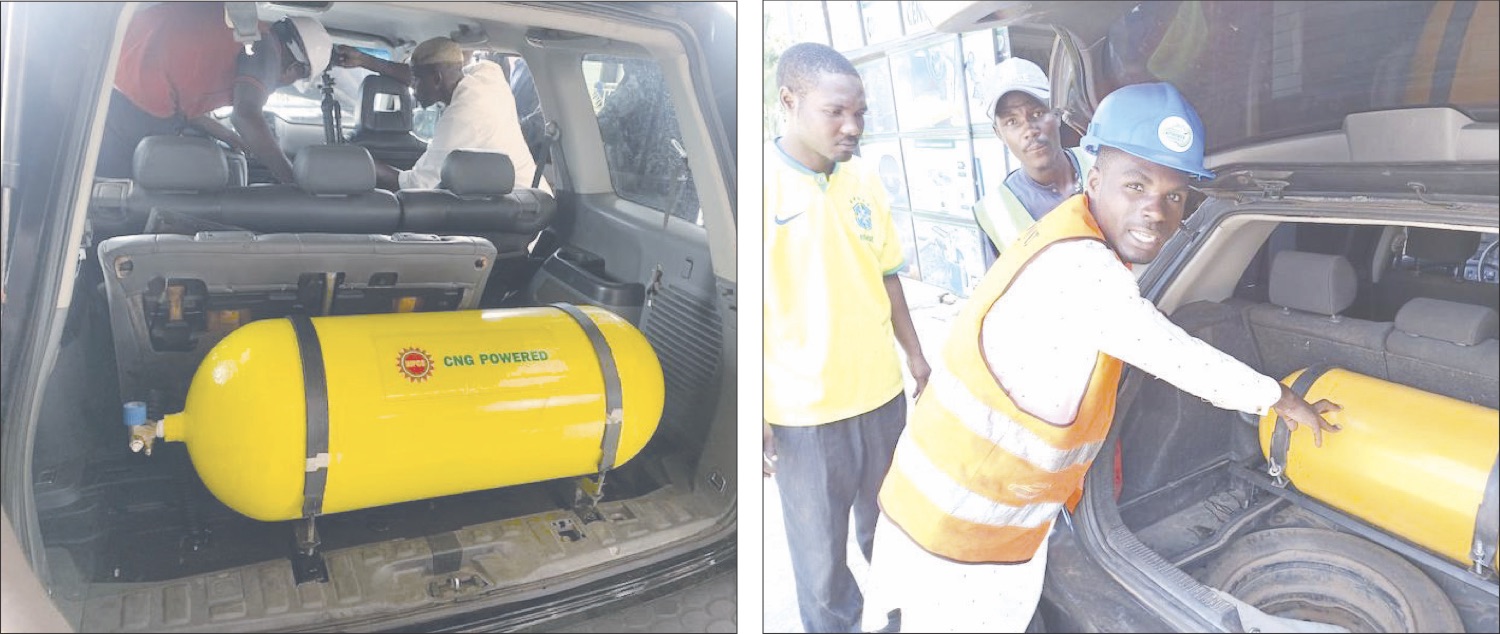
“Once the security sights the cylinder in my trunk during routine checks, they refuse me entry, saying cylinders are not allowed. Sometimes they claim there is no parking space. But later I would see my colleagues who arrived after me and use petrol cars being allowed in.
“It is really frustrating. This is because parking far from where you are going is inconvenient. It also poses security risks, especially with the high rate of car theft in Abuja.”
Saint Idah blamed the trend on ignorance: “Some Nigerians do not even know the difference between CNG and cooking gas. Once they see the cylinder in your car, they assume it is the same as cooking gas and insist you park outside. I have had to cancel visits to certain places because of this. It is painful to see other drivers being allowed in while you are asked to go back because your car runs on CNG.
“At some point I considered removing the CNG because the troubles are too much. Yes, it saves cost, but you deal with rejection, scarcity and even rising cost. Then you ask yourself, is it really worth it?”
Halima Yahaya, a private school teacher converted her car in 2024: “Everywhere we go, they treat us as if we are carrying explosives. There needs to be more awareness on this CNG or even sanctions against those who discriminate against users.”
The Federal Government launched the CNG initiative about two years ago, following the removal of petrol subsidy. It was marketed as a cheaper, safer and greener alternative. Chief executive officer, Presidential CNG Initiative, Michael Oluwagbemi, claimed: “The sector has attracted at least $980 million in private investments.”
Yet, for many early adopters in Abuja, the reality has been discouraging. Investigations show that several facility managers and security operatives still associate CNG vehicles with safety risks, despite assurances from regulators.
Automobile experts argue that such fears are unfounded, noting that CNG systems, when properly installed and regulated, are even safer than petrol, as natural gas dissipates quickly into the air in the event of a leak.
Managing director of a private conversion centre, Ahmad Muhammed, said: “When we talk about gas, many people only know about liquefied petroleum gas (LPG). CNG is not as inflammable as LPG. It does not explode easily. Even if there is a leakage in the valve, it evaporates.”
Operators in the CNG sector warned that such kind of silent discrimination could discourage users and slow down adoption. They urged government to intensify public education and enforce clear policies to protect motorists who invested in the CNG transition.
A concerned citizen, Mathew Ma, said: “The Nigerian government plays a crucial role in this initiative and must navigate the complexities and challenges associated with the widespread adoption of CNG. This can be achieved by formulating and implementing supportive policies that encourage investment and adoption of CNG technology across various sectors.
“Such initiatives would help dispel misconceptions, inform the public about its safety and efficiency, and encourage a shift in consumer behaviour toward this cleaner energy source. By fostering collaboration among governmental agencies, private sector players, environmental groups, and the public, Nigeria can create an enabling environment for CNG adoption.”