Follow Us on Google
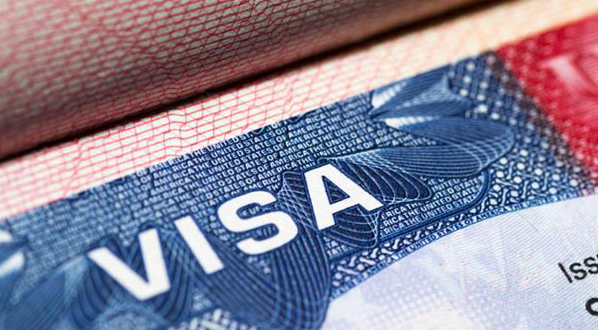
Recently, the United States Mission in Nigeria announced that the US will partially suspend the issuance of certain visa categories to Nigerians, effective January 1, 2026. This follows a new Presidential Proclamation from President Donald Trump, regarding border and national security. The proclamation is titled “Restricting and Limiting the Entry of Foreign Nationals to Protect the Security of the United States.” Apart from Nigeria, other countries affected by the order include Angola, Antigua and Barbuda, Benin, Burundi, Côted’Ivoire, Cuba, Dominica, Gabon, The Gambia, Malawi, Mauritania, Senegal, Tanzania, Togo, Tonga, Venezuela, Zambia and Zimbabwe.
The new restriction bars entry for Nigerians seeking to enter the US as green card holders, or on B1, B2, B1/B2, F, M, and J visas. This means that Nigerians who hold visas for business (B1), tourism (B2), combined business and tourism (B1/B2), academic studies (F), vocational or nonacademic studies (M), and exchange programmes (J) are now barred from entering the United States under the new restrictions. The US Mission clarified that the suspension does not apply to everyone.
The exemptions include immigrant visas for ethnic and religious minorities facing persecution in Iran, dual nationals applying with a passport from a country not affected by the suspension, and Special Immigrant Visas for eligible US government employees. Other exempted categories include lawful permanent residents of the United States and participants in certain major international sporting events.
The US government stressed that the proclamation only applies to foreign nationals who are outside the United States on the effective date and who do not hold a valid US visa as of January 1, 2026. Part of the statement contained in the Proclamation reads: “Foreign nationals, even those outside the United States, who hold valid visas as of the effective date are not subject to Presidential Proclamation 10998. No visas issued before January 1, 2026, at 12:01 a.m. EST, have been or will be revoked pursuant to the Proclamation.”
In October, the US included Nigeria in the list of countries indicted for contravening religious freedom. The move by the US was connected to alleged genocide against Christians in Nigeria. The federal government has denied the allegation, stressing that both Christians and Muslims are victims of attacks by terrorists, bandits and kidnappers in the country. Despite the ongoing dialogue between Abuja and Washington, it is a surprise that Nigeria is among countries the US government included in its new visa restriction order.
No doubt, the visa ban will affect many Nigerians, especially those having one thing or the other to do with the US. Many Nigerian students have applied to study in the United State for college and graduate programmes. Some of these students have already been given a scholarship by some US universities. Also, some Nigerian academics with research grants and fellowships in US universities will be affected by the new visa policy. Those, who travel for business, tourism, vocational and non-academic studies will equally be affected. Unfortunately, the dream of some Nigerians to migrate to the US for professional enhancement and jobs will be aborted.
Considering the implications of the visa ban on Nigerians, the federal government should dialogue with Washington to resolve the matter. It must not be allowed to linger. There is need to strengthen our bilateral relations with the US. Available statistics show that Nigeria ranks 7th globally for international students in the US. For instance, over 20,000 Nigerian students enrolled in US colleges and universities in 2023/24, marking a 13.5 per cent increase from the previous year. Most of them pursuing higher education focus heavily on graduate studies and STEM fields with partial or full funding.
Therefore, the visa restriction order does not bode well for US and Nigeria friendship. Besides, the federal and state governments should begin to lay the foundation for good governance across the country. Let the government be intentional in the ongoing war against insecurity and ensure that the terrorists are decisively dealt with. The government must make the country safe for all citizens. All Nigerians must be protected by the government irrespective of their religion. No Nigerian should be killed because of his faith. Although some Nigerians have argued that it provides Nigerians the opportunity to stay in their country and develop it, we believe that our nationals can still obtain useful experience from US universities that will enhance our scientific and technological development.