Follow Us on Google
Since the curtain fell on the 2023 general elections, Nigeria has remained trapped in a scorching political season. The noise never stopped. The billboards never disappeared. The defections never ended. The promises kept multiplying like locusts in harvest season. Every week produced a new saviour, another coalition, another “rescue mission,” another gathering of men who once ruined the same country they now claim they want to repair.
But now, as screenings, alignments, horse-trading, and primaries begin to gather momentum toward 2027, the crowd is beginning to thin.
The masquerades are removing their masks.
Many who strutted across television studios as presidential materials are discovering that social media applause is not political structure. Some who mistook noise for popularity are realising that rented crowds cannot survive internal party arithmetic. Others who shouted “coalition” are now learning that Nigerian opposition politics is often a marketplace of ambition, not ideology. In the coming months, many gladiators will vanish quietly into political oblivion. Some will withdraw and call it “strategic consultation.” Others will defect and describe it as “national interest.” A few will suddenly discover “health challenges.” Many will negotiate appointments in exchange for silence. That has always been the tragic comedy of Nigerian politics.
There are different species of aspirants already visible in the arena.
There are the professional defectors: politicians with no ideological spine, men who treat parties like commercial buses. Today they are progressives; tomorrow they are conservatives; next week they become patriots. Their loyalty is not to Nigeria but to proximity to power. They move wherever the food is warmest.
There are the emergency messiahs: loud, angry, eloquent individuals who diagnose Nigeria correctly but possess neither structure, patience, nor capacity to govern a complex nation. They ignite youthful emotions but cannot sustain political machinery beyond social media trends and protest slogans.
There are the recycled emperors: familiar faces from past administrations who now speak like prophets against the corruption they once supervised. They wear the garment of reform after spending years feeding fat on the old order. Nigerians must beware of men who suddenly become saints after losing access to power.
Then there are the businessmen of politics: aspirants who see elections as investments and governance as returns on capital. Their campaigns are not built on ideas but on calculations. They measure delegates in dollars, not convictions. To them, the electorate is a market crowd waiting to be bought wholesale.
There are also genuine patriots scattered quietly among the chaos: competent, prepared, visionary Nigerians with the intellect and moral courage to confront the nation’s decay. Sadly, these are often drowned by money politics, godfatherism, ethnic manipulation, and institutional sabotage. Nigeria repeatedly punishes some of its finest minds while rewarding political predators skilled only in propaganda and patronage.
The parties themselves are not exempt from this coming thinning.
The larger parties are preparing for brutal internal wars disguised as democratic primaries. Beneath the smiling photographs and unity chants lie dangerous fractures: ethnic suspicions, regional calculations, personal vendettas, and elite rivalries waiting to explode. Primaries in Nigeria are rarely contests of ideas. They are often battles of influence, intimidation, financial strength, judicial manipulation, and institutional capture.
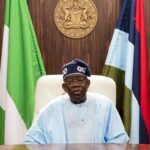
And yet, despite all the confusion, one uncomfortable truth continues to stare Nigeria in the face: if the opposition continues to sabotage itself, fragment itself, and prioritise ego over national urgency, then President Bola Ahmed Tinubu is already halfway to reelection.
Politics abhors disorganisation. Power rarely falls into the hands of divided opponents. While opposition figures spend valuable time attacking one another, the ruling establishment continues consolidating state power, building alliances, securing loyalists, and preparing its machinery for 2027. History has shown repeatedly that incumbency in Nigeria is not easily defeated, especially when the opposition behaves like scattered hunters, chasing different animals in a burning forest.
The tragedy is that many Nigerians genuinely expected that the hardship, inflation, insecurity, unemployment, and economic suffocation after 2023 would naturally produce a united and formidable opposition. But hardship alone does not create political maturity. Suffering does not automatically produce strategic leadership. Sometimes pain only deepens confusion.
That is why Nigerians must approach 2027 with wisdom rather than emotion.
The electorate must understand that the future of a nation cannot be traded for bags of rice, wrappers, cash envelopes, or temporary ethnic excitement. Vote-buying remains one of the deadliest cancers destroying Nigerian democracy. Politicians insult the intelligence of citizens with crumbs stolen from the same treasury they helped empty. Then after elections, the same electorate spends four or eight years lamenting hunger, insecurity, collapsing infrastructure, and abandoned promises.
A people who consistently sell their votes should not be shocked when leaders eventually sell their future.
The danger is not merely political; it is generational. Every compromised election deepens national decay. It weakens institutions. It empowers mediocrity. It normalises impunity. It discourages competent citizens from entering public service. It turns governance into organised exploitation.
Nigeria cannot continue pretending that elections rigged by money and manipulation will somehow produce transformational leadership. Democracy is not merely about voting day. It is about the integrity of the process before, during, and after the ballots.
That warning must also reach the doorstep of Independent National Electoral Commission.
INEC stands at a dangerous historical crossroads. Nigerians are watching. The world is watching. The credibility of future elections may determine whether citizens retain faith in democratic participation or drift further into cynicism and unrest.
Electoral institutions that fail repeatedly become incubators of national instability.
If institutions manipulate the people’s will, suppress transparency, or enable electoral fraud through incompetence or compromise, the consequences may outlive any temporary political victory. History is filled with nations where electoral injustice eventually produced social explosions nobody could control.
INEC must understand that technology without integrity is useless. Electoral reforms without courage are cosmetic. Promises without transparency only deepen public distrust. Nigerians deserve elections where votes truly count, where results reflect the people’s will rather than elite arrangements made behind closed doors.
The media, civil society, religious institutions, and traditional leaders also carry heavy responsibilities. Democracy cannot survive when truth becomes negotiable. Too many opinion merchants already operate like hired drummers for political interests. Some journalists have abandoned scrutiny for access. Some religious figures have exchanged prophetic courage for political patronage. Some elders preach morality publicly while negotiating compromise privately.
Nigeria’s salvation will not come from noise but from national awakening.
The thinning crowd now unfolding may actually become an opportunity. As pretenders fade away, Nigerians may finally begin separating politicians from statesmen, ambition from vision, propaganda from competence, and popularity from preparedness.
But citizens must also abandon dangerous political habits.
Ethnicity must not become the sole qualification for leadership. Religion must not replace competence. Party logos must not blind voters to character. A corrupt politician does not become righteous because he speaks your language or worships in your mosque or church.
The future belongs to nations that choose capacity over sentiment.
The 2027 elections will not merely determine who occupies Aso Rock. They may define whether Nigeria continues drifting toward institutional exhaustion or begins the painful process of national recovery. The stakes are enormous. Insecurity is expanding. Economic frustration is deepening. Youth disillusionment is rising. Trust in governance is dangerously low.
This is why Nigerians must refuse to become tools in the hands of desperate political merchants. Refuse to be rented crowds. Refuse to become online attack dogs for politicians who do not know your name. Refuse to trade your conscience for temporary gifts that cannot sustain your future.
The crowd will continue thinning.
Many loud aspirants will disappear. Many alliances will collapse. Many promises will evaporate. Many political marriages will end in betrayal. That is inevitable. But when the dust finally settles after the primaries, conventions, defections, and political fireworks, Nigeria will face a defining question: will the country once again recycle power among the same entrenched interests, or will citizens summon the courage to defend competence, credibility, justice, and genuine nation-building?
The answer may determine whether 2027 becomes another ceremony of recycled disappointment or the beginning of a long-delayed national rebirth.