Follow Us on Google
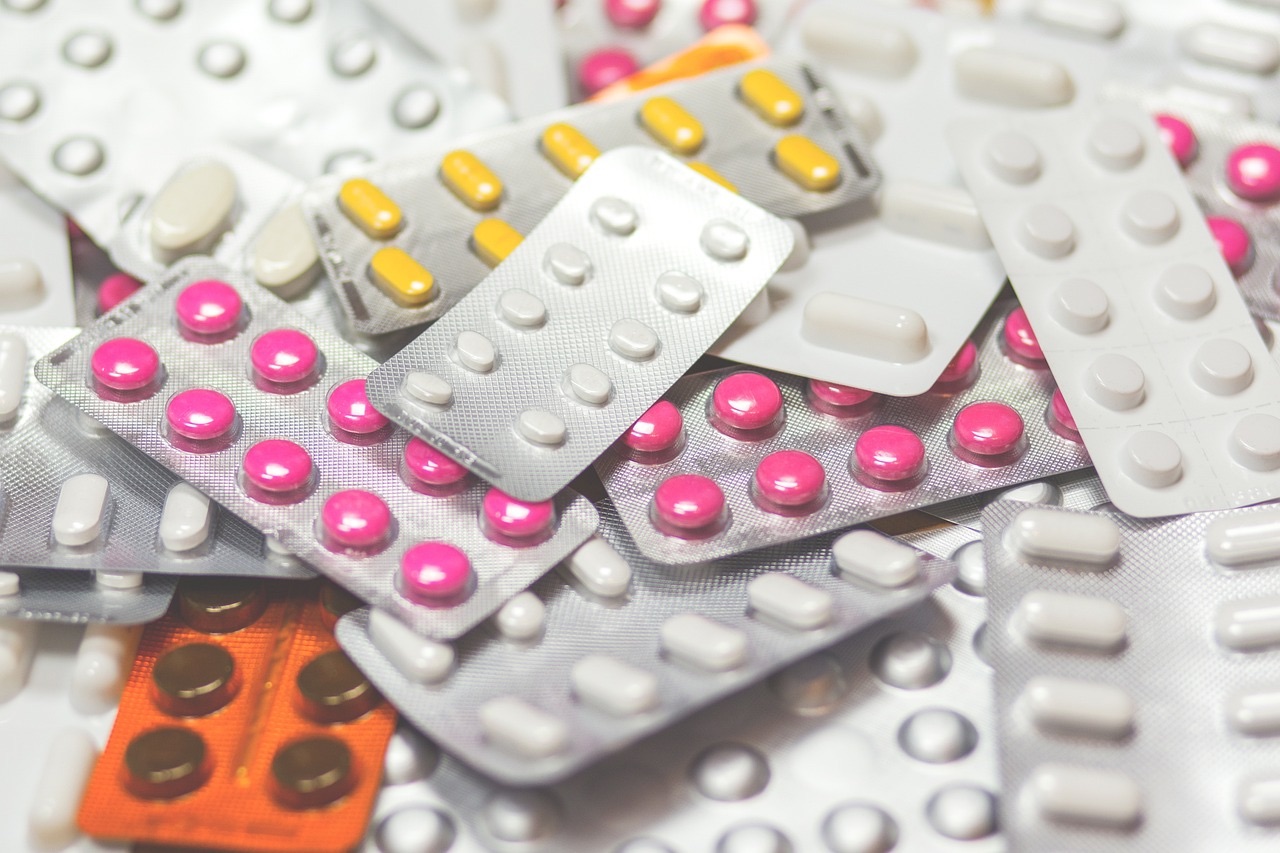
The recent exit of major pharmaceutical companies from Nigeria has led to increase in the prices of drugs by 400 to 900 per cent, according to a survey by the National Bureau of Statistics (NBS). Consequently, about 81.6 per cent of the Nigerian population have resorted to traditional herbal concoctions to meet their primary healthcare needs. Though traditional herbal medicines are easily accessible and culturally acceptable, orthodox medical experts have expressed concern that some herbal medicines could be harmful to the human organs such as the liver, kidney and others.
The economic hardship in the country has further pushed up the prices of essential drugs. The heavy reliance on imported drugs due to inadequate capacity to produce the drugs locally, has left many with no option than to patronise traditional herbal medicines. Available data from the NBS showed that in 2023, Nigeria imported medications worth N81.81billion between July and September, 2023. This is an increase of 68 per cent from the N48.74billion worth of drugs imported in the same quarter of 2022. With fewer manufacturers and distributors due to the exit of major pharmaceutical companies such as GlaxoSmithline, in August last year and plans by Sanofi-Aventi, to leave in February, there is a decrease in competition and astronomical rise in the prices of essential and generic drugs in the country.
Until its exit after 51 years of operation, GSK was the second largest pharmaceutical manufacturing firm in Nigeria. None of the two pharmaceutical companies has yet announced the third-party distributors of its healthcare products. The Haelon Group, one of the world’s largest consumer healthcare providers, which used to manage distribution for GSK, has terminated its agreement with the company, thereby blocking direct sourcing of medicines from the company.
As drug prices surge, healthcare providers are also lamenting the increasing number of diabetic, asthmatic and cancer patients, who have started to micro-manage the available medicines as a result of lack of funds. According to medical experts, the most important component in the structure of most drugs is the Active Pharmaceutical Ingredients (APIs), which accounts for 80 per cent of the total structure. The APIs are imported from pharmaceutical manufacturing hubs like India, China, USA, United Kingdom and Germany. With N48.74 billion worth of drugs imported in the second quarter of 2022, representing a 27 per cent rise from the N64.38billion recorded in Q2,23, India is Nigeria’s top importing pharmaceutical trading partner, followed by USA, China, France and Germany. Within the last two years, about N33.68billion drugs were imported from India, N15.3billion from the USA, and N9.98billion from China, N2.72billion from France, and N2.41billion from Germany.
While medication imports in Q3 2023 accounted for 0.97 per cent in total imports, representing a slight decrease from 1.12 per cent in the previous year, it still managed to edge on the 0.97 per cent recorded in Q3 of the previous year. As the naira continues to depreciate, the pharmaceutical industry has been struggling to meet the challenges of access to healthcare needs. Patients with serious ailments have been stretched to their limits as a result of higher prices of essential drugs. There is urgent need to address the increasing healthcare needs of Nigerians.
The government must address the forex scarcity, the exorbitant cost of importation of drugs and the high cost of doing business in the country. The high value of finished imported drugs, which according to the National Agency for Food and Drug Administration and Control (NAFDAC), grew from N6.4billion in 2018 to N12.1billion in 2021, almost 100 per cent increase in three years must be addressed.
There is no doubt that the exit of the multinational companies will affect Nigeria’s health services sector. Many healthcare providers are reportedly asking Health Management Organisations (HMOs) for tariff review. The prices of some drugs have since increased by over 400 per cent. This undermines contract terms reached between HMOs, the insurers and their partners (hospitals and pharmaceutical companies).
Already, the growth rate of the manufacturing sector in the Q3’23 was 0.48 per cent. It is lower than the preceding quarter by 2.39 percentage points, and 1.72 percentage points in 2022.
Sadly, businesses are grappling with higher operating costs. Exchange rate has increased at both the official window and the parallel market. The high cost of FX has pushed inflation rate in November to 28.2 per cent. The latest monthly purchasing managers’ index, which is the survey indicator from private sector manufacturing firms has dropped to 46.7 per cent, the lowest level in eight years. The government should review the tariff on imported drugs and halt the exit of more pharmaceutical companies. It must also encourage the local production of essential drugs.