Follow Us on Google
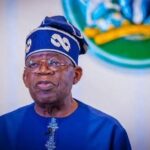
The National Council of State is an irregular statutory meeting. It is a constitutionally-backed advisory organ to Mr. President in exercise of his powers on matters of public order, prerogative of mercy, award of national honours, National Judicial Council (NJC), National Population Commission (NPC) and population census, as well as the Independent National Electoral Commission (INEC), including the appointment of members of all the aforementioned bodies. Under President Tinubu, the Council has met only twice. First, in August 2024 and second, in October 2025, where he received a go-ahead with his nomination of Professor Joash Ojo Amupitan (SAN) as the new INEC boss.
Among the far-reaching decisions by the Council was the variants of reprieve of presidential pardon granted to 175 ex-convicts, including posthumous reversal of criminal label that dented the memories of some of our fallen compatriots. On the advice of the Presidential Advisory Committee on Prerogative of Mercy (PACPM) headed by Lateef Fagbemi, SAN, the Attorney General of the Federation, considerations were given based on age – those within the age bracket of 60+ years and 16 years and below; those with terminal diseases; long-term convicts who served up to 10 years and above and have turned a new leaf; and those who have stayed up to 3 years and above for various prison terms. The criteria for the clemency expanded to those who are adjudged remorseful, among other conditions.
Beyond the knocks and kudos that are trailing the clemency, I am elated by the state pardon granted to Farouk Lawan, the former fourth-term parliamentarian, who represented the Bagwai/Shanono Federal Constituency of Kano State at the House of Representatives from 1999 to 2015. He has reportedly shown remorse. I am happy that his active citizenship has been restored. Before the bribery scandal that brought reputational damage to him, there were speculations that he had his eyes on Kano gubernatorial race. He used to be a colourful politician and a rallying point whom most of his colleagues deferred to. He exuded courage, brilliance, strength of character, articulate mind, and charming personality. Despite his size and height, his name commanded fear and respect. His thoughtful interventions during plenary and committee sessions solidified the impression of legislative independence.
Farouk was powerful. The “Integrity Group” which he led ensured the ouster of Patricia Etteh, the first and so far, the only female speaker of the lower chamber. Mrs. Etteh drew the ire of majority of his colleagues who had barely swallowed the bitter pill of her emergence as Speaker with a less impressive profile in a House peopled by eggheads. She was accused of unlawful award contracts of N620 million to her cronies for upgrading her official residence. Consequently, she caved in to political pressure and resigned on October 30, 2007, five months into her tenure. Dimeji Bankole, a favourite of Faruok and his group, became her successor.
Having cut the image of juggernaut of politics of legislature, Farouk was a linchpin of the ‘rebel’ lawmakers who executed the emergence of Tambuwal/Ihedioha as Speaker and Deputy Speaker, contrary to the then ruling PDP’s zoning of the leadership of House of Representatives between 2011 and 2015. In compensation, he was appointed the Chairman of Education Committee, one of the ‘juicy’ standing committees, before the current splitting to accommodate growing interests for committee headship.
But when national emergency arose, the House reconvened from its annual recess and took a strong resolution concerning the January 1, 2012 fuel subsidy removal that was greeted by a national strike and street protests. The House set up an ad-hoc committee to probe the sleaze in the fuel subsidy regime. The headship of that special committee became Farouk’s Achilles’ heel. His piercing and probing questions on a live television exposed some of the oil thieves who unconscionably milked the country dry. However, behind the scenes lurked the danger that collapsed the entire investigative hearing. Farouk couldn’t survive the banana peel. Through a string operation arranged by Nigeria’s secret service, Otedola invited Faruok and gave him cash of $500,000 (as part of alleged $3million bribe) to enable him remove Zenon Oil & Gas (owned by Otedola) from the list of companies indicted for fuel subsidy fraud by the ad-hoc committee.
The hunter became the hunted. Farouk was charged to court for bribery and corruption with Otedola as a star witness. The trial court found him guilty of the three charges and sentenced him to 7-year imprisonment. However, the appellate court’s three-man panel acquitted Farouk on two counts bordering on what the panel discovered as a lacuna and investigative flaw: the prosecution failed “to establish whether it was Mr. Otedola who offered the bribe or it was Mr. Lawan who asked for it.” Notwithstanding, Farouk was found guilty in one count of receiving bribe and the jail term was reduced to five years. The Supreme Court upheld the ruling. And in October 2024, Farouk was released from Kuje Custodial Centre after serving the 5-year term. He received state pardon in October 2025.
Indeed, Farouk’s statement after the state pardon is emotion-laden. “Mr. President has cast a warm blanket over me, pulling me back from the harshness of yesterday’s cold…During the eclipse at noon of my life, a path designed by destiny, a past with which I am fully reconciled, my family, friends and associates stood by me through thick and thin, their light became my singular unfailing beacon. I remain eternally indebted to you.”
Three possible scenarios are likely to emerge from Farouk’s come-back to civil life. First, perhaps in his memoir, he will have an opportunity to present his own side of the story as the prosecution shielded Otedola’s role in the bribery saga. Second, Farouk’s grassroot appeal will be a factor in favour of APC in the 2027 cold calculations. Third, his political ambition has hit the reset button. Most importantly, the silver lining should be for him to run a Centre to teach upcoming politicians about landmines in public office. Nonetheless, the nagging question is: Why are the indicted oil subsidy saboteurs not prosecuted?