Follow Us on Google
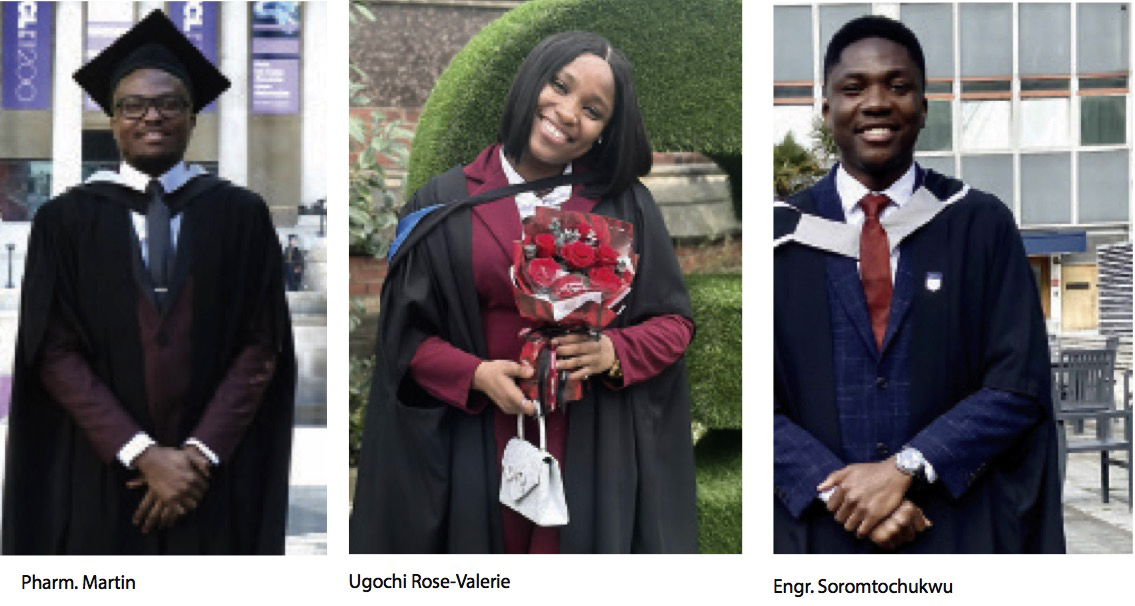
…Inside the Ihedilionye family that raised three first-class graduates
By Chinenye Anuforo
Long before university distinctions, departmental prizes and international academic honours entered the story, mornings inside the Ihedilionye household in Lagos followed a familiar rhythm.
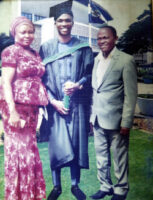
There were school runs to make, homework to inspect, prayers to say and bills to pay.
Like many middle-class Nigerian homes headed by civil servants, financial priorities often competed for attention. Yet, amid those daily realities, Mr. Emma and Mrs. Dominica Ihedilionye were quietly building something that would eventually distinguish their family in an uncommon way.
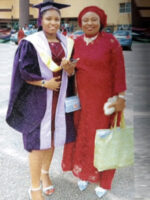
They were raising children around a deliberate philosophy. One that combined discipline, faith, education and character. Years later, that philosophy would produce a remarkable outcome.
Three of their children would graduate with First Class honours in different professional fields, carving impressive academic and leadership paths that extended beyond Nigerian universities into global institutions and professional spaces.
For the family whose roots trace back to Okwuabala, Ihioma, in Orlu Local Government Area of Imo State, the result was neither accidental nor miraculous in the simplistic sense. It was the product of years of planning, sacrifice, parental supervision and a home culture where education was treated not merely as a route to employment but as a serious moral and intellectual responsibility.
For Emma Ihedilionye, the memory remains emotional. “It was awesome,” he said while reflecting on the academic achievements of his children. “To say I never expected that would be an understatement.”
But excellence did not begin at university. The foundations were laid much earlier. The children attended Rainbow International School in Lagos for nursery and primary education, where they quickly established themselves as high performers.
“They were consistently excellent,” the father recalled. “They either took first position or remained among the top students.” Their academic promise later earned them admission through competitive examinations and interviews into Saint Francis Secondary School, Idimu, a Catholic institution run by the Jesuit congregation and widely known for discipline and academic rigour.
The transition reinforced values already deeply rooted at home. By graduation from secondary school, each child had sat for nine subjects and passed with a minimum of four distinctions.
Yet, beyond grades and certificates, the Ihedilionyes insist that character came first. The family’s Catholic faith formed the spine of their upbringing.
“There was much discipline in our home,” Emma said. “When I got married to my spouse, it was seamless transferring that to our children.”
Religion, for the family, was not ceremonial. It shaped daily living. The children participated actively in church programmes, while family routines revolved around prayer and spiritual guidance.
“We were fully engaged in religious activities,” the father explained. “So the children had no time to engage in frivolities.”
If Emma provided philosophical direction, the wife became the operational backbone of the project.
A staff member of the Lagos State Ministry of Education, former Catholic Women Organisation president, Catholic Charismatic leader and certified marriage counsellor, she approached motherhood with unusual intentionality. “I had to buckle up to raise my children,” she said.
As a respected church leader, she understood that many people watched not only her conduct but also that of her children.
Her daughter became actively involved in Catholic youth programmes, ministering and helping to coordinate church activities. The mother described family life in terms that now sound almost symbolic.
She said: “Our children’s life then was triangular. From house to school, school to church and back to house.” That triangle defined much of the children’s early years.
Morning Bible readings and prayers were regular family routines. Night prayers before sleep remained compulsory. There was structure around chores, friendships and movement. Schoolwork received close monitoring.
Mrs. Ihedilionye handled most of the school runs, dropping and picking the children from school even through senior secondary school.
She attended PTA meetings faithfully, maintained relationships with teachers and monitored academic performance carefully.
“I didn’t do assignments for them,” she clarified. “I only assisted in difficult areas, especially mathematics and science subjects.”
She also monitored friendships and social environments.
“I had the phone numbers of their best friends and roommates and became friends with them,” she said of the university years.
The parenting model was deliberate. “Knowing God at that tender age was my greatest asset. It was an all-round training”, she explained.
But ideals alone do not pay school fees. Like many Nigerian families pursuing quality education, the Ihedilionyes confronted economic realities. School fees came with pressure.
Living in rented accommodation and funding private education as civil servants required sacrifice.
“We had to drop some financial undertakings to meet up,” Emma admitted.
His wife reteirated that reality. “It wasn’t all roses. The pressure was real.”
Yet, perhaps one of the strongest features of the family’s story is that the children gradually learned to participate in carrying the burden.
Through academic brilliance, each secured scholarships during undergraduate studies, easing financial strain.
The children also embraced work and self-development early. Mrs. Ihedilionye still remembers a phone call from her daughter.
“One thing that made me overjoyed was when my daughter called and said she had secured a job while still an undergraduate,” she recalled.
The monthly income was modest, N30,000 but the significance was profound.
Rather than spending holidays idly, Ugochi Rose-Valerie worked in the accounts department of her alma mater secondary school and used the stipends to support herself.
Her brothers also pursued remote jobs and developmental opportunities. “To God be the glory,” she said. “We are giving this as testimony.”
For Ugochi Rose-Valerie Ihedilionye, the youngest among the three high achievers and the family’s only daughter, excellence came with determination and emotional resilience.
She graduated with first class honours in Accountancy from the University of Benin in 2023 and later earned distinction in the United Kingdom, emerging best graduating student in her MSc programme.
But the journey was hardly perfect. “I felt very happy and fulfilled,” she said of her first-class result.The goal had always been clear. Yet confidence wavered.
After recording an impressive 5.0 GPA early in university, her CGPA later dropped, shaking her self-belief.
“By 300 level, that confidence was shaken,” she admitted. At one point she joked with herself. “No be by first class.” But beneath the humour remained persistence. She prayed, refocused and continued.
Importantly, she rejected the stereotype of the socially withdrawn scholar. She embraced leadership, internships, volunteering, church programmes and social activities. “I was not a student who focused only on academics,” she said.
Her advice to young Nigerians reflects that balance. “Never be a triangular student in university,” she advised. “University should shape you beyond academics.”
Her elder brother, Gerald Soromtochukwu Ihedilionye, an engineer, told a story of transformation. Graduating with a first class degree and emerging Best Graduating Student in Engineering at the Federal University of Technology, Owerri, in 2019, Gerald’s journey began shakily.
“My first year wasn’t great,” he admitted. Young and shy, he struggled to adapt. But by his second year, something changed. His grades improved significantly.
By Year Four, he had secured a first-class CGPA, eventually graduating with 4.61 and a perfect 5.0 in the final year.
“I realised that if I could hit such high GPAs consistently, I would be on a First Class CGPA,” he said.
His study methods were intentional. “Consistency always beats motivation,” he explained.
Yet, university life nearly delivered heartbreak. At one point, Gerald was informed he had failed a course and might need to repeat it. “The discovery was devastating.”
However, investigations later revealed an administrative error involving his student identification details. His actual grade was an A.
Rather than retreat into academics alone, Gerald built a broad university experience. He organised conferences, led volunteer organisations, explored entrepreneurship and represented his university externally.
One achievement stands out. He helped secure FUTO’s first victory in the Society of Petroleum Engineers Petroquiz competition in 17 years. “The university should not just be a place for reading and getting a degree,” he argued. “It should be for all-round development.”
If Gerald represents transformation, first son, Martin Chukwuemeka Ihedilionye, embodies philosophical reflection.
A Doctor of Pharmacy graduate with first class from the University of Benin and later a distinction graduate of University College London in Global Health and Development, Martin combines academic excellence with intellectual depth.
His journey stretched across nearly eight years. “I felt overly accomplished and satisfied,” he said of finally graduating.
But beneath achievement were struggles rarely visible to outsiders. “There were moments of impostor syndrome,” he admitted.
Pressure came from expectations, particularly as first son. “Sometimes it felt as though people did not realise I am human after all.”
His turning point emerged in third year. Complex pharmacy courses became proving grounds. He excelled and rose to the top of his class. “That momentum never disappeared,” he said.
Martin adopted highly adaptive learning strategies. Near-perfect lecture attendance, strategic preparation and wide reading became central to his success. Laboratory practicals exposed weaknesses.
Rather than surrender, he adjusted. “That experience made me approach subsequent practicals differently,” he explained.
The improvement was remarkable. Martin also rejected narrow definitions of academic success. Nicknamed “A Beast” by peers because of his ability to balance multiple engagements, he immersed himself in academic, political, professional and social life. He summarised his philosophy with a phrase from Roman literature.
Carpe diem. Seize the day. “Life is too short to be passive with living,” he said.
For the parents, the family’s story is bigger than personal celebration. Emma believes Nigeria must do more to recognise academic excellence. “Various levels of government must come up with strategies to recognise and financially support them,” he said.
Corporate organisations, he argued, should also strengthen scholarship programmes and reward exceptional performance.
His wife sees the matter through maternal eyes. She said: “Being a mother is not an accident but God’s design. Be there for your children. Bless them. Encourage them.”
Their story ultimately raises difficult but necessary questions: Can excellence still flourish despite economic pressure and educational uncertainty? What becomes possible when parents remain deliberately involved? Can discipline, faith and structured upbringing still shape outcomes in a distracted age?
Inside the Ihedilionye household, the answers are already written not merely on certificates or university transcripts, but in a family culture carefully nurtured over decades.
Theirs is not simply a story of three First-Class graduates. It is a story of vision, sacrifice and possibility. And perhaps, in a country searching for models of hope and responsible parenting, that may be the true formula worth studying.