Follow Us on Google
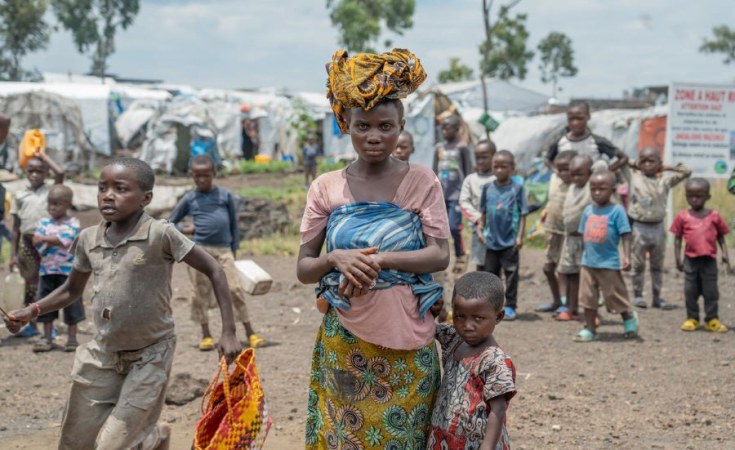
As a result of the ongoing crisis in the Middle East, the World Food Programme (WFP) has warned that 10.4 million people in West and Central Africa could face acute food insecurity if the conflict is not halted. The warning, which was published on its website some days ago, drew attention to the consequences of the crisis. If the conflict persists and oil prices continue to rise, the WFP also predicted that globally, about 45 million additional people are likely to face acute food insecurity.
It also projected an increase of 21 per cent in food-insecure people for West and Central Africa and 17 per cent for East and Southern Africa. The frightening statistics on food-insecure people in Africa should worry political leaders on the continent. It is, indeed, another wake-up call on African leaders to emphasise food production and curb food losses. It is estimated that Africa loses about 30 per cent to 50 per cent of its food annually between harvest and consumption. The sub-Saharan Africa faces 37 per cent post-harvest losses, due to poor storage and infrastructure. These losses in fruits, vegetables, roots and tubers equal 1.3 billion metric tons annually.
According to the WFP, not less than 318 million people are currently facing hunger globally. Already, prices of food items and other essential commodities have risen astronomically in most of the countries in West and Central Africa. The situation is equally worsened in these countries by rising prices of petroleum products. In Nigeria, the cost of transportation has risen by over 100 per cent.
“If this conflict continues, it will send shockwaves across the globe, and families who already cannot afford their next meal will be hit the hardest,” said Carl Skau, the Deputy Executive Director and Chief Operating Officer of WFP. He also warned that “without an adequately funded humanitarian response, it could spell catastrophe for millions already on edge.”
Many African countries are dependent on the importation of food and petroleum products. With the Iranian forces occupying the Strait of Hormuz, a waterway where 30 per cent of global trade crosses, many vessels carrying multi-billion-dollar goods are held hostage there. Arising from this, shipping firms have hiked their charges.
Apart from the WFP, the Food and Agriculture Organisation (FAO) has also warned that a growing number of countries in the world are facing severe food insecurity, with Africa being the most affected region. Also, the Crop Prospects and Food Situation Report (CPFSR) of March 2026 showed that 41 countries worldwide require external assistance for food. A further breakdown of the figures revealed that 31 of those countries are in Africa, including Nigeria, eight in Asia, one in Latin America and the Caribbean and one in Europe.
Other News
The federal government and other governments in Africa should immediately embark on policies to provide safety nets to cushion the economic effects of the crisis in the Middle East. African leaders should make the continent food-secure for their people. The federal government should use the benefits from the removal of oil subsidy to address the current economic hardship, which millions of Nigerians are grappling with now.
There should be palliatives to cushion the effects of the Middle East conflict on Nigerians, especially the rising costs of food items and petroleum products. As an oil-producing country, Nigerians should not be subjected to the current hardship arising from the war in Iran. Apart from the Dangote refinery, the federal government must ensure that its refineries are working optimally. If our refineries are working in full capacity, Nigeria will not be depending so much on imported petroleum products. Sadly, Nigeria is about the only oil-producing nation that relies so much on imported petroleum products. There is need to reverse this ugly narrative.
Since the end of the Middle East crisis is not yet in sight, given pronouncements by United States President Donald Trump, and leaders of Israel and Iran, African leaders should think outside the box and ensure that their citizens are not affected by the looming hunger. Nigeria and other African countries must begin to subsidise food and other essential commodities. They need to embark on mechanised agriculture to enhance their food security.
At the same time, we urge the federal government to evolve measures to ameliorate the increasing cost of transportation. This is the time the government can release food from national food silos in order to reduce the rising cost of food items. Since there is a link between elevated prices of petroleum products and rising food prices, government must tackle both challenges without delay.
As another election season is fast approaching, we urge our political leaders to prioritise good governance and security of the people. Politics should not be allowed to take the centre stage while millions of Nigerians are suffering and wallowing in abject poverty. An enabling environment must be created for farmers to go to their farms and produce more food.