Follow Us on Google
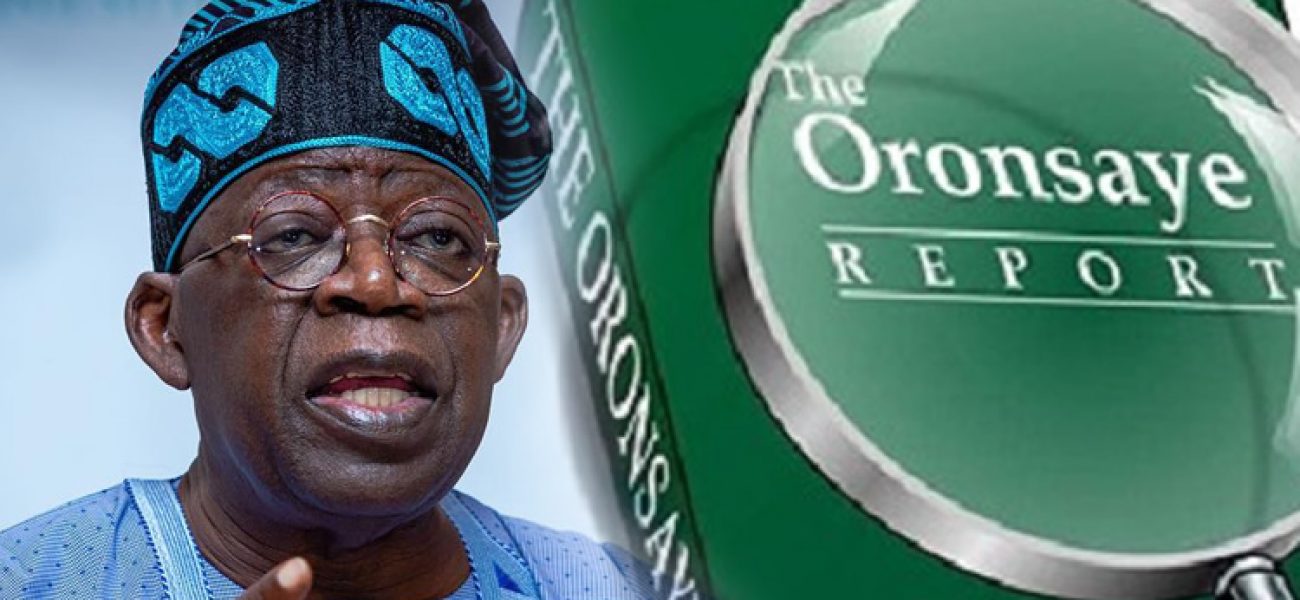
With the inauguration of the committee to implement the recommendations of the Oronsaye report on the restructuring and rationalisation of Federal Government parastatals, commissions and agencies, President Bola Tinubu has demonstrated his commitment to cut drastically the cost governance. The restructuring panel was headed by former Head of Civil Service of the Federation Stephen Oronsaye.
The committee will supervise the restructuring of the ministries and agencies. Although the implementation of the report submitted to the government 12 years ago is belated, it will enhance the efficiency in the nation’s civil service if it is properly executed. It will also eliminate duplication of functions of several government’s departments and agencies. The report had revealed, among other things, that there were 541- statutory and non-statutory – Federal Government parastatals, commissions, and agencies.
In the Executive summary of the Committee’s report, it was discovered that at least 50 out of 541 parastatals identified by the committee during its assignment had no enabling laws, just as there were multiple challenges of supervision in the monitoring of the parastatals and agencies. They were also weakened by overlapping functions that impede the progress of government processes, procedures and execution. It recommended that 263 of the statutory agencies be drastically reduced to 161, and that 52 of the parastatals/agencies be merged and be reverted or relocated to departments in various ministries.
It recommended the law establishing the National Salaries and Wages Commission would be repealed and its functions taken over by the Revenue Mobilization and Fiscal Commission. Similarly, it recommended the merger of the nation’s three top anti-corruption agencies, the Economic and Financial Crimes Commission (EFCC), the Independent Corrupt Practices and Other Related Offences Commission (ICPC), as well as the Code of Conduct Bureau (CCB). There are many other parastatals, agencies that will be subsumed into other ministries for cost-effectiveness and optimal performance.
About N862billion will expectedly be saved from the exercise. The Secretary to the Government of the Federation, George Akume, is the chairman of the committee. Other members are the Head of Civil Service of the Federation, the Attorney General and Minister of Justice, Minister of Budget and National Planning, the Director General, Bureau of Public Service Reforms, and Special Adviser to the President on Policy and Coordination, as well as the Senior Special Assistant to the President on National Assembly. The Cabinet Affairs Office will serve as the secretariat of the committee.
Considering the current economic challenges, the implementation of the Oronsaye report has become imperative. It will ensure effective allocation of scarce resources to areas of needs. It is good that the government has allayed fears over job losses arising from the implementation of the report. Therefore, let the recommendations be implemented. It should not be jettisoned like the governments of Jonathan and Buhari. For example, in November 2021, then President, Muhammadu Buhari inaugurated two committees, one chaired by a retired Head of Civil Service of the Federation Alhaji Goni Aji to review the Oronsaye Report. It came to nothing. The second Committee was headed by Ms Ama People, a former Head of the Civil Service, and yet again, in July, 2021, Mrs Ebele Okeke, ex-Head of the Civil Service of the Federation, was appointed to chair a Committee set up to review government agencies created between 2014 and 2021. None of its recommendations saw the light of day. There should be sincerity of purpose in the implementation of the report. There may be need to review some of the recommendations in view of the present realities. The review is necessary because some of the recommendations may be obsolete.
The Tinubu administration should consider reducing the number of ministers and aides. With 48 ministers, Tinubu’s cabinet is unwieldy. A recent report revealed that the government will spend about N4.86billion on the salaries and allowances of ministers. This excludes other allowances/perks of the office. Similarly, the present bi-cameral legislature at the federal level should be reviewed in favour of a uni-cameral legislature. To deepen our democracy, there is need to make legislative duties to be part-time and those involved paid sitting allowances. State governors should also begin moves to reduce the cost of governance in their domains.